
A lower-cost US holiday doesn’t have to mean staying in one place or skipping the sights. Concord, Phoenix and Macon are among the budget friendly vacation spots in the us to consider, with city attractions and outdoor options that can help keep your plans practical.
Flights, accommodation and meals can take a big share of your travel budget. Choosing a destination with free activities and affordable local food gives you more control over spending.
This guide rounds up US cities to consider, from beach breaks to desert scenery and smaller-city stays. You’ll find ideas for free parks and outdoor activities, ways to enjoy local food for less, and approximate daily budgets in Australian dollars to help plan around your spending limit. Choose options that suit your travel style, then shape your trip around the costs that matter most.
Key Takeaways
- Compare destinations by the full trip cost, not just the cost of getting there.
- Build your plans around beaches, parks and outdoor activities to keep sightseeing costs down.
- Use local food options to make meal spending easier to manage while still trying regional dishes.
- Set a daily budget that accounts for accommodation, transport, food and activities before choosing your destination.
1. Affordable US city destinations
The study used the Bureau of Transportation Statistics’ average airfare for 2025 when calculating vacation costs. Treat these figures as examples for specific dates, not a year-round price list.
For families, couples and solo travellers, choose a city that suits how you plan to spend your time. Families can look for museums and outdoor attractions, then factor in room needs and transport. Couples may prefer a compact city break with walkable places to eat and explore. Solo travellers can focus on central accommodation and activities that are easy to reach without a car. Concord, Phoenix and Macon offer different starting points for comparing trip costs.
Consider affordable lodging, food and activities together. Concord’s lower estimated total makes it a useful first comparison; Phoenix offers city attractions and access to hiking, while Macon provides a smaller-city option. The best fit depends on airfare, accommodation, local transport and how many paid attractions you include. Compare the full trip, not hotel rates alone.
There is no single cheapest time of year for every US destination. Summer demand can differ from quieter travel periods, while school holidays and major events can affect fares and room rates. Australian travellers can compare flexible dates, departure airports and routes, then check the full fare before choosing a city. Central America and South America are separate regional options, not US destinations; compare them as different itineraries, including flights from Australia and transport after arrival.
2. Free beaches, parks and outdoor activities
Beach days can keep an itinerary simple: choose a shoreline, walk, swim or relax outdoors instead of building the day around paid attractions. Thirty US states have a coastline, so beach vacations span the country, from Florida’s Gulf Coast to the Pacific. Before setting out, look for public access points and parks where entry won’t add to the day’s costs. Include transport and parking in your plan, since a free activity can still involve travel expenses.
Miami gives visitors beaches and outdoor time alongside downtown streets and famous city sights. Plan a beach visit around a walk, a swim, or time outdoors, then group nearby stops to limit extra trips. Luxury hotels and paid attractions can raise costs, so compare accommodation locations with the places you want to visit. For a different Florida coast option, Naples Pier extends 1,000 feet into the Gulf. The pier was first erected in 1888, making it a named landmark as well as a place to take in the waterfront.
Which U.S. national parks are affordable to visit, and what are the entrance fees? Fees depend on the park and type of visit, and no specific fee figures are available here. To keep plans cost-conscious, compare national parks with city parks and beach walks, and account for any entrance charge before travelling.
For a low-cost beach destination, compare Miami with Naples by accommodation, local transport and access to the shore. A beach itself may not require paid activities, but travel, parking and nearby services can affect the day’s total. Choose a base close to the beach, then add outdoor activities such as walking or hiking instead of filling the day with paid attractions. This approach suits families, couples and solo travellers who want flexible time outside.
To find more places that fit an outdoor-focused trip, explore low-cost US destination ideas and compare the city with its nearby beaches and parks.
3. Affordable food and local cuisine
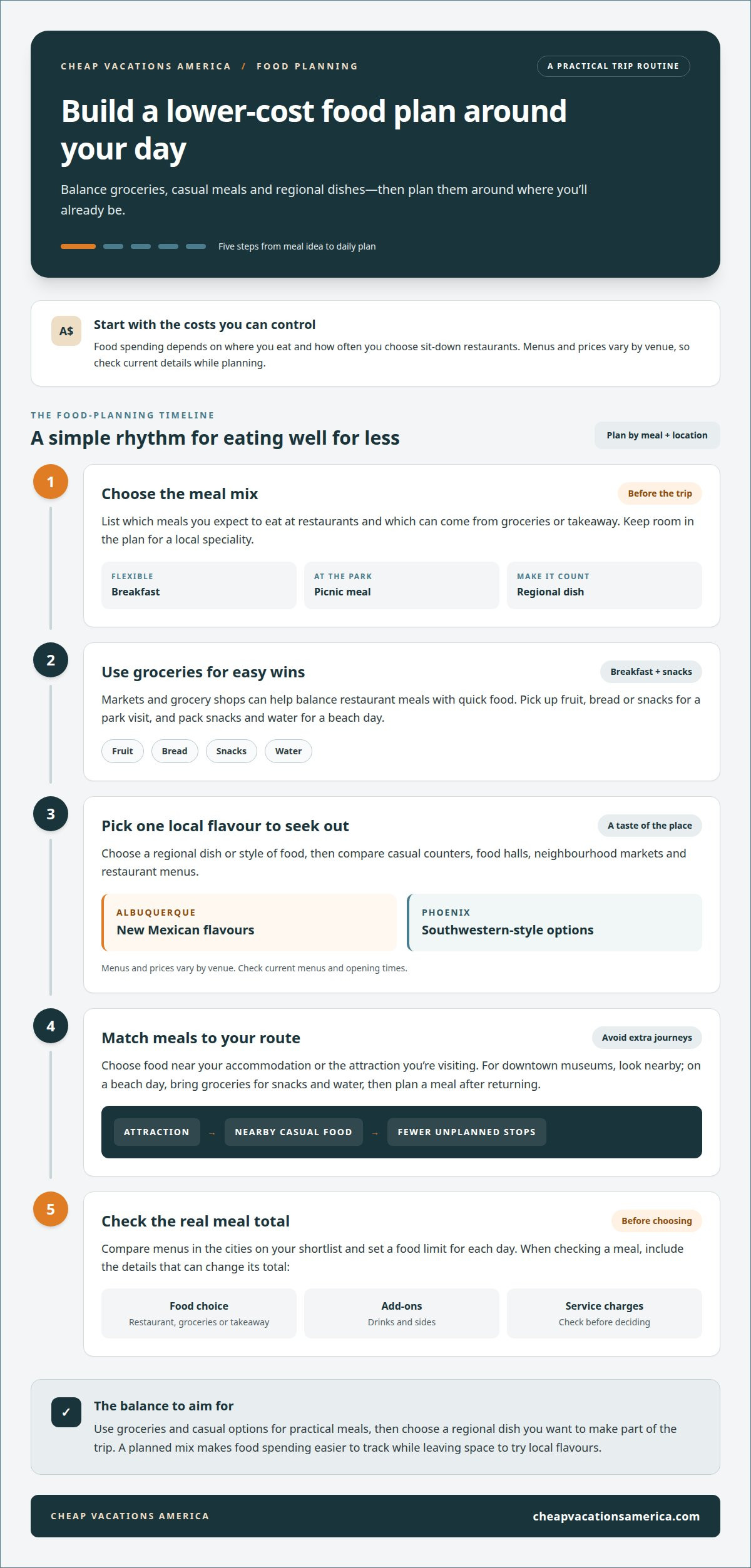
Food spending depends on where you eat and how often you choose sit-down restaurants. In cities such as Phoenix, Macon and Albuquerque, compare casual counters, food halls and neighbourhood markets with restaurant menus. These options can make it easier to try local flavours without planning every meal around a full-service venue. Check menus before choosing, and include drinks, sides and any service charges in your meal budget.
Use a simple routine to save money: make one meal a picnic, keep breakfast flexible and choose a local restaurant for a regional dish. In Albuquerque, for example, seek out New Mexican flavours; in Phoenix, look for Southwestern-style options. Prices and menus vary by venue, so check current menus and opening times when planning each day.
Markets and grocery shops can help families and solo travellers balance restaurant meals with quick food. Buy fruit, bread or snacks for a park visit, then choose a restaurant for a meal you want to make part of the trip. Couples can share a few dishes to sample more local food, where the venue allows it. Keep the plan practical by choosing places near your accommodation or an attraction, avoiding an extra journey.
Plan food around the day’s route. If you’re visiting downtown museums, look for casual dining nearby rather than travelling across town for one meal. On a beach day, pack snacks and water from a grocery shop, then plan a meal after returning to your accommodation. This reduces unplanned stops and makes it easier to track spending across several destinations.
Before travelling, list the meals you expect to eat at restaurants and those you can cover with groceries or takeaway. Compare menus in the cities on your shortlist, then leave room for a local speciality. That balance helps keep food affordable while giving you a taste of each place’s culture.
4. Approximate daily travel budgets
Build a daily travel budget from the costs you’ll actually face: accommodation, meals, local transport and activities. Add flights separately, then divide their total across your trip days to see how much they add per day. This makes it easier to compare destinations such as Phoenix and Macon without mistaking a low room rate for the cheapest overall trip. Track amounts in A$ and convert US prices using the exchange rate available when you plan.
For two adults, one study’s meal assumption included three meals at mid-range restaurants and 12 meals at inexpensive restaurants. Use this as a planning example, not a daily allowance. Your meal total will depend on the mix of restaurants, groceries and takeaway you choose. Set a food limit for each day, then adjust it for a special local meal or a quieter picnic.
Next, list planned activities by day. Separate free options, such as a walk through a historic district, from ticketed attractions and paid tours. Add transport to each activity, especially if your plans include mountains or places outside downtown. Leave a small buffer for costs such as parking, baggage charges or local transit fares. These can change the total even when your main plans stay the same.
For Australian travellers, keep entry documentation and any required authorisation separate from daily spending. Plan for flights, accommodation, food, transport and activities, then account for entry requirements based on your passport and travel circumstances. Keep travel paperwork separate from everyday expenses, but include any related costs in your overall trip plan.
Review the budget each evening. Compare your actual meal and activity spending with your plan, then adjust the next day. If a museum visit costs more than expected, balance it with a free outdoor activity. Explore US destination guides for budget planning to compare places and shape a trip around your spending limit.
Cheap Vacations America: Top US budget friendly cities to visit in the United States
Cheap Vacations America helps you narrow down US destinations with guides to budget-friendly cities and low-budget places. Explore its travel destination guides when weighing what to see, where to stay and how to match a destination to your spending limit.
Use the city recommendations to compare options, then explore best-priced hotels and hostels as you shape your accommodation plan. This is useful when you’ve chosen a region but still need a practical base for nearby attractions, beaches or outdoor activities. The guides support your research, while you choose the trip details that suit your needs.
For a clearer shortlist, compare destinations by the kind of holiday you want, the activities you’ll prioritise and the accommodation style that works for you. Contact Cheap Vacations America to discuss your search for affordable US city destinations and travel guides.
Choose a US trip that fits your spending plan
Your next step is to turn a shortlist into a trip that suits your travel style. Decide what matters most, such as time outdoors, local food or a city base, then match those priorities to your budget. A flexible plan makes budget friendly vacation spots in the us easier to compare without treating every destination as the same kind of holiday.
Cheap Vacations America offers low-budget destinations, guides to affordable US cities and travel destination guides to support your choice. Use these resources when you’re ready to narrow your options and plan around the places and experiences you value. The right destination is one that makes the trip feel manageable from the first planning decision.
Ready to take the next step? Contact Cheap Vacations America to explore your destination options. Start with a clear spending limit, keep your priorities in view and make your next US holiday your own.
Frequently Asked Questions
How can I save money on a United States of America vacation package?
Save by treating flights, accommodation, meals and activities as separate budget lines, then choose a destination and travel dates that fit your total limit. Cheap Vacations America provides destination guides and recommendations, not direct vacation package bookings or airline tickets. Use its city and low-budget destination guides to plan independently, and compare the full itinerary rather than focusing on one advertised part of a trip.
What are the cheapest vacation destinations in the United States?
Concord, North Carolina, had the lowest estimated total among the destinations compared for two adults on a three-night trip from August 7 to 10. Phoenix and Macon, Georgia, were also among the lower-cost examples. These are estimates for specific dates, not a fixed ranking for every season. Compare your own travel dates, accommodation needs and planned activities before choosing.
What is the average daily vacation cost in popular budget-friendly U.S. cities?
There isn’t one daily average that fits every city and traveller. Your daily figure depends on whether you’re travelling solo or sharing accommodation, as well as your choices for meals, transport and activities. For a useful estimate in A$, total your expected trip costs and divide by the number of travel days. Keep airfare separate or spread it across those days for an all-in daily figure.
Which U.S. cities have free or inexpensive attractions and public transportation?
Albuquerque has low-cost options such as the Albuquerque Museum, while the National Hispanic Cultural Center offers free admission for guests aged 16 and under. At Charlotte Motor Speedway, event tickets are free for children aged 12 and under for most events. For public transport, choose accommodation near the attractions on your itinerary and group nearby stops to limit extra journeys.
When is the cheapest time of year to visit budget-friendly U.S. destinations?
There is no single cheapest time of year for every destination. Compare flexible dates, since summer demand, school holidays and major events can affect fares and room rates.