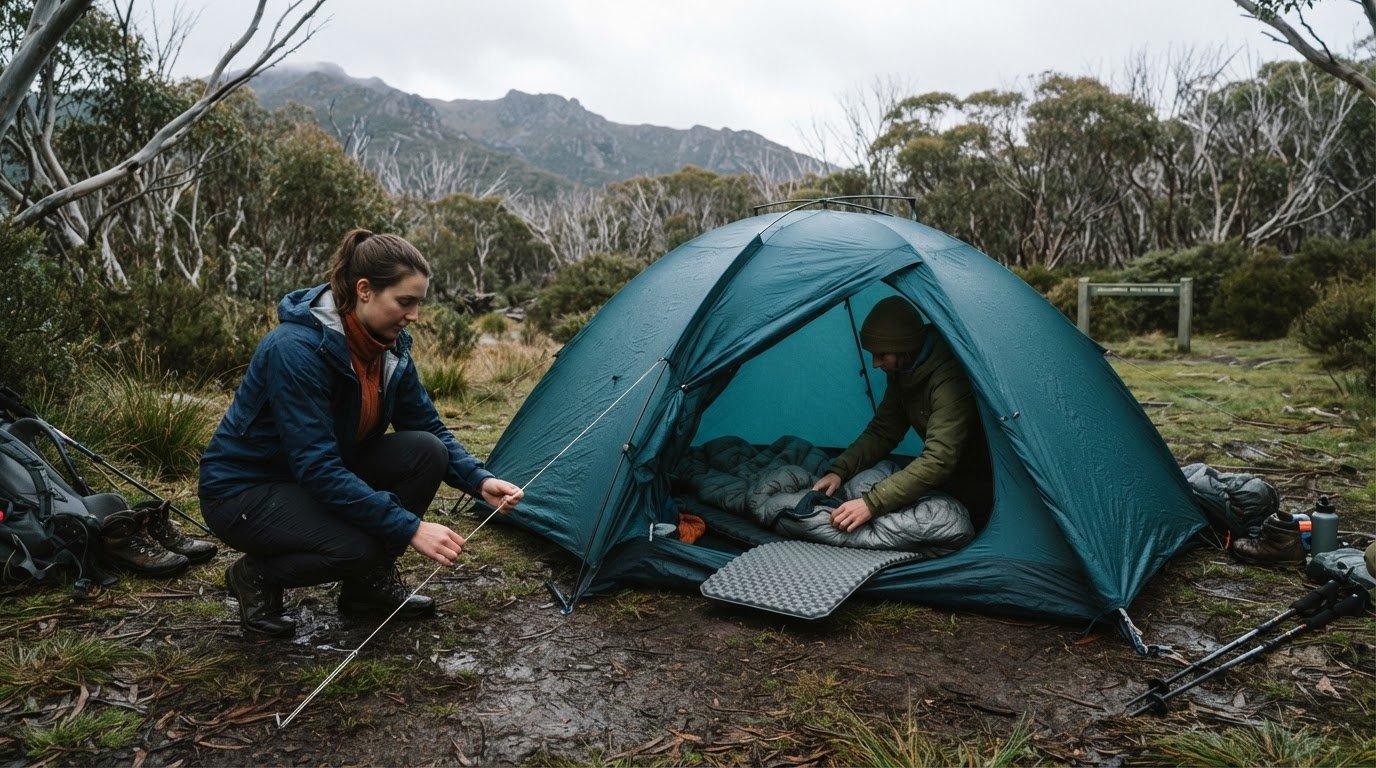
A low-cost backpacking setup can include a simple tent, a suitable quilt or sleeping bag, an insulating sleeping pad, practical clothing and rainwear. The best budget hiking gear is what suits your route, expected weather and pack, not what has the most features.
Getting started can feel like it means buying a complete premium kit. It doesn’t. Focus on the basics and choose each item for the conditions you’ll face. Your shelter and sleep system need to work together, while clothing and rainwear help you stay comfortable when the weather changes.
This guide covers affordable options for tents, quilts, sleeping pads, hiking clothes and rainwear. You’ll learn what each item needs to do, when a simpler choice makes sense and which details to check before packing. Use it to build a practical setup at a pace that suits your budget.
Key Takeaways
- Choose a shelter and sleep system that suit the weather and conditions on your route.
- Build your gear list around essentials first, then add items that fit your needs and budget.
- Weigh tent style and packability against the shelter you need for your trip.
- Plan clothing in layers and pack rainwear that helps you stay comfortable in changing conditions.
1. Backpacking tents, quilts and sleeping pads
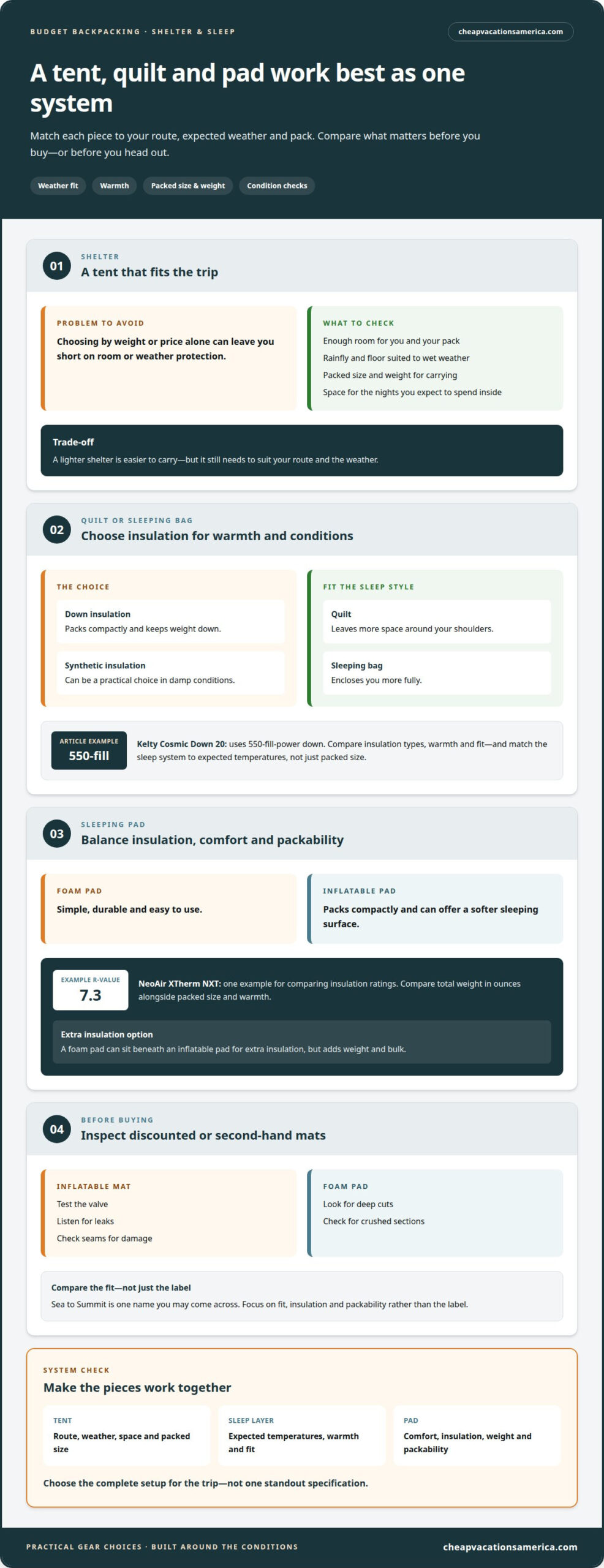
Start with the conditions your shelter and sleep system need to handle. A tent should have enough room for you and your pack, with a rainfly and floor suited to wet weather. Check its packed size and weight, then consider whether it has enough space for the nights you expect to spend inside. A lighter shelter is easier to carry, but it still needs to suit your route and the weather.
Choose a quilt or sleeping bag based on warmth, fit and insulation. Down insulation packs compactly and keeps weight down, while synthetic insulation can be a practical choice in damp conditions. A quilt leaves more space around your shoulders, while a sleeping bag encloses you more fully. The Kelty Cosmic Down 20 uses 550-fill-power down, a concrete example to compare with other insulation types. Match the sleep system to your expected temperatures, not just its packed size.
Your sleeping pad affects both comfort and warmth. Foam pads are simple, durable and easy to use, while inflatable pads pack compactly and can offer a softer sleeping surface. The NeoAir XTherm NXT has an R-value of 7.3, a useful example when comparing insulation ratings. A foam sleeping pad can also sit beneath an inflatable pad for extra insulation, but that adds weight and bulk. Compare the total weight in ounces alongside packed size and warmth.
Discounted sleeping mats can help lower the cost of budget hiking gear, but inspect the whole item before buying. For an inflatable mat, test the valve, listen for leaks and check the seams for damage. For foam, look for deep cuts or crushed sections. Sea to Summit is one name you may come across when comparing mats, but focus on fit, insulation and packability rather than the label. Choose your sleeping bag, pad and tent as a system, and make sure each item suits the trip.
2. A low-cost backpacking gear list
Build your list around the jobs each item must do. Start with a backpack, shelter, sleep system, food, water, cooking gear, clothing and navigation. Add a headlamp and first-aid supplies before optional extras. One listed budget loadout has an 11 lb base weight, showing how a focused list can keep carried gear manageable. Treat that as one example, not a target for every trip.
For cooking, pair a stove with a pot suited to your meals. A canister stove is a straightforward option; an alcohol stove may suit hikers who prefer a different setup. Keep your cook kit simple: a pot, spoon and lighter. Pack food in a secure bottle or container, and plan meals before choosing cookware. An insulated jacket adds warmth during breaks, while a lightweight layer helps you adjust to changes in effort and weather.
Choose a pack by fitting your gear inside, not by its label alone. A daypack suits short walks with food, water and a jacket. Overnight hikes need room for a sleeping system, shelter and extra supplies. Load the pack with what you plan to carry, adjust the straps and check that essentials are easy to reach. For winter outings, allow room for bulkier insulated clothing.
An inflatable backpacking pillow is optional. Use a stuff sack with spare clothing if you prefer to save space, or pack a pillow if better sleeping comfort matters more. Keep small essentials together so they don’t disappear among larger items. A 10,000 mAh charger is another example of a specific item to consider for keeping electronics powered.
For day hikes, carry the food, water, weather protection and safety items your outing calls for. Overnight hikes also need shelter, a sleeping setup, cooking gear and supplies for your time away.
Second-hand gear can be a good buy if it works as intended. Inspect tent seams, pack buckles, zips and stove parts, and avoid damaged equipment that is critical to safety.
Once your kit is sorted, match it to the trip. Explore low-budget destinations to plan an affordable getaway around your gear.
3. Affordable backpacking tents
Match a tent to your trip, sleeping space and pack. A solo shelter can save pack space, while a larger design gives you more room for gear. Check the packed size, setup method and included parts before buying. For Australian travel, consider the expected weather and ground, then choose a shelter suited to those conditions.
A lower-cost tent can meet basic needs if its fabric, seams and floor are in good condition. Check that the zips move smoothly, poles connect securely and rainfly covers the sleeping area. If the tent is discounted, check what’s included, such as pegs and guylines. A bargain is less useful if a missing part makes the shelter difficult to pitch.
Ultralight designs can reduce carried weight, but compare the full setup rather than the tent alone. Some shelters use trekking poles instead of separate tent poles, so account for the gear needed to pitch them. The 3F ultralight Mini Tarp weighs 8.2 oz. It’s a tarp, not an enclosed tent, so weigh its open design against the cover and privacy you want.
Practise pitching a new tent at home before taking it on a trip. Lay out every part, follow the setup order and check that the fabric sits correctly. A headlamp helps in low light, but practising in daylight makes it easier to learn the process. Pack the shelter only when it’s dry.
Compare budget hiking gear tents by weight, packed size, room and weather protection. You may save more by choosing a simple design that suits your trip than by paying for features you won’t use. Keep the tent compact in your pack and make sure its shape works with your sleeping setup. A good fit matters more than a flashy specification.
Zpacks Arc Zip Ultra backpack: capacity 62 litres. Its budget pack list is designed for temperatures in the mid to low 20s in three-season alpine backpacking in the western United States. The author defines an ultralight pack as below 10 lb base weight.
4. Budget hiking clothing and rainwear
Build your hiking clothes in layers so you can adjust your warmth as your pace and conditions change. Start with a comfortable base layer, add insulation, then pack a rain shell for wet or windy weather. For a backcountry walk, this gives you options without relying on one bulky jacket. Choose clothes that let you move freely and feel comfortable outdoors.
A rain shell should fit over your other layers without restricting movement. Check the hood, cuffs and front closure, then reach overhead and bend your arms. This helps you see whether the jacket works for walking and carrying a pack. A waterproof outer layer helps keep rain off your clothing, while an insulating layer provides warmth when you stop near a summit.
Discounted outdoor clothing can stretch your gear budget, but inspect each item before buying. Check the seams, zips, cuffs and fabric for damage. Try it over the layers you plan to wear instead of judging the fit on its own. A cheaper jacket that pulls across the shoulders or leaves your sleeves exposed may be less useful on a long walk.
Match your clothing to the trip, not just the forecast at the starting point. A shaded forest track, an exposed ridge and a slow stop at a lookout can feel very different. Pack a dry layer separately from wet gear, and keep rainwear easy to reach. For example, place your shell near the top of your pack rather than under food and spare clothing.
The Frogg Toggs UL rain suit is listed at 12 ounces, a concrete weight comparison for hikers choosing rainwear. Look at the weight alongside coverage and fit. A rain suit covers both jacket and trousers, while a shell jacket may suit walks where you want separate clothing options. Test your chosen layers with your pack before setting out, and make sure the combination stays comfortable as you move.
Choose the layers that fit your route and pack, then explore low-budget destinations for an outdoors trip that suits your plans.
Cheap Vacations America: Travel gear recommendations
Cheap Vacations America offers travel gear recommendations to help you make practical equipment choices as you plan an affordable trip. Browse the guides when deciding what to pack or looking for a destination that fits your travel budget. Its guides cover low-budget destinations and budget-friendly cities across the United States, helping you plan a trip around the gear you already own.
For a backpacking plan, start with the route and conditions, then use the gear guidance to build a suitable kit. Pair that with destination ideas when you’re still choosing where to go. The information is for planning and recommendations, not direct bookings. If you’d like help finding a useful guide or recommendation, contact Cheap Vacations America.
Put your gear to work on your next trip
Take one small next step: choose a route, check the conditions and prepare your kit for the trip. A short outing lets you learn how your layers feel, how your pack carries and which items you use most. Note what worked when you return. This simple habit can help you make better choices before spending more on budget hiking gear.
Keep your plans flexible. A local walk can help you practise, while a longer getaway may need more planning for travel and overnight gear. Explore Cheap Vacations America’s destination guides for trip ideas and inspiration for where your setup could take you next.
Ready to plan a value-conscious getaway? Get in touch with Cheap Vacations America. Take the next step, then enjoy getting outdoors with a setup that suits your plans.