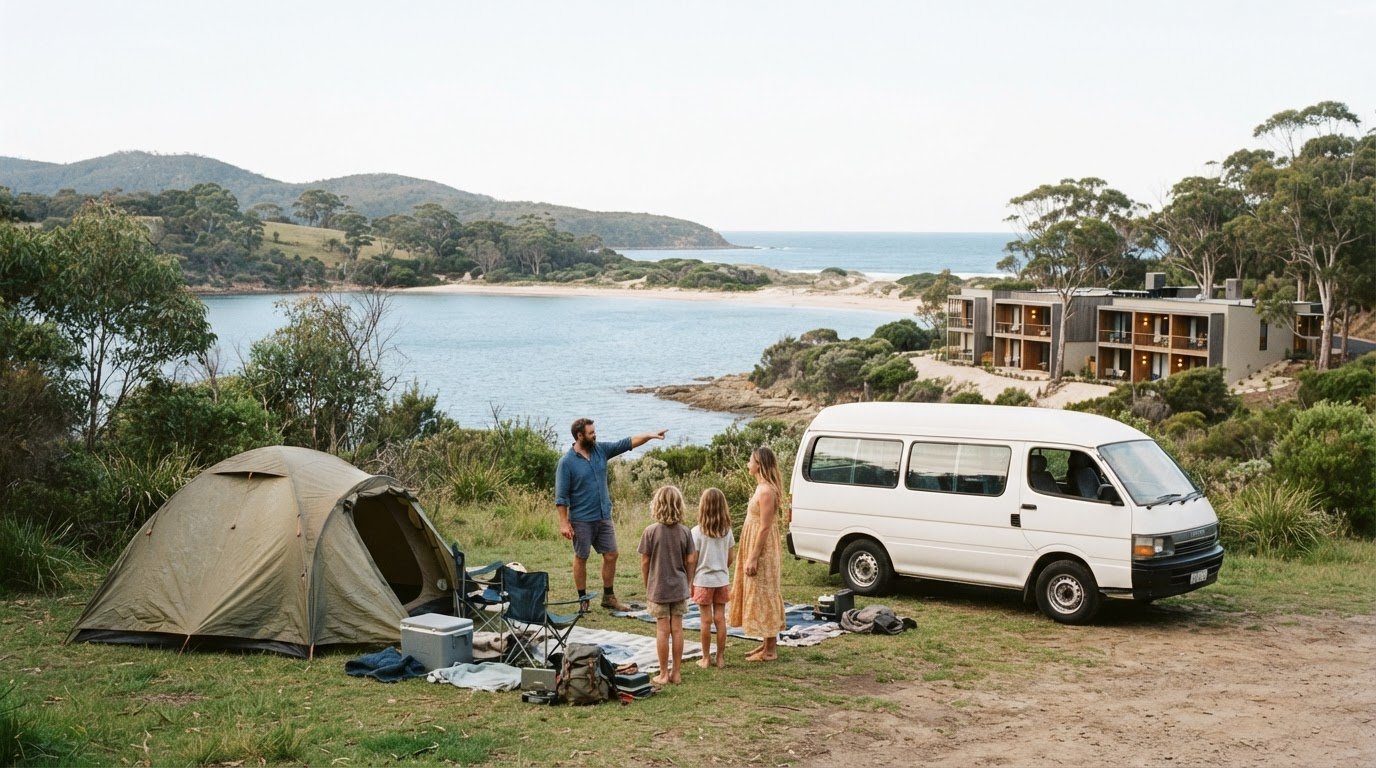
Camping can cost less per night than a hotel, but it won’t always make the whole trip cheaper. Camping instead of hotels in the USA can reduce accommodation costs, while gear, transport and meals still shape your budget. The better-value choice depends on how you travel and what you need from your stay.
Look beyond the room rate. A campsite may offer outdoor facilities and access to activities, while a hotel provides a ready-made place to sleep and wash. Each option has trade-offs, especially on longer trips or when you’re travelling with a group.
This guide compares campsite costs, facilities, activities and accommodation types with a hotel stay. You’ll see what can add to the total, when camping may suit your plans and when a hotel may be more practical. Use the comparison to choose a stay that fits your budget and the trip you want.
Key Takeaways
- Compare campsite amenities with the hotel comforts you rely on, such as showers, toilets and ready-made beds.
- Match your stay to the activities you want, while accounting for access, local restrictions and time outdoors.
- Look beyond the nightly rate: gear, food and transport can change which option gives your trip better value.
- Compare tents, RV sites and other campsite accommodation with hotel rooms to find a setup that fits your group.
Campsite facilities, services and entertainment
A campsite may offer basic washing facilities or a fuller holiday setup. Compare what’s on site with the comfort and convenience you expect from a hotel.
Campsite Amenities and Services
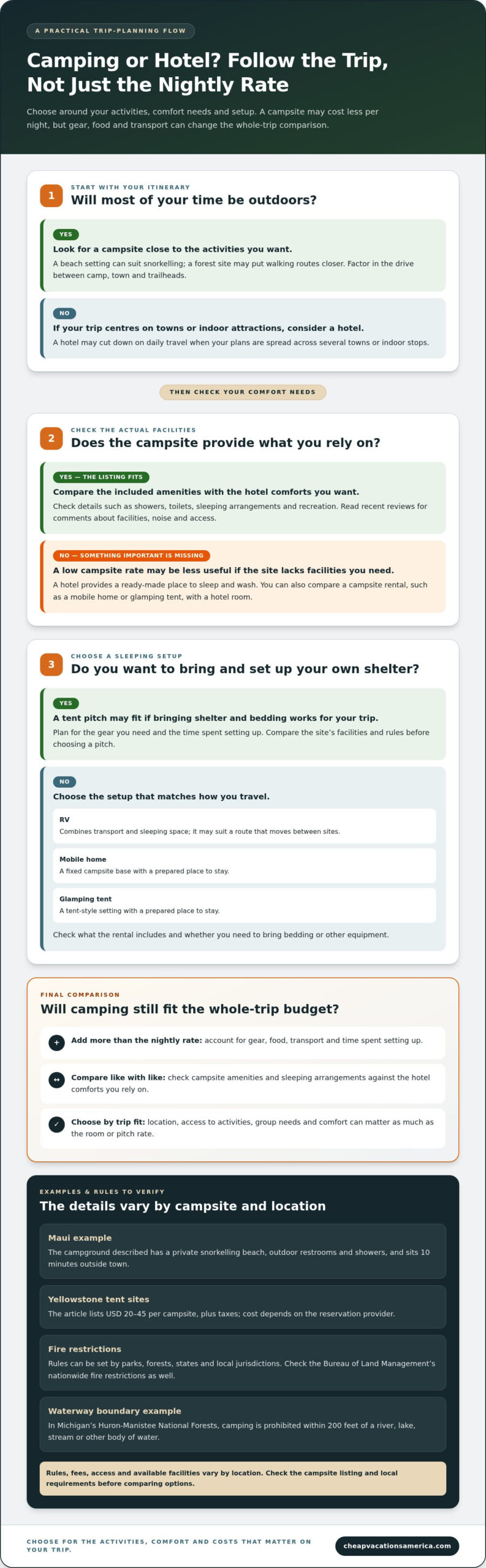
Campsite amenities include facilities and activities such as toilets, showers and recreation. They matter because a low nightly rate may be less useful if the site lacks facilities you need. One Maui campsite, for example, had a private snorkelling beach, outdoor restrooms and showers. Compare the details with your plans: beach access may add value, while reliable showers may matter more after a long day outdoors.
Accommodation Types and Capacity
Camping accommodation ranges from a tent pitch to a cabin, mobile home or glamping tent. The right type depends on your group, gear and comfort needs. Campsites may offer options for groups of two, four, six or eight, with stays of two or three nights at some sites. Check the sleeping arrangements and included facilities before comparing a rental with a hotel room.
Choose a developed campground for on-site facilities, a national park campsite to stay close to park attractions, or dispersed camping for a more basic outdoor experience. Each option affects access to services and activities, as well as the rules you’ll need to follow.
On US public lands, rules and fees vary by location and campsite. Yellowstone tent sites cost USD 20-45 per campsite, plus taxes, depending on the reservation provider. Campers should account for fire restrictions set by parks, forests, states and local jurisdictions, as well as nationwide restrictions from the Bureau of Land Management.
Families, solo travellers and beginners can all camp, but the practical fit depends on the facilities, sleeping setup and activities available. Before booking, read recent campsite reviews for comments about showers, toilets, noise and access. Then compare the listing with your group’s needs and the hotel alternative.
Nature and outdoor activities
Camping puts you close to trails, water and open spaces, so outdoor activities can shape your whole stay. Choose a site based on what you want to do, then factor in the drive between camp, town and trailheads.
For example, the Maui campground described sits 10 minutes outside town, with a private snorkelling beach. One traveller also reported finding wild camping or rural campgrounds within 30-40 minutes of many places in North America. That can make camping practical for day trips, but location still affects travel time and access to services.
Follow the campground’s wildlife and weather guidance to camp safely. Secure food and scented items as directed, and prepare for changing conditions with suitable clothing and shelter. These precautions matter when you’re sleeping outdoors rather than in a hotel.
Fire rules can affect campfires and cooking plans. Check the Bureau of Land Management’s nationwide fire restrictions, as well as restrictions set by parks, forests, states and local jurisdictions. Rules can vary by location, so requirements at one campground may not apply at another.
Water access also comes with site-specific limits. In Michigan’s Huron-Manistee National Forests, camping is prohibited within 200 feet of a river, lake, stream or other body of water. Follow posted boundaries and choose a permitted pitch before setting up. This keeps your campsite within local rules and helps protect the area around waterways.
Match the campsite to your planned activities. A beach setting suits snorkelling, while a forest site may put walking routes closer at hand. If your trip centres on several towns or indoor attractions, a hotel may cut down on daily travel. Choose based on where you’ll spend your time, not just where you’ll sleep.
Accommodation options, including mobile homes and glamping tents
A campsite stay might mean pitching your own tent, parking an RV or renting a ready-made unit. Mobile homes and glamping tents offer alternatives if you want a campsite setting without sleeping in a basic tent. Each option affects how much gear you bring, how you travel and what kind of sleeping space suits your group.
With a tent, you bring your shelter and bedding, then set up at the campsite. An RV combines transport and sleeping space, while a rented mobile home provides a fixed base. Glamping tents offer a middle ground: a tent-style setting with a prepared place to stay. Compare each setup with your route, luggage and comfort needs.
Some campsites offer rentals for one, two or three weeks. A longer rental can suit a stay based at one site, while a tent or RV may work better for a trip with several stops. Consider how long you want to stay in one place and how much flexibility you need. A week near a park, for example, calls for a different plan from a road trip with frequent overnight stops.
Read the accommodation listing as carefully as the campsite details. Check the sleeping arrangements, what the rental includes, and whether you need to bring bedding or other equipment. Some campsites replace caravans with new luxury houses every few years, so rental options can change over time. Compare each unit’s description with your group’s needs instead of assuming every campsite offers the same setup.
Start with your travel style. Choose a tent if carrying and setting up your own gear suits the trip. Consider an RV if you want to move between sites with your sleeping space. A mobile home or glamping tent may suit you if you prefer a prepared campsite rental.
Camping compared with hotel stays
Camping instead of hotels in the USA can lower accommodation costs, but the nightly rate isn’t the full trip budget. That gap can leave more room for activities, but camping also means planning for equipment, meals and daily comfort.
Camping can bring practical costs that hotels usually avoid. Add the gear you need, the food you prepare and the time spent setting up. A hotel provides a ready-made room, while camping requires you to bring or rent more of your sleeping setup.
Food can shift the comparison, especially on longer stays. Hotel food costs may be manageable for a one- or two-day visit but can add up over a one- or two-week trip. Camping gives you more control over meals, though you’ll need suitable food storage and cooking equipment. Compare the whole budget, not just the room or campsite rate.
Trip length and route matter too. Hotel stays of four or five nights can be expensive, and stays longer than three or four nights can add up if extra costs aren’t managed. But a traveller covering 7,200 miles across several cities in 15 days said a hotel would probably be more efficient than a camper. Frequent moves can make campsite setup and driving less practical.
For camping, pack a shelter or sleeping arrangement, bedding, weather-appropriate clothing, lighting, food, water and cooking gear. The exact kit depends on your accommodation and planned activities. A tent trip needs different gear from an RV stay. Compare US camping and RV facilities with hotel options, then weigh comfort, route and total trip costs before choosing.
Cheap Vacations America: Low budget destinations
Cheap Vacations America helps you compare low-budget US destinations when choosing between a campsite and a hotel. Its travel destination guides cover budget-friendly US cities, camping and RV facilities, hotels and hostels. Use them to weigh the type of stay that suits your route, comfort needs and travel style.
Still deciding where to go? Start with a destination guide. If you’ve chosen a place, compare its accommodation options before settling on a campsite or hotel. This gives you a clearer picture of the choices as you plan your trip from Australia.
Explore Cheap Vacations America’s travel guides at cheapvacationsamerica.com.
Make your next US trip fit your budget
Choose a stay around the trip you want, not a fixed idea of what a holiday should look like. When considering camping instead of hotels in the USA, weigh outdoor time, comfort, transport and the gear you’ll carry. A mixed itinerary can work too: camp during nature-focused stretches and choose a hotel when a town stop makes that more practical.
Explore low-budget destinations, budget-friendly US cities and travel destination guides with Cheap Vacations America. Use the ideas to narrow down your destination, then compare the stays that make sense for your route. A clear plan helps you focus your travel budget on the parts of the trip that matter most to you.
Ready to shape your next trip? Explore budget-friendly US travel ideas and start planning a stay that fits your style.
Frequently Asked Questions
Camping instead of a hotel?
Choose camping instead of hotels in the USA when outdoor time and a flexible, lower-cost stay matter more than a ready-made room. A hotel may suit a short stop, a packed city itinerary or a trip with little room for camping gear. Compare the whole plan: travel between activities, meals and setup time can matter as much as the overnight rate.
What about accommodation?
Camping accommodation ranges from a tent pitch or RV site to a rented mobile home or glamping tent. Your choice affects what you need to pack and how easily you can move between destinations. On a road trip with frequent stops, consider whether carrying tent gear is practical. For a fixed base, compare rental sleeping arrangements and included items with your group’s needs.
How much does camping cost compared with hotels in the USA?
Camping can cost less per night, but there’s no single rate for either option. Yellowstone tent campsites cost USD 20-45 per campsite, plus taxes, depending on the reservation provider. Treat these as specific examples, not a nationwide average, and include gear, food and transport in your budget.
How do I find and book campsites in the United States?
Start with your destination and accommodation type, then look for campgrounds near the places on your route. Compare site descriptions, dates, sleeping arrangements and listed facilities before choosing. Follow the booking instructions for the specific campground and keep the confirmation details with your travel plans. If you’re visiting several areas, map out each overnight stop before settling on your route.
Which U.S. national parks require campsite reservations or permits?
Reservation and permit requirements depend on the park, campground and activity, so no single rule covers every national park. Check the specific park’s official information for your campsite and planned activities. Plan campsite reservations separately from activity permits: arranging a place to sleep may not cover access to a particular activity.
What facilities do U.S. campgrounds offer, such as showers, toilets, and electricity?
Facilities vary by campground and site type. A listing may describe toilets, showers, power access or other amenities, but don’t assume every campsite offers the same setup. Match the listed facilities to your equipment: power matters if your gear needs an electrical connection, for example. Also check whether facilities are shared or included in a rental unit.