A low-cost US trip doesn’t need to depend on paid attractions. Cheap things to do in America include free public spaces, museums with free admission and outdoor spots you can explore at your own pace. Most Smithsonian museums and the Smithsonian National Zoo in Washington, D.C., offer free admission year-round.
It’s easy to see why you’d want clear options before planning a trip across the United States. This guide brings together free and discounted admission, affordable museums and historic sites, and outdoor ideas, with state and territory destination guides to help you shape a budget-friendly visit. Find options by the kind of day you want, then use the destination guides to narrow down where to go.
Key Takeaways
- Plan museum visits around free admission and discounted-entry options to keep more room in your budget.
- Use parks, scenic routes and hiking trails to build low-cost days outdoors.
- Pair free memorials and historic sites with nearby attractions for a fuller day of exploring.
- Use state and territory guides to compare destinations and find budget-friendly places that fit your travel plans.
1. Free and discounted museum, aquarium and zoo admission
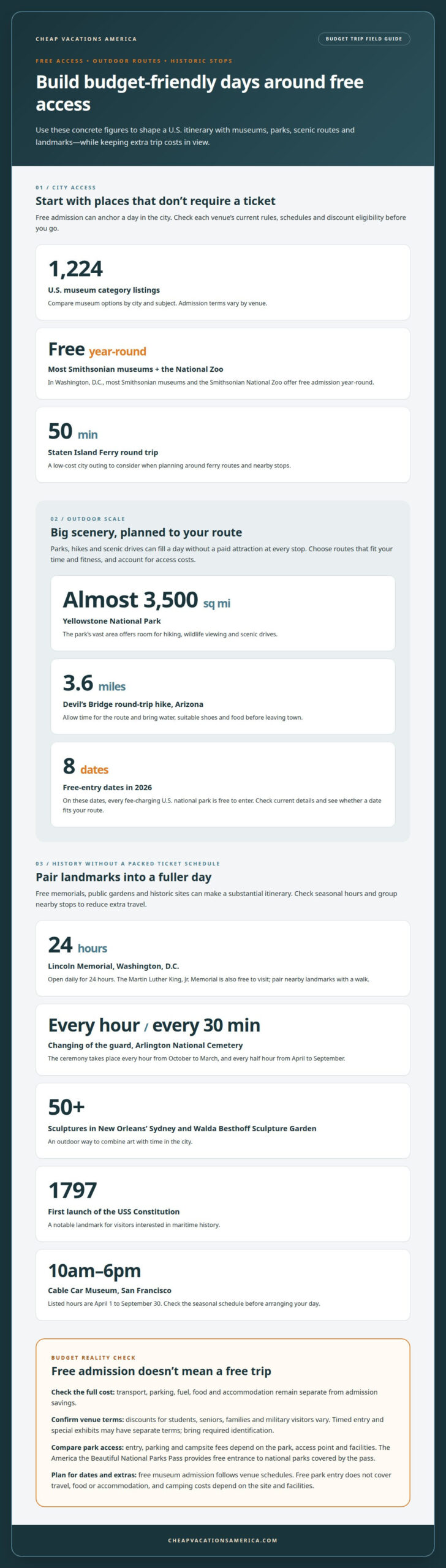
In Washington, D.C., most Smithsonian museums and the Smithsonian National Zoo offer free admission year round. That gives budget-conscious visitors a clear starting point. U.S. museum category listings include 1,224 museums, so compare options by city and subject. The Staten Island Ferry’s round trip takes 50 minutes. For low-cost city activities, start with free admission; other venues set their own ticket costs.
Student, senior, family and military discounts vary by venue. Check each attraction’s admission page for eligibility details and bring any required identification. Family tickets, timed entry and special exhibits may have separate terms. Compare the total cost before choosing, including transport and parking.
Museum free-admission dates follow venue schedules, so check the calendar before planning around one. Some national parks may offer free admission on selected days, so check current details before planning a visit. Use those dates to plan a park visit, but account for travel, food and optional activities separately. Admission savings don’t cover those extras.
Free public transport and ferry services depend on the city and route. Check local network maps for free shuttles, then plan nearby attractions around their stops. In San Francisco, combine a waterfront walk with a museum visit; in Los Angeles, look for public parks near your chosen sights. These steps can help you enjoy popular attractions without paying for a separate activity at every stop.
For affordable music, check library calendars and public park event listings for free performances. For exercise, choose a city park, walking path or public beach, and bring water and suitable shoes. A scenic outdoor route can fill a morning without an entry ticket. Before settling on a city-day plan, compare admission rules, discount eligibility and transport options.
2. State parks, scenic drives and hiking trails
Outdoor days can make a United States road trip more budget-friendly. Yellowstone National Park covers almost 3,500 square miles, with space for hiking, wildlife viewing and scenic drives. In Arizona, Devil’s Bridge offers a 3.6-mile round-trip hike. Choose trails that match your fitness and allow time for the route. Pack water, suitable shoes and food before leaving town.
Hiking, beaches and scenic drives may cost little beyond transport, but park visits and camping can involve entry, parking or campsite fees. Costs depend on the specific park, access point and facilities. The America the Beautiful National Parks Pass can provide free entrance to national parks covered by the pass. Compare its coverage with your planned destinations before buying, and include fuel in your road-trip budget.
In 2026, there are eight dates when every fee-charging U.S. national park is free to enter. Plan around one of those dates for a lower-cost park visit. Free entry doesn’t remove travel, food or accommodation costs, so choose sights near your route. Camping costs depend on the site and the facilities you need. Look for a basic campsite if you can manage without extra services.
Colorado combines outdoor recreation with paid excursions. At Garden of the Gods in Colorado Springs, visitors can enjoy the scenery on foot. Sightseeing jeep tours offer another option, but add a separate activity cost. Decide whether a guided ride fits your plans before booking. A Hollywood stop can also be part of a wider trip rather than the whole itinerary.
In Iowa, build a day around state parks, local landmarks and a scenic drive between them. Save on attractions by grouping nearby sights and comparing tour inclusions before booking. Choose dates with free park entry when they fit your route. This simple plan leaves more room for a trail, picnic or extra stop.
3. Museums and historic sites with low admission costs
Free memorials make Washington, D.C., a strong stop for history on a budget. The Martin Luther King, Jr. Memorial is free to visit, and the Lincoln Memorial is open daily for 24 hours. Pair both landmarks with a walk between nearby sites. You can spend time exploring without buying museum admission or booking a guided tour.
Arlington National Cemetery adds a historic ceremony to a visit. The changing-of-the-guard ceremony takes place every hour from October to March and every half hour from April to September. Plan around the ceremony, then allow time to walk through the cemetery. It’s a meaningful itinerary without the need for several paid attractions.
For architecture and city history, consider San Francisco’s Cable Car Museum. It’s open from 10am to 6pm from April 1 to September 30. Check the museum’s seasonal schedule before arranging your day. In New Orleans, the Sydney and Walda Besthoff Sculpture Garden features more than 50 sculptures. Walk through the garden to combine outdoor time with art and historic surroundings.
Some historic places are memorable even without a full museum visit. The USS Constitution was first launched in 1797, making it a notable landmark for visitors interested in maritime history. In New Orleans, the sculpture garden offers another way to see art without focusing your day on indoor exhibits. Compare each site’s admission details and opening hours, then group nearby landmarks to reduce extra travel and spending.
For a guided experience, weigh the added context against the tour’s separate cost. A self-guided walk through a memorial or historic district may suit travellers who prefer setting their own pace. Use a city map to connect museums, architecture and public landmarks along one route. This helps turn individual historic sites into a fuller day of discovery.
4. State and territory destination guides
A state-by-state plan can turn a large trip into manageable days. Pick one base, then group nearby outdoor stops, town centres and free public spaces. California offers different travel styles across its coast, cities and inland routes. Choose places that suit your pace and map the drive before adding extra stops. For cheap things to do in America, a focused route can help make each day count.
For a desert adventure, use Las Vegas as a base for nearby sights. Seven Magic Mountains is 20 minutes outside Las Vegas, Nevada. Pair the installation with other nearby stops instead of building a day around one photo visit. A destination guide can help compare driving time, meal stops and outdoor options. This makes it easier to plan the route around what you want to see.
On Florida’s Gulf Coast, Beer Can Island, also called Greer Island, has free parking in Longboat Key. Make it one stop in a coastal itinerary, then plan the rest of the day around nearby public places. Island access and transport affect the overall cost, so map the route before setting out. For another outdoor option, leave time to walk and enjoy the coastline.
In Honolulu, the Hawaii State Art Museum extends its opening hours until 9pm on the first Friday of each month. Time your visit around that late opening, then plan a nearby walk. In Manhattan, a self-guided walking tour can connect landmarks and neighbourhood streets at your own pace. These examples show how cheap things to do in America can fit different interests and destinations.
Compare transport, distances, opening times and free options before choosing a base. Add a Martin Luther King Jr. site, a California beach or a Florida island only when it fits your route. Explore state and territory travel guides to shape a trip around the places you want to discover.
Cheap Vacations America: Low budget destinations
Cheap Vacations America helps you turn attraction ideas into a practical, budget-minded US trip. Use its destination guides to compare low-budget destinations and choose places that match your interests. If you’re deciding where to stay, explore guides to budget-friendly US cities. They can help you weigh city activities against outdoor stops and plan around the experiences you value.
Once you’ve chosen a destination, browse recommendations for well-priced hotels and hostels as part of your trip planning. These guides can help you narrow down where to go, but they aren’t a ready-made itinerary or booking service. Match the destination to your budget priorities, then build your own plan around free sights, museums and outdoor activities.
Visit Cheap Vacations America to explore budget destination guides.
Choose a destination, then shape the trip around it
Turn your shortlist into a route before planning each day. Pick the place you most want to visit, then group nearby stops so travel time doesn’t take over. Leave room for a slower morning, a change in weather or an unexpected local find. A flexible budget plan is easier to adjust without rebuilding the whole trip.
For cheap things to do in America, start with the experience you care about most, then balance it with simple options nearby. Pair a museum visit with a neighbourhood walk or add a picnic stop to a scenic drive. Set a spending limit for paid activities, while leaving room for the practical costs of getting around.
If you’re still choosing where to go, Cheap Vacations America can help you explore possible destinations and cities. Contact Cheap Vacations America to take the next step. Pick a place that fits your plans, and make the trip your own.
Frequently Asked Questions
Want full budget travel guides?
Cheap Vacations America offers destination guides focused on low-budget cities and attractions across the United States. Use them to compare places before choosing a base, then shape your own itinerary around the activities and travel style that suit you. The guides support independent planning; they don’t provide packaged trips or make reservations.
What are the best free things to do in the United States?
Good free options include self-guided neighbourhood walks, public art, waterfront paths, library exhibitions and community events. Choose a compact area and pair nearby stops to avoid spending time and money crossing town. For example, combine an outdoor art route with a library visit. Check opening schedules and event listings before planning your day.
Which U.S. national parks offer free or low-cost entry, and what are the current entrance fees?
National park entrance fees vary by park, so there’s no single nationwide rate. The cost depends on the park and its entry options; camping or paid activities can add to your budget. Compare the park’s current entrance information with your travel dates and access plans to estimate costs for the specific parks on your itinerary.
How can visitors find free walking tours, festivals, concerts, and community events across America?
Check city event calendars, public library listings, park department schedules and neighbourhood notices. Filter by your travel dates and where you’re staying. For walking tours, look for self-guided routes from local tourism offices or libraries. Check event details for booking requirements, rain plans and suggested donations, then set a spending limit for food and extras.
What are the cheapest ways to travel between U.S. cities for sightseeing?
Compare intercity bus, train and shared-ride options for the same dates. Add baggage charges, station transfers and local transport to each fare, since a cheaper ticket may involve a costly transfer. Flexible travel days can give you more options. If you’re travelling with others, compare shared vehicle costs, including fuel and parking, with the cost of separate tickets before choosing a route.