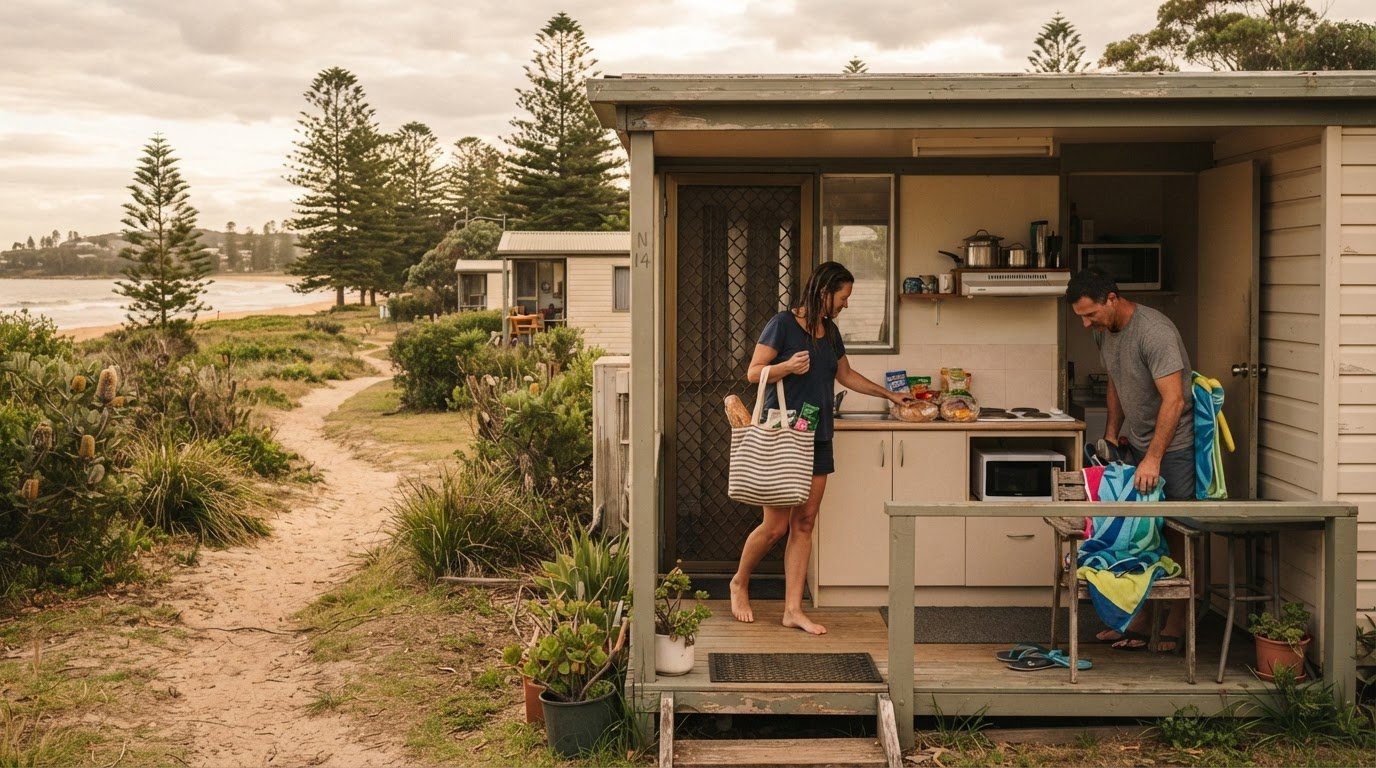
The nearest beach isn’t always the best-value choice. Whether you are planning a coastal getaway just 90 minutes from a major hub or venturing further afield, the right trip depends on more than distance: your stay, activities and travel plans all shape the fit.
Start by weighing up the accommodation. A beachfront room can suit a short break, while a self-contained stay may work better if you want space to cook and unwind. Then consider what’s nearby, from relaxed beach time to walks and local attractions.
Here at Cheap Vacations America, this guide explains how to compare coastal areas, beachside accommodation and activities against your budget. It also helps you look beyond the nightly rate to the full trip cost and choose a stay that suits your group and travel style. Set your budget first, then match the location and accommodation to the kind of break you want.
Key Takeaways
- Compare beachfront stays, cabins and self-contained accommodation by the space and setup your group needs.
- Choose activities that fit your plans, from coastal walks to local heritage and nature trails.
- Look beyond the nightly rate and weigh accommodation, travel and planned activities together.
- For a short break, match your destination to the time you have and the kind of weekend you want.
Beachside accommodation
Port Victoria gives holidaymakers a coastal base on South Australia’s Yorke Peninsula. Coastal Getaway in Port Victoria has 2 bathrooms, a useful detail when comparing holiday homes for a group. Check each listing for its exact beach access, sleeping setup and kitchen facilities. The Port Victoria Geology Trail runs 4km from south of the jetty to Rifle Butts Beach, adding a named local outing to consider when choosing where to stay.
Beach houses, seaside villas and holiday parks suit different kinds of trips. A house can give a group shared living space, while a villa may offer a smaller, self-contained setup. Holiday parks bring different accommodation types together in one location. Compare space, bathrooms, cooking facilities and distance to the beach rather than relying on the property label. These details help you choose a beachside stay that fits your group’s plans.
Capacity can guide your shortlist. Avoca Sea Breeze in Avoca Beach sleeps 12 guests, while Pebbly Beach shacks in Murramarang National Park sleep 6 people. Montague Island Head Lighthouse Keeper’s Cottage on Barunguba Montague Island has 5 bedrooms and sleeps 10 people. These examples show why guest limits and bedroom counts matter when comparing larger holiday homes with more compact stays.
Wardang Island adds a heritage option near Port Victoria. The Wardang Island Maritime Heritage Trail features 8 shipwrecks in the nearby waters off Wardang Island, according to Yorke Peninsula Council. Its 6 land-based interpretative signs offer visitors who are not divers a way to explore the trail. Factor nearby activities into your choice of accommodation, especially if your group wants more than beach time.
If coastal seafood and beachside dining are priorities, compare nearby meal options with the accommodation’s facilities. A kitchen makes self-catering easier, while nearby restaurants may suit a shorter break. For a retreat with a pool or spa, check the property details and weigh those amenities against location and space. Boutique stays and holiday parks offer different experiences, so focus on the features that matter most to you.
Activities on coastal getaways
Build a weekend around a few activities, rather than filling every hour. In Port Victoria, the Port Victoria Geology Trail runs 4km from south of the jetty to Rifle Butts Beach. Use the route as a planned walk, then leave time for the shoreline. A named trail gives your day a clear destination without needing a paid tour.
Wardang Island offers another way to explore local maritime history. The Wardang Island Maritime Heritage Trail has land-based interpretative signs, so visitors can engage with the island’s heritage without diving. Pair a stop at the trail with a beach visit, or make it the focus of a slower-paced day.
Choose activities based on location and energy levels. Begin with a walk or beach visit near your accommodation, then add another outing if the travel time works. For a relaxed break, plan one main activity each day. If you’re after a more active escape, combine a walk with time by the water. A flexible schedule leaves room for breaks and changing weather.
Before setting out, plan the practical details. Check the route’s starting point, how you’ll get there and what facilities are nearby. For a trail, consider whether everyone in your group can manage the distance and terrain. For water-based activities, think about the equipment you need and whether the activity suits your group’s experience. This helps you balance comfort with your plans for the day.
Make the activity fit the stay, not the other way around. A Port Victoria visit can centre on the geology trail and nearby beach time. Wardang Island suits travellers interested in maritime heritage. If you’re also weighing up a trip beyond Australia, explore budget-friendly US city guides for a different kind of break. Choose a destination where the activities match your time, interests and budget.
Choosing a coastal getaway by budget
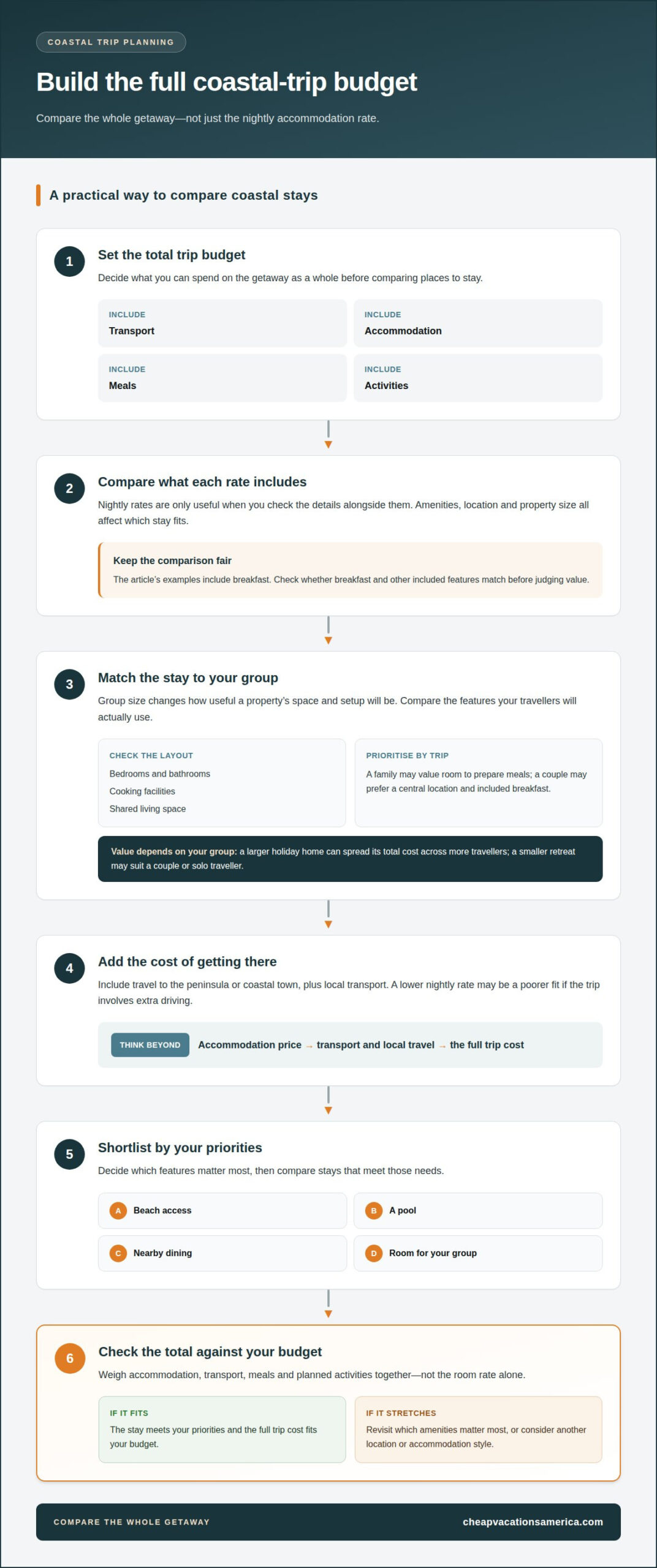
Set your total trip budget, then divide it among transport, accommodation, meals and activities. These examples include breakfast, but compare the same details before judging value.
Then compare nightly rates with what each stay includes. Treat these as different options, not like-for-like comparisons. Amenities, location and property size all affect which stay suits your group.
Group size affects the value calculation. A larger holiday home can spread its total cost across more travellers, while a smaller retreat may suit a couple or solo traveller. Compare bedrooms, bathrooms, cooking facilities and shared space. A family, for example, may value room to prepare meals, while a couple may prefer a central location and included breakfast. Prioritise useful amenities over extras your group won’t use.
Include the cost of getting to the peninsula or coastal town, as well as local transport. A lower nightly rate may not be the best fit if the trip involves extra driving. Set your priorities first, whether that’s beach access, a pool, nearby dining or room for your group. Then shortlist stays that meet those needs and compare the full trip cost, not just the accommodation rate. This gives you a clearer basis for choosing a coastal break that fits your budget.
Consider how this option fits your overall trip budget alongside transport, meals and activities, rather than judging it by the accommodation price alone. Decide whether its beachfront setting matches your priorities, then compare the full cost and included features with other stays your group is considering. If the total stretches your budget, revisit which amenities matter most and whether another location or accommodation style would suit the trip better.
Weekend coastal trips
For an easy weekend from Sydney, the Central Coast is 90 minutes north. The Entrance is 100 km north of Sydney, giving you a specific destination to plan around. Choose one base, then group nearby beach time, meals and activities into a simple itinerary. Less driving between stops leaves more of your short break for the coast.
Port Victoria is approximately 2 hours from Adelaide, making it another option for a weekend away. Set out with a clear plan for your arrival day and your full day there. A single main activity can anchor the itinerary, with time left for meals and a slower start. This approach works well when travelling time takes a share of your available break.
Match the accommodation to your group before choosing the destination. Pretty Beach cabins in Murramarang National Park have 2 bedrooms and sleep 4 people. Yellow Rock Beach House in the same park sleeps 5 people. Myer House in Mimosa Rocks National Park has 4 bedrooms and sleeps 10 people. Compare guest capacity and bedroom count to find a practical fit for your group.
Smaller groups can consider Telegraph Station bunkhouse in Beowa National Park, with 1 bedroom and space for 3 people. For a bigger group, Myer House’s capacity may make shared accommodation a better fit. Check how each option suits your sleeping arrangements, then choose activities close to your base. A short trip benefits from a plan that avoids unnecessary backtracking.
Use the overnight stay as a budget check, too. It’s a distinct option from a drive-to weekend, so compare the destination and included meal when weighing trip costs. If you’re planning a longer break beyond Australia, explore budget-friendly US city guides for destination ideas.
Cheap Vacations America
Cheap Vacations America helps you plan with budget and fit in mind. Its destination guides cover low-budget destinations and US cities with budget-friendly options. Use them when you’re considering a different kind of trip or looking for ideas beyond an Australian coastal break. Guides to budget-friendly hotels and hostels can also help you compare accommodation as you plan.
Start with the destination and the kind of stay you want. Then use the guides to narrow your options to suit your budget and travel style. They offer ideas for planning and comparison, so you can shape a trip that works for you.
For help finding a budget-friendly destination, contact Cheap Vacations America.
Plan your next coastal break
Give your next escape a clear starting point: choose the experience you want, then let it guide your choice of destination and stay. A simple priority, such as quiet beach time or exploring somewhere new, can make decisions easier and keep your plans on budget.
When you’re ready to explore beyond Australia, Cheap Vacations America offers low-budget destination ideas, travel guides and suggestions for budget-friendly US cities. Use these resources to compare destinations and find options that suit your travel style. The same practical approach works for coastal getaways and trips further afield: start with what matters most, then build your plans around it.
Contact Cheap Vacations America to explore your next destination. Take the next step at your own pace, and make your next break one that feels right for you.
Frequently Asked Questions
Looking for a different kind of escape?
Try changing the pace or setting instead of repeating the same beach break. Swap a packed itinerary for a quiet stay, or plan a trip around walking, local food or heritage stops. If you’re considering a different destination, use a travel guide to compare activities and accommodation styles before deciding. A clear priority makes it easier to find an escape that feels fresh.
What should I pack for a coastal getaway?
Pack for time in and out of the water: swimwear, a towel, comfortable walking shoes and a change of clothes. Bring sun protection, a light layer for cooler conditions and a reusable water bottle. If you’re exploring a trail, take a small day bag for essentials. A dry bag can help keep your phone and spare clothes separate from wet beach gear.