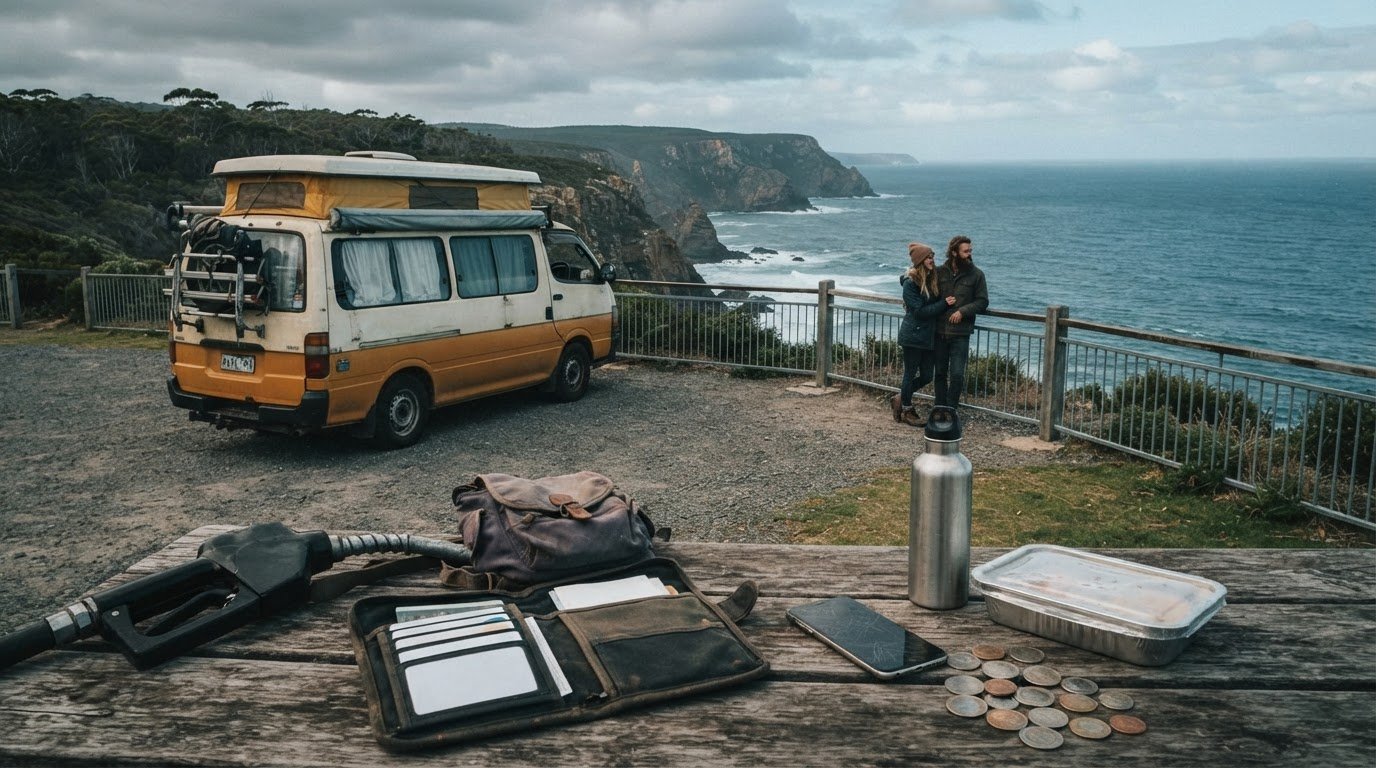
The cheapest fare can be the most misleading number in your trip budget. The hidden costs of budget travel often appear after you book, from baggage add-ons and accommodation taxes to meals, local transport and card fees. Small daily purchases can add up, especially when you’re travelling from Australia and paying in another currency.
A low headline price can still lead to an affordable trip, but only if you compare the likely total. This guide shows you how to spot extra expenses before booking, estimate everyday spending that’s easy to overlook, and leave room for surprises without losing sight of your budget.
We’ll cover costs linked to flights, places to stay, getting around, food, activities and staying connected. You’ll also find ways to use destination guides and recommendations for hotels, hostels, tours, camping and RV facilities to compare options more fairly. Add the likely costs together first, then choose the trip that fits your budget in real life, not just on the search results page.
Key Takeaways
- Look beyond the headline fare or room rate for extra charges that could change your trip total.
- Map out transport, lodging, meals, activities and local travel to compare similar trips fairly.
- Use the hidden costs of budget travel as a planning prompt: separate confirmed charges from estimates and optional purchases.
- Set aside room for unexpected expenses so a surprise doesn’t throw off your whole budget.
- Compare accommodation, tours, camping and RV options against your needs, not price alone.
Hidden Costs of Budget Travel: Why the Headline Price Can Mislead
A low fare or room rate is only one part of a trip budget. The hidden costs of budget travel are expenses outside the advertised price, or costs that are easy to leave out of an early estimate. They may be predictable and clearly disclosed, yet still catch you off guard if you haven’t included them in your total.
Not every traveller will pay every extra. A checked bag matters if you bring one. A rental car changes which costs to consider, while a trip based around public transport has different needs. Match your estimate to your plans instead of assuming every possible charge applies.
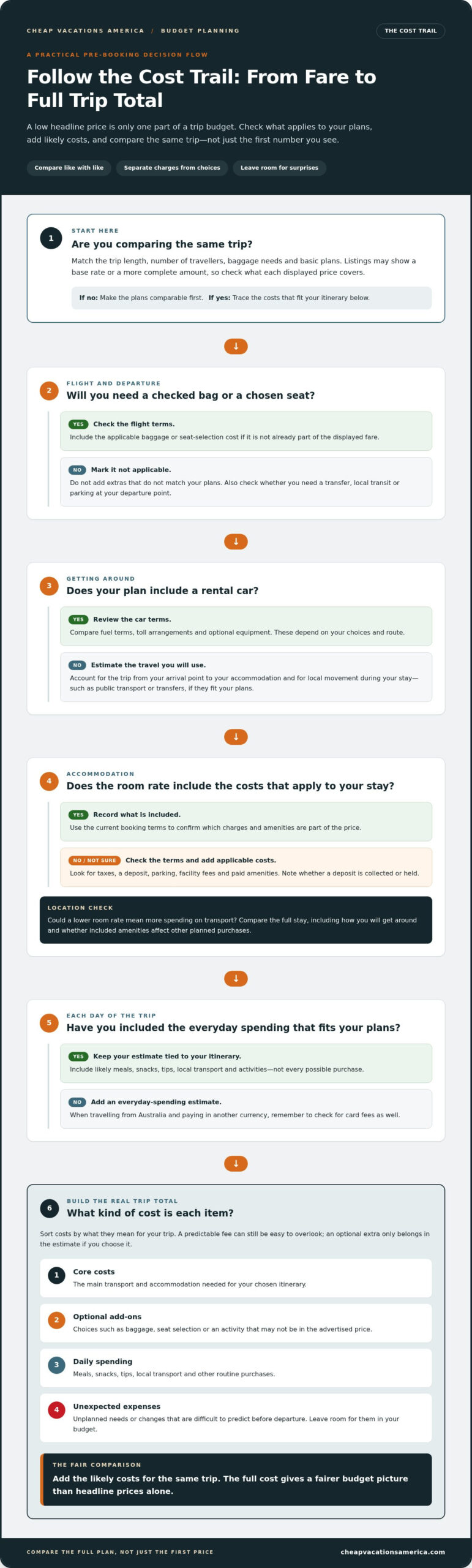
A simple way to sort trip costs:
- Core costs: The main transport and accommodation needed for your chosen itinerary.
- Optional add-ons: Choices such as baggage, seat selection or an activity that may not be part of the advertised price.
- Daily spending: Meals, snacks, tips, local transport and other routine purchases.
- Unexpected expenses: Unplanned needs or changes that are difficult to predict before departure.
Quotable takeaway: Comparing the full cost of the same trip gives you a fairer budget picture than comparing headline prices alone.
What counts as a hidden travel cost?
Consider costs that can appear before, during or after a booking. A flight listing may not include a checked bag or chosen seat. A room rate may be displayed before applicable taxes. Once you arrive, local transport, tips and snacks can add to daily spending. These examples are easy to overlook, but that doesn’t mean they’re concealed or improper.
Some costs depend on a choice. You might pay for extra baggage, a hire car or a tour because it suits your plans. Others are essential to the itinerary you’ve chosen, such as transport to your accommodation. A cost can be necessary for your trip without being unavoidable for every traveller. Sort expenses by what you’ll actually use.
Why a low advertised price may not match your total
Listings don’t all present prices in the same way. One may display a base rate, while another shows a more complete amount. Optional extras, taxes or other charges may appear later in the booking process, depending on the terms. A quick comparison can be misleading if one option includes more than another.
Compare like with like: the same trip length, number of travellers, baggage needs and basic plans. For travel from Australia to the United States, also account for how you’ll handle everyday purchases in another currency. Don’t assume every airline or accommodation option uses the same pricing approach. Check what the displayed price covers, then note what remains outside it.
For a broader view, use an affordable US destinations guide to compare likely trip needs alongside the headline cost. A more complete estimate helps you judge whether a low starting price still fits your plans.
Where Hidden Budget Travel Costs Add Up: Getting There and Staying
After setting a headline budget, trace the trip from departure to check-in and through each day of your stay. Transport and lodging extras are often predictable once you know your itinerary. A bag, rental car or paid hotel amenity affects your total only if it applies to your plans, so separate likely charges from options you can skip.
Quotable takeaway: Before departure, review transport add-ons. On arrival, account for local travel. For your stay, check taxes, deposits and paid amenities.
This sequence gives the hidden costs of budget travel a practical order. First, review what you’ll need to book. Then estimate the cost of getting from your arrival point to your accommodation and moving around during your stay. Finally, check what the room rate includes and what may be charged separately.
Transport extras beyond the fare
Start with the journey you’ve planned, not every possible add-on. Review baggage and seat-selection terms for your flight. Work out whether you’ll need a transfer, local transit or parking at your departure point. If you’re hiring a car, include fuel terms, toll arrangements and optional equipment in your comparison. These costs depend on your choices and route, so fees and policies can vary. Read the current terms before you book.
Mark each item as likely, optional or not applicable. A fee listed in the terms is a predictable cost if your plans trigger it, not an unexpected surprise. An unplanned change or need is different. This simple split helps you avoid adding irrelevant extras while still preparing for costs that fit your itinerary.
Lodging charges and convenience trade-offs
Look beyond the nightly rate. Depending on the stay, taxes, a deposit, parking, facility fees and paid amenities may affect what you pay or need available at check-in. Review the booking terms to see what is included, what is charged separately, and whether a deposit is collected or held. Fee structures vary between properties.
Location matters, too. A lower room rate may mean more spending on transport, while useful included amenities could reduce other planned purchases. Compare the full stay with the likely cost and convenience of getting around. A guide to choosing a budget hotel can help you weigh room features and location against the advertised rate.
Before you commit, make a short review list: transport terms, arrival transfer, local movement, lodging total, deposit and included amenities. Separate confirmed charges from estimates and optional purchases. For details that could change your total, rely on the current booking terms rather than an old screenshot or a general assumption.
For wider trip planning, destination and accommodation guides can help you compare options with the way you expect to travel.
Compare the Real Cost of Budget Travel, Not Just the Booking Price
A side-by-side estimate makes it easier to see what each option includes. Compare the same trip length, number of travellers, baggage needs, comfort requirements and planned activities. Otherwise, one option may seem cheaper simply because its estimate leaves out something the other includes.
Use the table as a worksheet, not a price guide. Fill it in with details for your itinerary. Include costs you expect to pay, mark optional choices separately, and flag anything that still needs checking. The hidden costs of budget travel vary with how you travel, so this framework compares categories, not current prices or guaranteed savings.
A practical total-trip comparison
Choose two realistic options, such as different combinations of transport and accommodation. Keep dates and traveller needs consistent. A higher base price may include baggage, breakfast or another item that a lower-priced option charges for separately. Compare the final set of essentials, not just the first number shown.
| Cost category | Option A | Option B | Included items | Likely extras | Costs to verify |
|---|---|---|---|---|---|
| Transport | Record your planned fare or travel method | Record the alternative | Baggage, transfers or transit, if included | Seats, bags, parking or fuel, if relevant | Current terms, tolls and route costs |
| Lodging | Record the total for the same stay | Record the alternative total | Taxes, meals, parking or amenities, if included | Facility charges or paid services, if applicable | Final total and deposit terms |
| Meals and activities | Estimate for your plans | Estimate for the same plans | Included meals or activities | Food, drinks, tips and tickets | Opening details and booking terms |
| Local movement and add-ons | Estimate based on your itinerary | Estimate the same needs | Transport already covered | Local transit, laundry or connectivity | Rates and terms that may change |
Leave out categories that don’t apply. For example, don’t add rental-car fuel to an option that doesn’t involve driving. Keep fixed or confirmed costs distinct from choices you could reduce, skip or pay for only when used. This avoids an incomplete total as well as a list padded with expenses you won’t face.
Everyday spending that can slip past the plan
Daily purchases are harder to total from booking pages. Meals, drinks, tips, laundry, connectivity and small purchases can vary with your routine. Estimate each category by travel day and number of people. Think through a typical day, including snacks between activities and any planned laundry or mobile data use. Don’t rely on one universal daily amount.
Then compare the same daily needs across both options. Accommodation with meal facilities may change how you plan food, while a different itinerary may affect local transport. For more ways to keep trip spending in check, practical tips for travelling America cheaply can help you consider where to adjust your plans.
Plan for Hidden Travel Costs with a Simple Pre-Trip Checklist
A short review before departure can turn vague worries into a workable plan. You don’t need to predict every purchase. Identify costs tied to your bookings, estimate routine spending, and keep a separate cushion for things you can’t predict. This checklist gives the hidden costs of budget travel a clear place in your budget without making planning complicated.
- List your bookings. Write down each flight or other transport booking, accommodation stay, hire car, tour and activity. Note who is travelling, how long you’ll be away and which plans are confirmed. This list is the starting point for checking what your trip requires.
- Inspect the terms. For each booking, review what’s included, cancellation terms, payment timing, deposits and listed add-ons. Save confirmation details and note any charge that may be collected later. Terms can change, so review the latest details before relying on them.
- Estimate daily spending. Consider meals, local movement, connectivity and other purchases based on your planned days and group size. Use your own habits as a guide. Keep these estimates separate from amounts already confirmed by a booking.
- Set aside flexibility. Create a separate line for unexpected needs or changes. Keep it distinct from planned spending and optional purchases, such as an activity you might decide to add. Choose a buffer that suits your trip length and budget rather than relying on a universal amount.
Quotable takeaway: List your bookings, review their terms, estimate daily needs, then set aside a separate buffer.
Review each booking before you commit
Check the final details before paying, not just the first price displayed. Look for what’s included and when payment is due. Note cancellation conditions, deposits and extras that may be charged at the property or during travel. Save the confirmation in one place so you can find the terms later. For time-sensitive policies, use the latest terms shown with the booking.
Set a flexible buffer without overcomplicating the budget
Base your estimate on the trip’s length, group size, known plans and personal spending habits. A longer stay or a plan with more booked activities may need a different cushion from a short, simple trip. Keep the buffer visible as its own line, so it doesn’t blur what you expect to spend. A step-by-step guide to planning a cheap USA trip can help place this check within your wider planning process.
Keep a spending log in a notebook or a basic phone note. Record the date, category and amount in A$ as you go. Mark each entry as planned, optional or unexpected. A quick daily check shows whether your estimates are holding up and where you may want to adjust. For destination, accommodation and activity ideas, explore budget travel guides.
Make Budget Travel Work: Choose Options That Fit Your Full Plan
A low-cost trip isn’t just about choosing the smallest number on a booking page. It’s about finding a mix of price, convenience and included essentials that works for your itinerary. A cheaper option may suit you, but first account for the transport, equipment or extra planning it requires.
Match choices to the way you’ll actually travel. Camping may suit a plan built around outdoor stays, while an RV facility makes more sense if you’re travelling by RV. Hostels may fit travellers comfortable with shared accommodation. Compare what each option includes, its location and how you’ll reach activities or services. A lower rate can come with different practical needs, so judge the whole arrangement rather than assuming one style always costs less.
Match travel choices to the costs you expect
Check the details that affect your day-to-day plan. For accommodation, compare facilities and location with the transport you expect to use. For a tour, look at what’s included, where it starts and whether getting to the meeting point adds extra travel or requires an early departure. The tour may fit your plans, but its logistics matter too.
Travel gear can support a plan, but it isn’t a requirement for affordable travel. Start with what you already own and identify any genuine need before adding purchases to your budget. If you’re comparing hotels, hostels, camping or RV facilities, use destination and accommodation guides as research starting points. They can help you explore options, but review the current terms that apply to your booking.
Turn your budget into a realistic travel plan
Once you’ve settled on dates, transport, accommodation and activities, review the total again. Make sure the estimate reflects the choices you’ve made, not an earlier version of the trip. Keep planned essentials separate from optional purchases. If actual spending starts to differ from your estimate, you can reconsider an optional activity or purchase before it affects other plans.
Build the trip around what matters most to you. You might prioritise a convenient place to stay, a particular tour or more flexibility in how you get around. Other travellers may prefer a simpler base and fewer paid activities. There’s no single right mix. The best fit covers your needs and leaves you comfortable with the full plan.
Destination guides, accommodation recommendations and tour suggestions can help you research possibilities and compare what may suit your travel style. Use them to shape your shortlist, then review the details that apply to your dates and itinerary. For more ideas as you plan, explore budget-friendly US travel guides.
Start Planning a Trip That Fits Your Budget
Your next step is simple: decide what matters most for this trip. It might be a comfortable place to stay, time for a particular activity or the freedom to move around at your own pace. Use those priorities to shape your shortlist, then compare options against the full plan you can afford.
The hidden costs of budget travel are easier to manage when your choices match your needs, not just a tempting starting price. A little flexibility helps, too. Keep optional plans adjustable and you can make changes without giving up on the trip altogether.
For ideas to shape your plans, explore curated destination guides for affordable US travel, with recommendations covering accommodation, tours, camping, RV facilities and travel gear. Explore budget-friendly US travel guides and find options to research for your next trip.
Build a plan that works for your budget and leaves room to enjoy the journey. Affordable travel can still feel like your kind of travel.
Frequently Asked Questions
Are budget trips really cheaper once extra fees are included?
They can be, but it depends on the complete itinerary and what each traveller needs. Compare the total for the same dates, trip length and group size. Shared costs can change the picture: two travellers may split a car or room, while each may need a separate ticket or activity booking. Add relevant extras before deciding whether the lower advertised price still offers better value.
What happens if I forget to budget for travel extras?
Forgotten costs may mean using your spare funds, changing plans or cutting back elsewhere during the trip. If an extra appears, first decide whether it’s essential, optional or already covered by a booking. Then review the rest of your planned spending and adjust flexible items, such as an unbooked activity. Keep receipts or notes so you can see what changed and make a more useful estimate next time.
Can travel insurance cover unexpected costs on a budget trip?
Some policies may cover certain unexpected events, but coverage depends on the policy, the reason for the expense and any exclusions or excess. Insurance isn’t a general fund for optional purchases or routine add-ons. Before buying, read the policy wording for relevant situations, limits, claim steps and required documents. Keep booking confirmations and receipts if you need to make a claim, and don’t assume a cost is covered unless the terms support it.
Is the lowest hotel rate always the cheapest option?
No. A lower rate may come with a less suitable location, room setup or arrival time. For example, if you reach your accommodation late and your planned transport has stopped running, you may need another way to get there. Compare options against your actual schedule and needs, including how you’ll reach the places on your itinerary. A slightly higher rate may be a better fit, but only your full trip estimate can show that.
How can I avoid surprise airline fees?
Read the fare conditions before booking, especially what the ticket allows for cabin and checked baggage. Look up the size and weight limits for the bag you plan to bring, and review the cost of any extras you know you’ll need. Policies can differ by airline, route and fare type. Save the relevant terms with your booking so you can refer to them while packing.
Should I carry cash for tips and small travel expenses?
Carrying some cash can be useful for small purchases or situations where a card isn’t accepted, but you don’t need to carry all your spending money as notes. Review your bank’s overseas card terms and plan how you’ll access money if needed. Keep cash and cards in separate places, and carry only what you’re comfortable having on hand. Tipping expectations vary by service, so check guidance relevant to your plans.