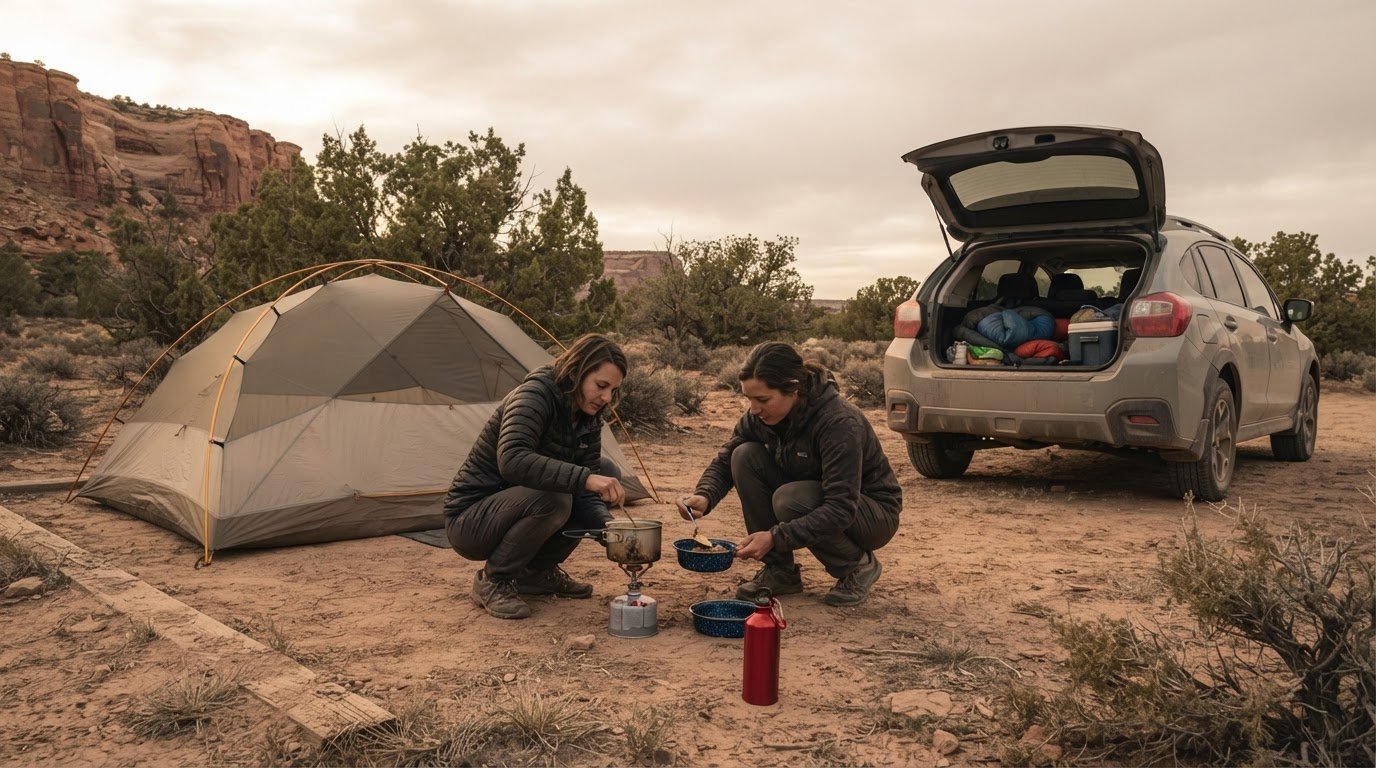
A budget-friendly US park trip starts with where you sleep and how you eat, not just which destination you choose. The best budget travel destinations in the USA for an outdoor holiday let you plan around camping, self-catering and time outside. National parks, mountain areas and an Arizona-Utah road trip are practical places to start.
It’s easy to focus on flights and overlook the costs that build up each day. Campsites, meals, transport and park visits all affect your total, so plan them together before settling on an itinerary.
This guide covers ways to cut everyday costs with camping and simple meals, plus ideas for national park and mountain trips. It also explores planning an Arizona-Utah drive and setting a daily budget in Australian dollars, so you can compare options and choose a trip that suits your travel style.
Key Takeaways
- Use camping and self-catering to shape a lower-cost trip, and plan meals alongside where you’ll stay.
- Compare national park and mountain destinations by access, activities and accommodation needs before choosing your route.
- Build a daily budget around food, transport, accommodation and activities so you can see which costs matter most.
- Plan an Arizona-Utah road trip around driving distances and overnight stops, then explore destination guides for more budget-friendly options.
1. Free camping and self-catering to reduce costs
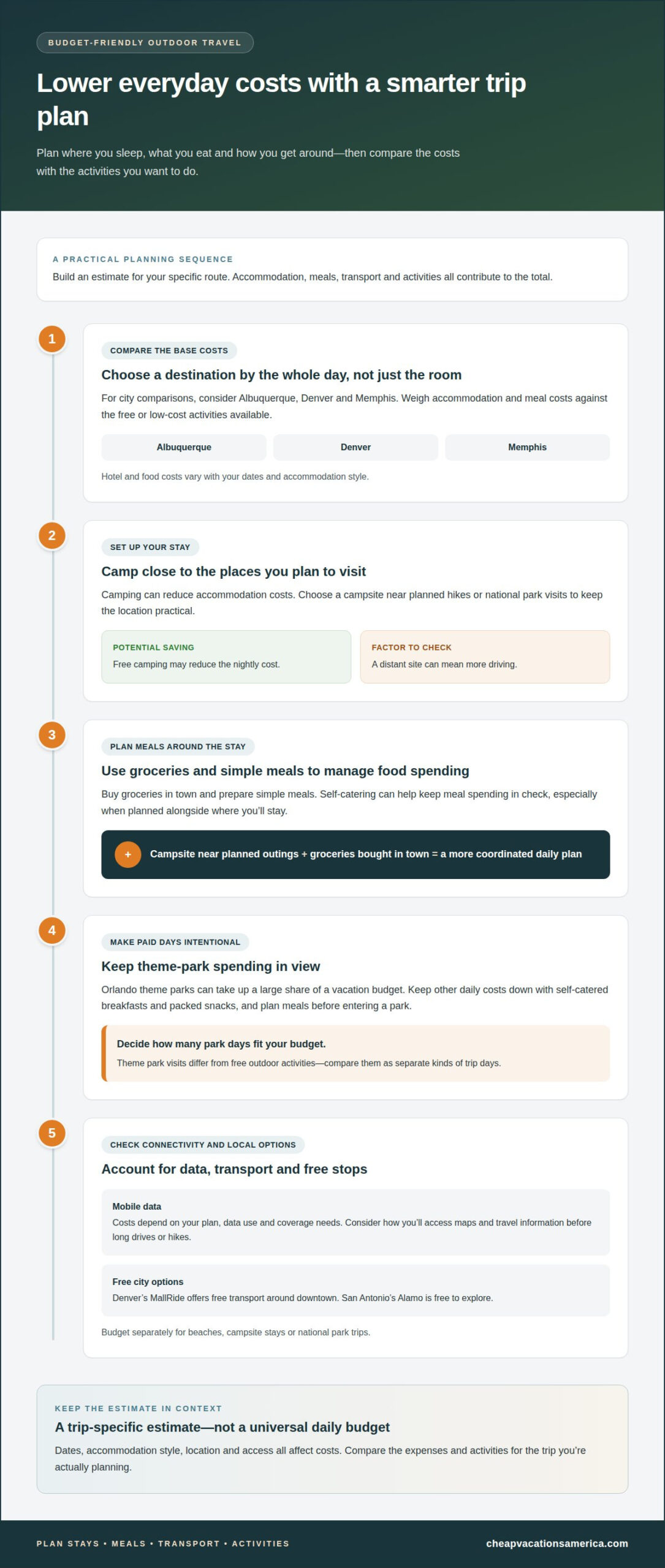
Hotel and food costs vary with your dates and accommodation style. To compare cities, consider Albuquerque, Denver and Memphis, then weigh accommodation and meal costs against the free or low-cost activities available.
Camping can reduce accommodation costs, while self-catering helps keep meal spending in check. Choose a campsite near your planned hikes or national park visits, then prepare simple meals using groceries bought in town. Free camping may reduce the nightly cost, but consider location and access: a distant site can mean more driving.
Treat it as an estimate for a specific trip, not a general daily budget for every US destination.
Orlando theme parks can take up a large share of a vacation budget. Keep other daily costs down with self-catered breakfasts and packed snacks, and plan meals before entering a park. Theme park visits differ from free outdoor activities, so decide how many park days fit your budget.
Mobile data costs depend on your plan, data use and coverage needs. Think about how you’ll access maps and travel information, then choose a suitable data option before relying on your phone during long drives or hikes.
Yes, some cities pair free attractions with free public transport. Denver’s MallRide offers free transport around downtown, while San Antonio’s Alamo is free to explore. These options can help you save on city days. Budget separately for beaches, campsite stays or national park trips.
2. National parks and mountain destinations
Great Smoky Mountains National Park is the most visited national park in the United States. It suits travellers who want mountain scenery, hiking and time outdoors without building a city-centred vacation. For a couple or a group planning several park stops, compare that pass with the visits on your route before setting the entry budget.
For Australians, the cheapest park destination to fly to is the one with the lowest fare to a useful gateway, plus manageable ground transport. Compare fares for your dates, then factor in the drive from the arrival city to the mountains. A low airfare may not save much if the onward journey adds long drives, extra accommodation or complicated connections. Choose the park and route together.
To keep travel costs down, consider dates outside school holidays and major holiday periods, then compare fares and accommodation for the same route. The cheapest time of year varies by destination and flight schedule, so compare total trip costs instead of relying on a particular month. Mountain weather and seasonal access also affect which hikes and roads suit your plans.
For a beach break, consider Galveston Island near Houston. The beach is about an hour’s drive from the city, making it a possible addition to a city stay. Compare the cost of getting to the coast with your accommodation location and planned activities. This helps you decide whether the beach fits your budget, rather than choosing on scenery alone.
Keep the plan simple: select a park, identify its nearest practical gateway, then map the onward drive and overnight stops. The Great Smoky Mountains, Galveston Island and other overlooked places offer different trip styles, from mountain trails to beaches. Explore more US park and mountain trip ideas to shape a route around your priorities.
3. Approximate daily travel budgets
There’s no single cost for a week-long budget trip to every popular US destination. Treat a daily estimate as a guide to spending on the ground for that specific trip, not a full trip total including flights from Australia. Keep airfare separate when comparing destinations.
Use a daily budget to compare options before building an itinerary. Break spending into accommodation, meals, local transport and activities, then add route-specific costs such as a rental vehicle or park visits. Camping and self-catering can leave more room for paid activities than hotel stays and restaurant meals.
Start with the biggest decisions. For a road trip, map overnight stops and driving days first. For a city break, consider how your accommodation relates to attractions and public transport. This shows whether cheaper accommodation also means more spending on local transport. Add meals and activities next, rather than treating one estimate as a complete vacation budget.
The type of destination matters. A national park itinerary may involve long drives and outdoor activities, while cities offer different ways to spend on culture and transport. Some places can feel expensive if key activities require paid entry or a car. Others offer free sights and opportunities to prepare your own meals. Compare plans you’d genuinely enjoy, not just destination names.
For a clear comparison, write down your route, number of nights, transport plan and paid activities. Use the Arizona-Utah estimate only for that example, then compare other destinations by accommodation, meals, transport and activities. Keep flights from Australia separate from daily spending on the ground. This makes it easier to see which budget travel destinations in the USA suit your plans and priorities.
There’s no single cost for a week-long trip across popular US destinations.
4. Arizona and Utah road-trip budget
Plan Arizona and Utah as a route, rather than as two separate destination lists. Mark the national parks and stops you want to visit, then group nearby places together. This can reduce backtracking and help keep fuel, driving time and overnight stops under control. On an American road trip, the route shapes daily spending as much as the activities do.
Phoenix is a useful starting point for northern Arizona. Sedona is about a two-hour drive away, so account for the journey when planning your first overnight stop. Decide whether to stay in Phoenix, near Sedona or farther along your route. That choice affects driving time and how often you need to move camp.
Set aside a separate activity budget. Balance paid stops with outdoor time and scenic drives. If you’re visiting several national parks, list each planned visit and account for entry separately from meals, transport and accommodation.
Keep your itinerary flexible enough to include a stop for local culture or history. A walk along a historic street, for example, can break up long drives and park trails. Don’t add every attraction to the route. Choose the places that matter most, then leave time between them for rest, supplies and unexpected delays.
Before setting off, map each day’s drive and mark where you’ll sleep. Then group activities by area, rather than crossing the same ground twice. This makes it easier to spot costly detours and decide where a longer stay is worthwhile. For more low-budget US destination ideas, compare routes that match your travel pace and priorities.
Cheap Vacations America: Low budget destinations
Cheap Vacations America helps you narrow down low budget destinations and plan a US trip around your spending priorities. Use its travel destination guides to explore budget-friendly US cities and compare options for where to stay, including best-priced hotels and hostels. It’s a useful next step when you’ve chosen a travel style but still need destination ideas that fit your plans.
Start with the places and trip features that matter most, such as city activities, outdoor stops or convenient accommodation. Then use the guides to shape a shortlist before settling on your route. For help finding a starting point for your US trip, contact Cheap Vacations America.
Choose a route that fits your travel style
Turn a broad idea into a trip plan by deciding whether you want a city break, time in the mountains or a drive between destinations. Set priorities for each stop, such as outdoor activities, local culture or a slower pace. This makes it easier to choose among budget travel destinations in the USA without trying to fit every attraction into one trip.
Explore Cheap Vacations America’s low-budget destination guides and recommendations for budget-friendly US cities. Use them to build a shortlist that suits the kind of holiday you want, then shape your route around it. A clear starting point can make planning from Australia feel more manageable.
For help finding ideas for your US trip, contact Cheap Vacations America. Pick a destination that feels right, make room for the experiences you value, and start planning an affordable American adventure.
Frequently Asked Questions
What are the cheapest U.S. destinations for a vacation?
Affordable options depend on your route, accommodation and planned activities. Albuquerque, Memphis and Denver are useful cities to compare, especially if you can plan days around free attractions or public transport. For a city-and-outdoors mix, compare the cost of reaching nearby parks with staying in the city. A destination offers good value only when transport and daily plans work together.
What are the cheapest U.S. national parks to visit, including entry fees and nearby lodging?
The lowest-cost park option depends on your route and where you stay, so compare total trip costs rather than entry fees alone. For a shorter visit, include the distance to your accommodation: a cheaper room farther away may mean more driving and fuel costs.
What U.S. travel costs and taxes should visitors budget for?
Budget for flights, accommodation, meals, local transport, activities and taxes. Keep airfare separate from on-the-ground spending, then organise daily costs by destination. Taxes affect the final cost of accommodation, meals and purchases, and the total varies by location and transaction. Compare the full amount shown at checkout, not just the advertised room or meal price, before allocating your travel budget.
How much does a week-long budget trip to popular U.S. destinations cost?
There’s no single cost for a week-long trip across popular US destinations.
What are the best budget beach destinations in the United States?
Galveston Island near Houston is a beach option to consider on a budget, about an hour’s drive from the city. Compare the cost of getting there with your accommodation and planned activities.