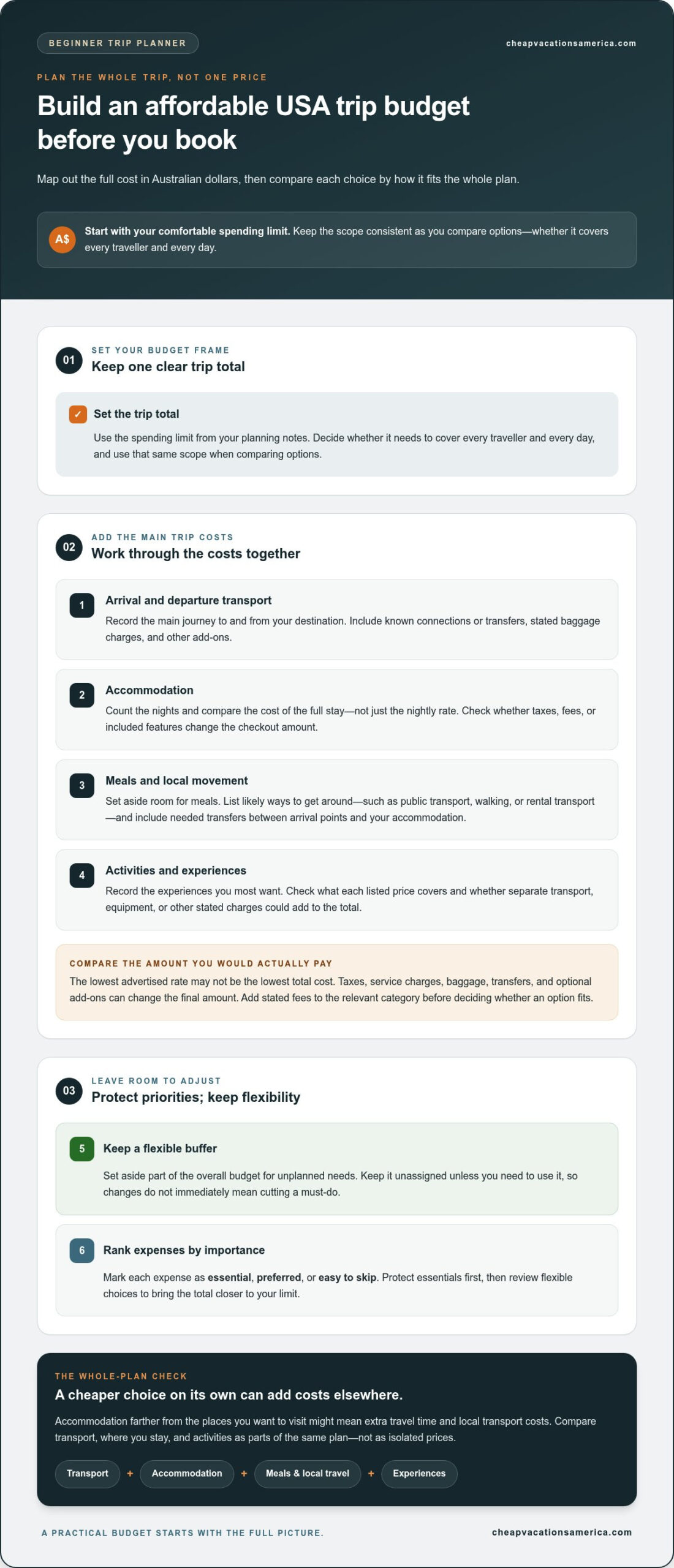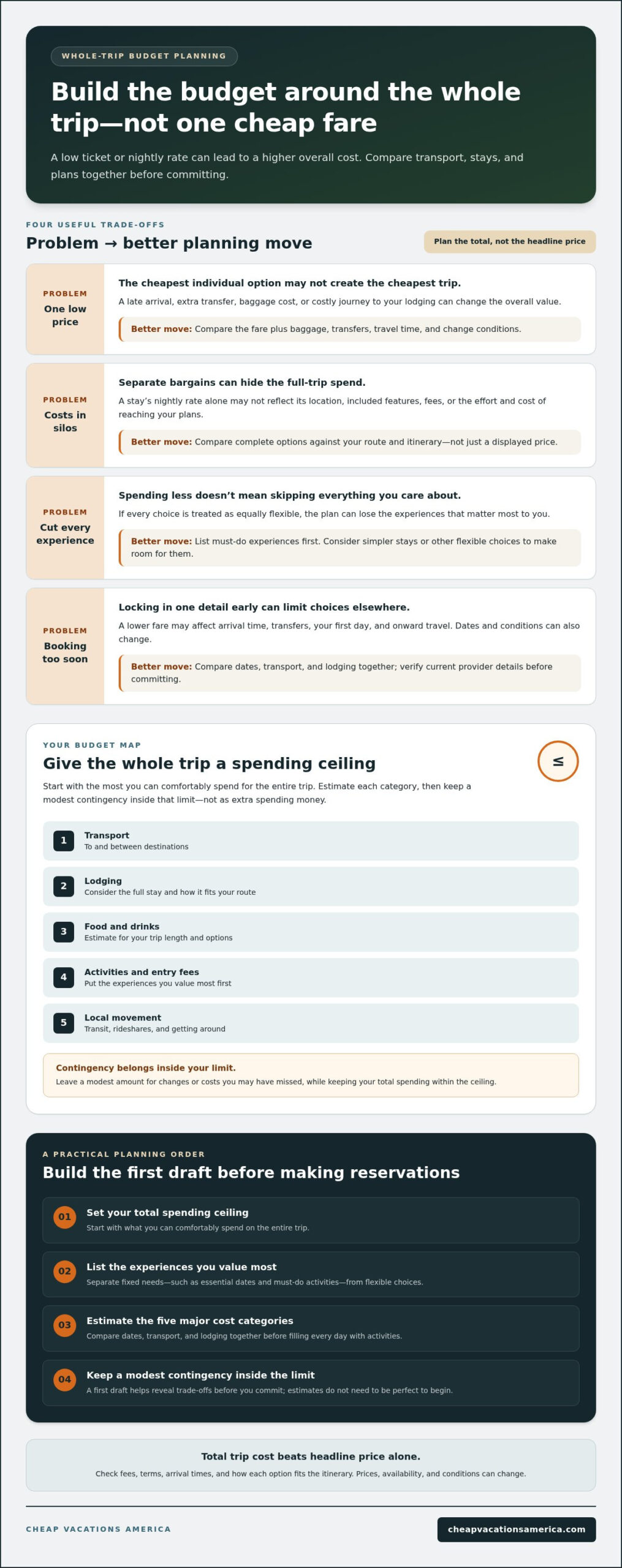
The cheapest-looking US city break can cost more once you add transport, meals and activities. If you’re searching for cheap cities to visit in America, compare the whole trip, not just the nightly room rate.
A low hotel price can be appealing, but a stay that requires a rental car or frequent rides may push up the total. So can an itinerary built around paid attractions. The better fit depends on how you like to travel, what you want to do and how much time you have.
This guide compares affordable city-trip styles and shows you how to weigh accommodation, local transport, food and activities together. You’ll find ideas for trips built around walkable sights, public transport, free attractions or a mix of lower-cost activities, along with practical ways to plan around seasonal price changes. Use the comparisons to narrow your options, then explore destination, stay and tour recommendations as you shape a trip that fits your budget.
Key Takeaways
- Use the city-trip profiles to match your priorities, whether you’re looking for culture, food or time outdoors.
- Compare lodging, transport, food and activities side by side to spot the trade-offs behind a low room rate.
- Set your priorities first, then compare flexible travel dates to find a better fit.
- Group nearby activities to cut unnecessary trips across town and make more room in your schedule.
- Choose a destination that suits your travel habits instead of relying on one universal “cheapest” option.
What Makes a City Cheap to Visit in America?
A city isn’t affordable just because its rooms look inexpensive. Your full trip includes where you sleep, how you get around, what you eat, which activities you choose and how long you stay. A lower nightly rate may matter less if you need extra nights to fit in your plans or spend more getting between sights.
Destination affordability is the relative cost of visiting a place; overall trip affordability is what you spend to experience it in a way that suits you. That distinction makes comparisons between cheap cities to visit in America more useful. There’s no single best fit for every traveller.
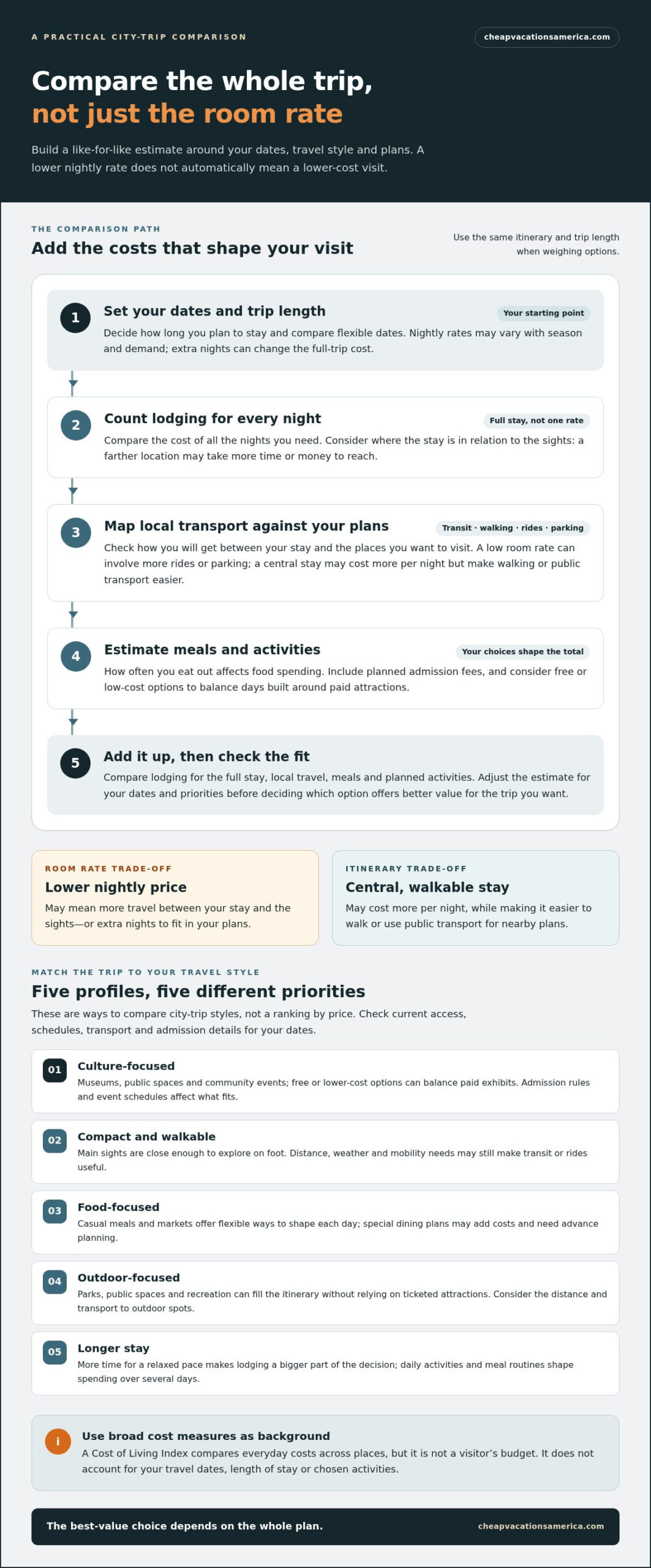
The Cost of Living Index offers a way to understand how everyday costs are compared across places. But a general cost-of-living measure isn’t a visitor’s budget: it won’t account for your travel dates, length of stay or chosen activities. Use it as background, then weigh the costs that apply to your own plans.
Which costs shape an affordable city break?
Start with lodging. Compare the rate for all the nights you need, not just the first price you see. A stay farther from the sights may take more time or money to reach. For local transport, consider transit, walking, rides and parking in relation to the places you plan to visit.
Next, estimate meals and activities. Your food budget depends partly on how often you eat out, while admission fees can add up if your itinerary centres on paid attractions. Free or low-cost options can balance the day. Finally, check the total against your trip length: a destination that suits a short visit may cost more if you need extra nights.
Why the lowest headline rate may not mean the cheapest trip
A low room rate can come with a transport trade-off. If the sights on your list are spread out, rides or parking may take a larger share of your budget. A central stay might cost more per night but make it easier to walk or use public transport. Neither option is automatically cheaper; compare them against your itinerary.
Paid attractions and extra nights can also change the total. A city with plenty of free things to do may suit someone who enjoys exploring on foot, while a visitor focused on ticketed sights may need to budget more for activities. Flexible dates can affect the comparison, too, because nightly rates may vary by season and demand.
Hypothetical example: Imagine two unnamed destinations. One has a lower nightly rate, but your planned sights require frequent rides and an extra night. The other costs more per night, but you can walk between several activities and finish your list sooner. Compare the cost of the whole plan, including meals and entry fees, before deciding which stay offers better value.
Before choosing, make a simple trip estimate: add lodging for the full stay, local travel, meals and planned activities. Adjust it for your dates and priorities. This makes the comparison practical without treating the lowest room rate as the final answer.
Five Budget-Friendly City-Trip Profiles to Compare
These profiles help you compare trip styles, not rank destinations by an assumed price. Each highlights a different way to spend your time and the budget trade-offs to consider. Use them to narrow down cheap cities to visit in America that fit your plans, then check current transport options and attraction details before setting your budget.
Profiles for culture, walkability, and free activities
Culture-focused trips can fill an itinerary with museums, public spaces and local events. Walkable trips can reduce reliance on paid transport, but only when the places you want to see are close enough together. In either case, check current access, schedules and admission details. Free entry or events may be limited to particular hours or dates.
- Culture-focused profile: Suits visitors interested in museums, public spaces and community events. Free or low-cost options can balance paid exhibits, but admission rules and event schedules affect what you can include during your visit.
- Compact and walkable profile: Works well if you enjoy exploring on foot and your main sights are near one another. Walking can reduce transport spending, but weather, distance and mobility needs may make transit or rides useful for some trips.
Profiles for food, outdoor time, and longer stays
Food-led trips let you mix casual meals, markets and planned dining instead of building every day around restaurants. Outdoor-focused breaks may centre on parks and public recreation, while longer stays put more weight on lodging and everyday routines. For each style, check what’s open, how to get there and whether access or admission details have changed.
- Food-focused profile: Fits travellers who like sampling casual meals and browsing markets. Flexible meal choices can help you shape each day around your budget, while special dining plans may add costs and need advance planning.
- Outdoor-focused profile: Centres on parks, public spaces and recreation. It can suit visitors who want time outside without filling every day with ticketed attractions. Consider how far outdoor spots are from your stay and what transport the route requires.
- Longer-stay profile: Makes sense when you want more time to explore at a relaxed pace. Lodging becomes a bigger part of the decision, while daily activities and meal routines shape spending over several days. Compare the full stay, not just one night.
No profile is automatically the cheapest. A walkable trip may suit someone who prefers exploring on foot, while an outdoor break may be less appealing if reaching recreation areas takes extra travel. Match a profile to your priorities, then compare the practical details for your dates. Destination guides, stay recommendations and tour research can help you build a shortlist, but treat estimates as planning tools rather than fixed prices.
Use budget-friendly destination guides to explore options that match your preferred travel style, then compare the details that matter for your plans.
How to Compare Cheap Cities Beyond Hotel Rates
A fair comparison uses the same trip plan for each destination profile. Set your travel dates, number of nights and daily activities, then consider what each plan asks you to spend in time and money. The descriptions below are relative, not price rankings. Actual costs can change with the season, event dates and weekday-versus-weekend demand.
Total trip cost is a better guide than room rate alone because it reflects the transport, meals and activities needed to enjoy your stay.
| Trip profile | Lodging | Transport | Food | Activities | Trip fit |
|---|---|---|---|---|---|
| Culture-focused | Compare stays near cultural sights with options farther away. | Check how easily museums and public spaces connect by foot or transit. | Allow for meals between visits and your usual dining habits. | Separate free public spaces and events from paid admission and tours. | Good for visitors who plan around cultural stops. |
| Compact and walkable | A central stay may cost more but shorten trips between sights. | Walking may cover more of the itinerary; account for transit when needed. | Look at meal choices near your planned route. | Group nearby sights and check current entry details. | Suited to visitors who prefer exploring on foot. |
| Food-focused | Weigh location against how often you’ll return to your room. | Map markets and dining areas to estimate daily rides or walks. | Compare casual meals, markets and planned restaurant visits. | Leave room for food-related experiences and other low-cost stops. | Works for travellers who want flexible meal choices. |
| Outdoor-focused | Check the distance between your stay and recreation areas. | Include travel to parks and public recreation in your plan. | Consider where and when you’ll eat around outdoor activities. | Distinguish free public spaces from paid activities or guided tours. | Fits visitors who want time outside. |
| Longer stay | Compare options across the full visit, not one night in isolation. | Estimate how often you’ll travel around during a typical day. | Consider whether self-catering suits your routine alongside meals out. | Mix repeatable low-cost activities with occasional paid outings. | Useful for a slower visit with everyday routines. |
Compare the daily costs that affect your itinerary
Build a sample day for each profile. Count likely local trips and note where walking could replace transit, rides or parking. List free activities separately from paid admissions and optional guided tours so you can see which costs are essential to your plans. For meals, compare self-catering with your usual routine. A kitchen only helps if you’ll use it.
Match a destination profile to your travel priorities
For museums and culture, look for accessible low-cost options and check current schedules and admission details. For walking or outdoor time, map activities and the routes between them. Be clear about compromises: a lower-cost stay farther from sights may add daily transport, while paying more for a convenient location may reduce those trips.
Before comparing the cheap cities to visit in America, check your travel dates against seasonal demand and major event calendars. Compare the same number of nights and a similar activity plan for each option. Weekday and weekend patterns can differ, so review the dates you’d actually travel rather than relying on a general impression of a trip profile.
Plan a Lower-Cost Visit Without Losing the Best Parts
A good budget plan protects the experiences you care about and trims the extras that matter less. Start with your priorities, then shape your dates, daily route and stay around them. This gives you a practical way to compare cheap cities to visit in America without trying to fit every possible activity into one trip.
Build a simple itinerary around your budget
Keep the plan manageable. Choose a few priorities for each day, group nearby stops and leave space for free activities or a change of pace. Before heading out, check current opening times, admission rules and local transit information. Details can vary by date, so use information for the days you’ll actually visit.
- Set your priorities. Decide what would make the trip worthwhile, such as a museum visit, time outdoors or a food-focused day. Choose a few must-dos before adding optional stops.
- Keep dates flexible. Compare possible travel dates, including weekdays and weekends. Look for seasonal changes or major events that could affect the feel and cost of your visit, then review lodging rates for the dates you’re considering.
- Group activities by area. Put nearby sights on the same day to limit backtracking. Check walking routes and current transit options between stops, and account for rides or parking if they fit your plans.
- Leave room in the schedule. Avoid filling every hour. Open time makes it easier to enjoy public spaces, take a break or choose a low-cost activity you find along the way.
- Review the full plan. Compare the stay, local transport, meals and activities together. If the total feels tight, adjust optional outings or dates before cutting the experience that matters most.
Use this quick checklist to balance free activities with one or two paid highlights:
- Choose free public spaces, walks or events that match your interests.
- Pick one or two paid attractions or tours you’re most excited about.
- Check current opening times, admission details and any schedule limits.
- Leave gaps between planned activities for meals, rest and unplanned stops.
Find stays and tours that fit the trip
Match your accommodation to your route and group needs. Compare hotels, hostels, camping and RV options based on location, length of stay and how you plan to get around. A lower nightly rate farther from your activities may require more travel, so weigh convenience against the full itinerary.
For tours, look beyond the headline description. Review what’s included, how long the outing lasts, where you need to meet and the cancellation terms. These details help you decide whether a tour fits your schedule and adds value to your plans. Explore affordable stay and tour recommendations as research resources while you shape your trip. The recommendations help you compare options; reservations are made through the relevant booking sites.
Choose Your Affordable City-Trip Style and Keep Planning
There’s no single city-trip style that works for every budget. A culture-focused visit may suit someone who values museums and public spaces. A walkable plan can reduce reliance on local transport, while a food-focused trip gives more weight to meal choices. Outdoor activities may fit if you want recreation time, and a longer stay can work for travellers who prefer a slower pace. Each profile has trade-offs, so choose based on what you’ll enjoy and how you want to spend your time.
Use a quick checklist to narrow your options
Before settling on a destination, compare your priorities with the shape of the trip. Use the same dates and group size across your options, then consider the full itinerary rather than one cost in isolation.
- Pick your main priority: Decide whether low-cost activities, easy transport, food, culture, outdoor time or a longer visit matters most.
- Check the whole trip: Consider lodging, local transport, meals and activities for your travel dates and group size.
- Look at the trade-offs: A stay that fits your lodging budget may add travel time or transport needs. A more convenient location may leave less room for other parts of the trip.
- Choose the best fit: Select the profile whose compromises you’re most comfortable with, not the one that only looks cheapest at first glance.
This approach can help you narrow down cheap cities to visit in America without expecting one destination to be the lowest-cost choice for every traveller, date or itinerary.
Continue planning with practical destination resources
For a broader planning framework, look for the guide Affordable US Destinations: How to Find a Lower-Cost Trip in 2026. Then explore affordable small towns to visit in the USA alongside recommendations for hotels, hostels, tours, camping and RV facilities. These resources can help you compare options against your travel style and planned activities.
As you review stays, consider how each location works with your itinerary. For tours, compare what’s included and how the timing fits your day. If you’re considering camping or an RV trip, factor those choices into your route and daily plans. Keep the details together so you can judge how well each option fits the trip you have in mind.
Cheap Vacations America provides travel guides and recommendations to support your research. The site directs visitors to third-party booking sites and retailers rather than making reservations directly. Use the guides to build a shortlist, then review the relevant details for your plans.
Browse the site’s budget destination resources to find a city-trip style that fits your priorities.
Start Shaping Your Next City Break
Your best-fit trip starts with one clear choice: what do you most want to come home having done? Use that priority to guide your destination shortlist, then build a plan that leaves room for the things you enjoy without stretching your budget to cover every option.
Explore curated guides to affordable United States destinations and use practical recommendations to research budget stays, tours, camping and RV facilities, plus travel gear. These resources can help you compare possibilities and plan your next steps.
Ready to find a trip style that fits? Explore affordable destination guides and trip recommendations to keep planning your visit to the cheap cities to visit in America. A well-matched trip can make a modest budget go further. Safe travels!
Frequently Asked Questions
How can I find affordable cities to visit in America?
Start by choosing what matters most, such as museums, food, outdoor time or easy movement without a car. Compare current accommodation options for the dates you can travel, then look at free activities and how you’ll reach them. Make a sample day for each option, including meals and likely journeys. This comparison can help you spot which of the cheap cities to visit in America fits your habits.
Are smaller cities always cheaper to visit than larger cities?
No. Size alone doesn’t tell you what a visit will cost. A smaller place may have fewer accommodation choices or require more driving between activities, while a larger one may offer transport connections and free public attractions. Timing matters, too. Compare the specific stay, routes and activities you’d use, then check how those options fit your dates. The better-value choice depends on your itinerary, not population size.
Can I enjoy an American city on a small travel budget?
Yes, a modest budget can still leave room for a worthwhile visit if you plan around your priorities. Build days around free public spaces or low-cost activities, then choose paid highlights you genuinely want to experience. Keep meals flexible by mixing casual options with any planned dining. Set a realistic stay length before making an itinerary, so you can enjoy the trip without trying to squeeze too much into each day.
What should I compare besides hotel rates when choosing a city?
Estimate local transport based on your planned routes, consider meal choices that suit your routine, check attraction access, opening times and admission, and count the nights needed for your itinerary. Compare your actual dates for seasonal or event-related changes, too. Also consider whether your accommodation location makes the daily plan easy to manage. These details can reveal trade-offs that a room rate alone won’t show.
When is the best time to visit a city cheaply?
There isn’t one cheapest season that applies to every destination. Accommodation choices and costs can shift with travel dates, visitor demand, local events and the day of the week. If your schedule allows, compare several date ranges rather than relying on a general rule. Look at current lodging options and event calendars for each possible visit, then choose dates that suit both your budget and the experiences you want.
How do I keep transport costs down during a city break?
Plan each day by area. Group nearby activities to avoid unnecessary backtracking, then check current public transport routes, fares and service information for your travel dates. Compare those options with walking distances from your accommodation. A lower-cost stay far from your plans may mean more daily travel, while a convenient location may make some trips simpler. Choose the mix that works for your route and needs.