What if the cheapest flight isn’t the best deal for your USA trip? A low fare can lose its appeal once you add transport, accommodation, meals, activities and travel documents. For Australians planning a first visit, affordable USA travel for beginners starts with the whole trip budget, not one tempting price.
It’s easy to feel stuck choosing between destinations, places to stay and ways to get around. You also don’t want to miss a booking detail or document that could disrupt your plans. Working through decisions in a practical order makes them easier to manage.
This beginner-friendly checklist shows you what to plan first, how to compare options against your full budget in A$, and what to review before you go. Work through your route, transport, accommodation and activities, then check key documents and booking details. You can build a trip that fits your budget without having to make every decision at once.
Key Takeaways
- Start with your trip length, travel party, priorities and comfortable spending limit to narrow your choices.
- For affordable USA travel for beginners, map out each spending category and leave room for unexpected costs.
- Compare transport, accommodation and activities together to spot extra costs and practical trade-offs.
- Check official entry guidance for your circumstances, then review booking terms, baggage rules and arrival details.
- Use the final checklist to review your budget, bookings, documents and saved contact details before you leave.
Affordable USA travel for beginners: start with these trip basics
Start with a few decisions, not a long list of bookings. Write down your dates, who’s travelling, how long you can go, what you most want to do, and the spending limit that feels comfortable in A$. Use these basics as a filter for the choices ahead. You don’t need to settle every detail today.
- Choose a likely travel window and note any flexible dates.
- List the travellers and any needs that affect the plan.
- Set a trip length that suits your time and budget.
- Pick your top priorities, such as museums, food, nature or live events.
- Set a comfortable overall spending limit before comparing options.
A trip budget combines transport, accommodation, meals, local travel and experiences. It’s not just the price of one booking. A low-cost flight or room may look appealing on its own, but the full plan matters. For example, accommodation far from the places you want to visit might mean extra travel time and local transport costs. Compare choices by how they fit together, not by one price in isolation.
First-time planning can feel like a lot, but the choices become easier when you make them in order: decide what matters, set your limits, then explore options. A broad overview of Travel shows how trips can take different forms and serve different purposes. Use that as a prompt to shape a trip around what you want from it, rather than trying to copy someone else’s itinerary.
Set a trip goal before comparing options
Make two short lists: must-do experiences and flexible preferences. A must-do might be seeing a national park or visiting a particular city. A flexible preference could be where you stay or which day you take a tour. Then choose a broad travel style, such as city, outdoors or mixed. Keep the itinerary manageable. One base with a nearby day trip can be easier to plan than squeezing several far-apart stops into a short visit.
Build a simple first-trip checklist
Put the basics in one note so you can compare destinations without losing track of what matters:
- Possible dates, including any dates you can shift.
- Travellers and total trip length.
- Your comfortable spending limit in A$.
- Must-do experiences and preferred travel style.
- Choices you can adjust later, such as the exact route or accommodation area.
Once you know what kind of trip you’re planning, browse affordable US destinations to find places that match your priorities. Treat your first ideas as options, not commitments. Keep the details that fit and adjust the rest as you shape the trip.
Build an affordable USA trip budget before you book
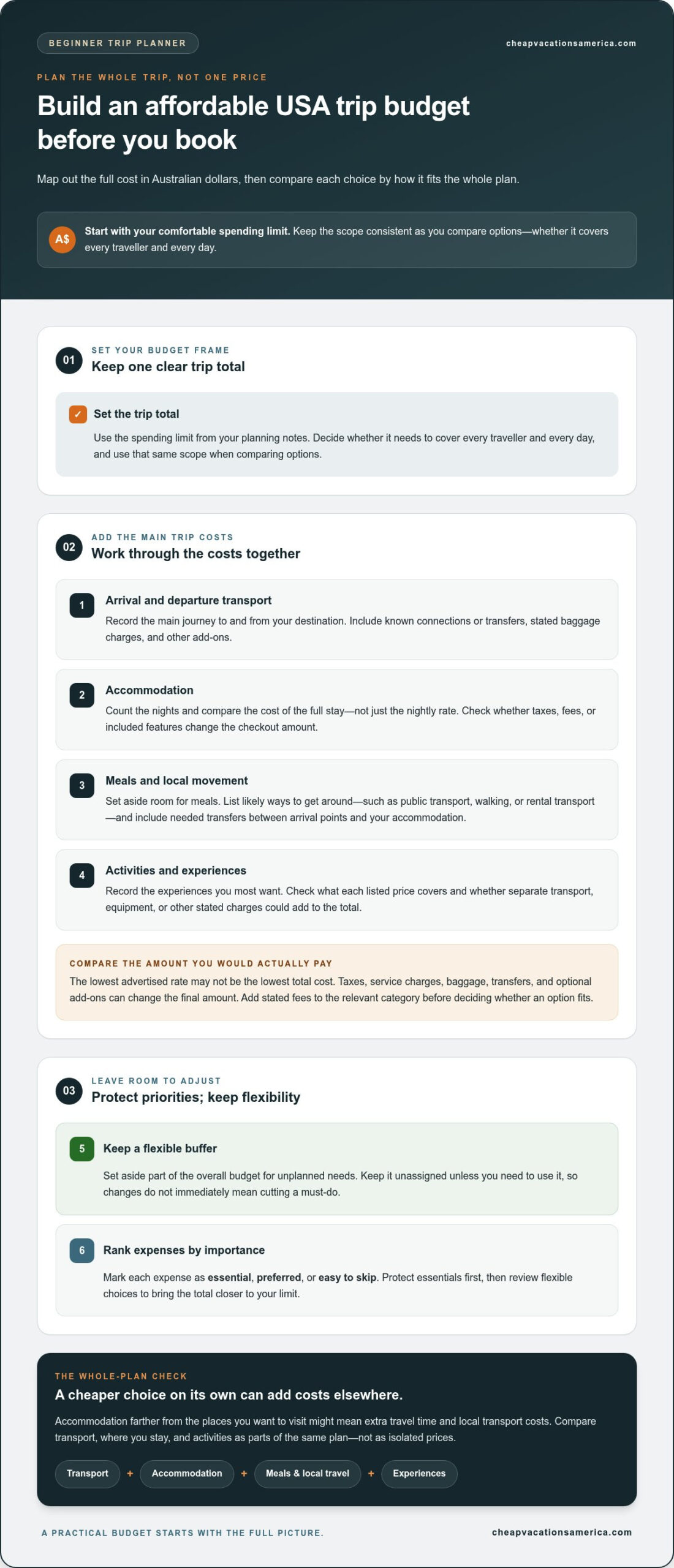
Before comparing individual fares or rooms, map out the full trip in Australian dollars. This gives you a way to judge each option by its effect on the whole plan. Your transport choice can affect where it makes sense to stay, while your location can change local travel costs and the activities you can fit into each day.
- Set the trip total. Start with the comfortable spending limit from your planning notes. Decide whether it needs to cover every traveller and every day, then keep the same scope as you compare options.
- Estimate arrival and departure transport. Record the main journey to and from your destination. Include any connection or transfer you already know you’ll need, plus stated baggage charges or other add-ons.
- Count lodging nights. Note how many nights you’ll stay and compare the cost of the full stay, not just a nightly rate. Check whether taxes, fees or included features change the amount shown at checkout.
- Plan meals and local movement. Set aside room for meals throughout the trip. List likely ways to get around, such as public transport, walking or rental transport, and include transfers between arrival points and your accommodation where needed.
- Choose activities. Record the experiences you most want to include. Check what’s covered by each listed price and whether separate transport, equipment or other stated charges could add to the total.
- Keep a flexible buffer. Set aside part of the overall budget for unplanned needs. Don’t assign it to a booking unless you have to use it. A buffer gives you room to handle changes without immediately cutting a must-do.
The lowest advertised rate may not equal the lowest total cost. Taxes, service charges, baggage, transfers and optional add-ons can change the final amount. Compare the same details across options and use the total you’d actually pay, not the first figure you see. Add stated fees to the relevant category before deciding whether an option fits your budget.
Rank must-haves and adjust the rest
Mark each planned expense as essential, preferred or easy to skip. Protect the essentials first, such as getting to your destination and covering your planned stay. Then see whether flexible choices can bring the total closer to your limit. You might choose fewer paid activities or a different base location, but weigh any saving against extra local travel or time.
Travel patterns can offer context, but your own route and priorities should guide the budget. The U.S. Travel Forecast provides a wider view of U.S. travel trends. For a step-by-step way to connect your choices, use this guide to how to plan a cheap USA trip. It can make affordable USA travel for beginners feel more manageable before you commit to bookings.
For a practical starting point, browse budget-conscious U.S. trip ideas and compare destinations, places to stay and activities against the categories in your budget.
Compare transport, places to stay, and activities as one plan
A choice that looks cheaper by itself can add time or costs elsewhere. Compare transport, accommodation and daily plans together. For example, a room farther from your activities may cost less upfront, but getting around could take more time and money. The best fit depends on your route, travel party, luggage and plans for each day.
| Option | Convenience | Flexibility | Check what’s included and what may cost extra |
|---|---|---|---|
| Public transport | Can work well for planned routes and locations it serves. | Depends on routes, timetables and service hours. | Fares, transfers and the distance from stops to your accommodation. |
| Intercity transport | Can connect parts of a multi-stop trip without driving. | Schedules and available routes shape your travel days. | Getting to and from stations, baggage terms and any stated fees. |
| Rental vehicle | May suit routes with stops that are harder to reach by other means. | Offers control over timing, subject to the route and rental terms. | Fuel, parking, insurance details and other stated charges. |
| Hotel or hostel | Convenience depends on location and included amenities. | Check booking and cancellation terms. | Taxes, fees, meals and amenities that may not be included. |
| Camping or RV stay | Can suit outdoor-focused plans, depending on facilities and location. | Check site rules, access and booking terms. | Equipment, services, site fees and travel between the stay and activities. |
Choose transport that matches the itinerary
Start with the route, not a default choice. Public transport may fit a stay centred around connected areas. Intercity options may suit a trip between places on a set schedule. A rental vehicle can offer more control for a route with several stops, but include parking and fuel in your comparison. Think about luggage, group size and how much you want to change plans as you go. Compare options against your actual travel days, since availability and suitability vary by itinerary.
Match lodging and activities to the same budget
Hotels and hostels can suit trips where location, room setup or shared facilities matter. Camping and RV stays may fit plans built around outdoor time, but consider the site’s location and what you need to bring. For any stay, review amenities, cancellation terms and stated fees. Then map activities by day. A paid tour might be easier from one area, while free or low-cost experiences nearby can balance the day’s spending.
Try a simple test: write down where you’ll sleep, how you’ll reach each planned activity, and what’s included. If a cheaper stay adds awkward transfers, compare its total effect with a more convenient location. This joined-up view helps with affordable USA travel for beginners because it replaces isolated bargains with practical choices that work together.
Use affordable USA travel guides to compare destination, accommodation and activity ideas, then weigh each option against your route and budget.
Check travel documents, booking terms, and trip logistics
As your main trip choices take shape, check the details that can affect your readiness to travel and what your bookings include. Requirements can depend on each traveller’s nationality and circumstances. Rules and guidance can also change, so use current official sources when planning and check again before departure.
Confirm documents and entry requirements
Check passport validity for every traveller, then look up U.S. entry requirements for each person’s circumstances. Use official government information, such as the U.S. Department of State and U.S. Customs and Border Protection, for current guidance on visas or travel authorisations. Australian travellers can also consult the Australian Government’s Smartraveller advice. Don’t assume one document or process applies to everyone in your group.
Keep a note of what each traveller needs to do and any application or document details they’ll need to access. If a traveller has more than one nationality, or their situation doesn’t fit a straightforward visitor trip, check the relevant official guidance for that specific case. Revisit the sources close to departure in case information has changed since you first planned.
Review each booking before paying
Read the full terms before completing a booking. Look beyond the headline rate and check the cancellation conditions, payment schedule, included services, baggage allowance and any stated fees. A low fare may have different baggage terms from another option. A room rate may also depend on the selected dates, room type or included amenities. Record the final details so you can compare like with like.
- Save booking confirmations, receipts and reference numbers in an easy-to-find place.
- Note check-in and check-out times, plus any arrival instructions for your accommodation.
- Review baggage allowances for each transport booking, including any size or weight limits stated in its terms.
- Check connection times and how you’ll get between arrival points and your next stop.
- Keep essential document details and booking records accessible offline as well as in your email.
Travel insurance is another decision to weigh against your plans, budget and personal circumstances. Review policy terms carefully, including what the policy says about covered events, exclusions, limits and claims. Don’t assume a policy covers every delay, cancellation, medical need or activity. If you’re considering cover, read the current policy information before deciding whether it suits your trip.
Before you leave, check official travel and entry guidance again. Match documents to each traveller, confirm what each booking includes, and save information you may need while on the move. These checks are a practical part of affordable USA travel for beginners, because a trip plan is only useful when its details are clear.
As you organise the rest of your trip, explore USA travel planning guides to compare budget-conscious destinations, stays and activities.
Use this final checklist to get ready for affordable USA travel
Use this checklist for a final review before you go. It brings the budget, bookings and practical details together. If the plan is above your chosen limit, revisit flexible choices first. You might adjust an activity, route or stay before changing a must-do experience.
Before booking
- Review the full budget: Check transport, accommodation, meals, local movement, activities and your flexible buffer. Make sure you’re comparing totals in A$, including stated taxes, fees and add-ons.
- Match the plan to your priorities: Confirm the route and trip length leave enough time for the experiences that matter most. Mark optional activities or preferences you could change.
- Compare the whole itinerary: Check that your transport, accommodation location and planned activities work together. Note any transfers or extra travel between stops.
- Read booking details before paying: Review what’s included, payment terms, cancellation conditions and any stated charges. Keep a record of the terms that apply to each booking.
- Check entry requirements: Look up current official guidance for every traveller’s nationality and circumstances before making plans that depend on a particular document or authorisation.
Before departure: complete the essentials
- Recheck documents: Confirm each traveller has the documents needed for their circumstances, and check current official entry guidance again.
- Confirm bookings: Save accommodation, transport and activity confirmations. Note check-in and check-out times, arrival instructions and cancellation details.
- Review transport arrangements: Check departure points, connection times, baggage allowances and how you’ll get to your accommodation after arrival.
- Pack for the itinerary: Choose clothing and gear for the activities and conditions you’ve planned. Compare your luggage with the baggage rules for each booked transport option.
- Save key information: Keep booking references, essential document details and important contact information somewhere accessible. Store backups where practical, such as in a separate secure location or format.
Travel day and during the trip
- Keep essentials within reach: Have the documents and booking details you may need during check-in and arrival easy to access.
- Leave breathing room: Avoid filling every day from start to finish. Time for rest, delays or a change of plan can make the itinerary easier to manage.
- Track spending: Compare what you spend with your budget as the trip goes on. If costs rise, adjust flexible activities before they affect your priorities.
- Save useful contacts: Keep accommodation and transport contact details with your confirmations so you can find them quickly while travelling.
For practical ways to make choices stretch further on the road, use this guide to how to travel America cheaply. A little room in the schedule and budget can make affordable USA travel for beginners feel more manageable, even when plans shift.
When you’re ready to explore options, browse USA destination, lodging, tour and camping guides at your own pace. Compare ideas and build a trip plan around your priorities.
Take the next step toward your USA trip
Your first trip doesn’t need to cover everything. Choose one place to start, then build a plan that leaves room to explore without stretching your budget. A clear spending limit can guide your choices while still giving you flexibility to adjust as you go.
Planning affordable USA travel for beginners is easier when you have practical ideas to compare. Cheap Vacations America brings together curated guides to budget destinations, accommodation, tours, camping, RV facilities and travel gear. Use the recommendations to explore options and decide what fits your trip. Bookings are made through third-party sites, where you can review the details before making a decision.
Explore affordable USA destinations and trip-planning guides to find ideas for your next step. Start with a destination or travel style that interests you, then shape the rest around what matters most. Your trip can be manageable, budget-conscious and still feel like your own.
Frequently Asked Questions
How much should a beginner budget for a trip to the USA?
There’s no single budget that suits every trip. Your total depends on trip length, route, season, party size, transport, lodging, meals and activities. List each category in A$ and compare the full cost of your intended itinerary, including any stated extras. Leave room for unexpected expenses, too. Before paying, check current booking terms for the exact dates and options you’re considering rather than relying on an unsupported average.
Is the USA expensive to visit for first-time travellers?
Costs vary with your itinerary, travel dates, transport and lodging choices, so the USA isn’t uniformly cheap or expensive to visit. Make planning easier by keeping your route manageable and choosing a few experiences that matter most. Then compare the total cost of each plan, including how you’ll get around and what’s included, rather than judging it by a headline fare or nightly rate alone.
What should I plan first for an affordable USA trip?
Start with your trip length, travel party, priorities and comfortable spending limit. These basics give you a way to compare destinations and routes before committing to bookings. For affordable USA travel for beginners, consider how each choice fits the full itinerary. A tempting low rate may not suit your dates, preferred activities or travel pace, so check the wider plan before deciding.
Do I need a visa to travel to the USA?
Whether you need a visa or another form of travel authorisation depends on your nationality, travel purpose and individual circumstances. Check current official U.S. government information before booking and again before departure. Don’t assume a visa, visa waiver or travel authorisation applies to every visitor. If your circumstances are unusual or unclear, use the relevant government guidance for your situation rather than relying on general travel advice.
Can I travel around the USA without renting a car?
Car-free travel may work for some itineraries, depending on the route, transport connections and activities you’ve planned. Check how you’ll travel between overnight stops as well as how you’ll reach places during the day. Include transfer time and luggage needs in the comparison. Public transport and other connections aren’t equally available or convenient everywhere, so assess each part of your route before deciding whether to rent a vehicle.
What should I check before booking a budget hotel or hostel?
Review the full stated total, taxes and fees, location, included amenities, cancellation rules, payment terms and check-in details. Then compare the stay with your itinerary. A displayed rate may not show how convenient the location is for your planned activities or what services are included. Check the terms for your exact dates and room choice before paying, and keep a copy of the booking details for reference.
When is the best time to book an affordable USA trip?
There’s no guaranteed best time to book. Availability and booking conditions depend on your dates, route, destination and provider, and a particular booking window can’t promise the lowest price. Start comparing early enough to review options and terms without rushing. If your schedule allows, keep some dates or itinerary choices flexible. Recheck the final details before paying, since the terms and availability shown can change.
How can beginners avoid surprise expenses on a USA trip?
Before paying, look for stated taxes, fees, baggage rules, transfers, cancellation conditions and details of what each booking includes. Add relevant charges to the matching part of your trip budget, then keep a flexible buffer for needs you can’t predict. Review the current terms at checkout, not just the first price displayed. Some extra costs may only become clear as plans develop, so leave room to adjust.