
The cheapest USA trip isn’t always the one with the lowest airfare. It’s the one where your route, travel dates and daily budget work together. If you’re wondering how to plan a cheap USA trip, comparing flights, stays and activities one at a time can make it hard to see what the whole trip will cost.
Prices vary, and smaller expenses such as local transport, meals and entry fees can add up. A realistic plan gives you a spending limit and room to adjust without cutting the experiences you care about most. If you’re travelling from Australia, track your estimates in A$ and allow for currency conversion and possible card charges. For a closer look at expenses that are easy to overlook, see this guide to the hidden costs of budget travel.
This guide takes you through the planning process in a practical order. Set a total budget, choose dates and a manageable route, compare transport and places to stay, then account for food, activities and other costs. Use budget-focused destination guides and curated accommodation, tour, camping and RV recommendations to research options for your 2026 trip.
Key Takeaways
- Learn how to plan a cheap USA trip by setting a clear spending limit before comparing options.
- Budget for the full trip, including everyday expenses and a buffer for changes.
- Compare transport and accommodation based on how well each suits your route, schedule and needs.
- Keep your itinerary manageable by grouping nearby plans and leaving room to adjust.
- Use a final checklist to review booking details and keep important trip information together.
Start planning a cheap USA trip with a clear budget and trip goal
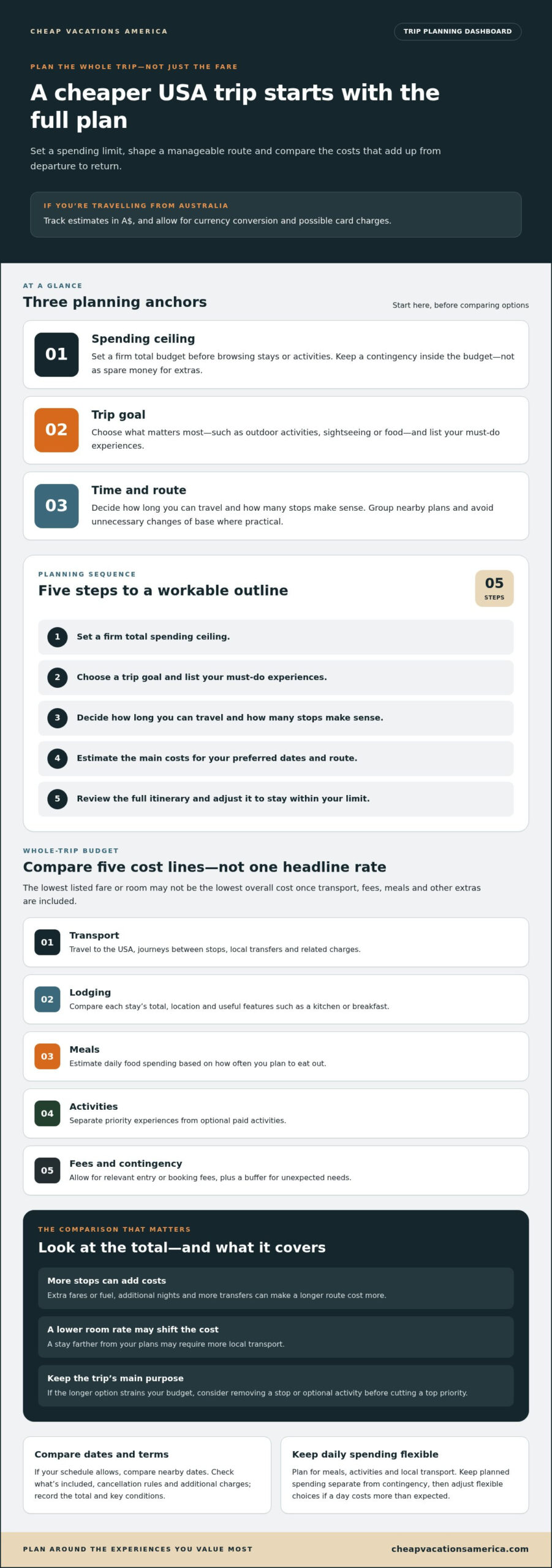
You don’t need expert travel skills to plan a low-cost trip. Start with three decisions: how much you can spend, what you most want to experience and how much time you have. These priorities make it easier to sort useful options from tempting extras.
A trip budget is a plan for the major expenses you’ll need to cover from departure to return. If you’re travelling from Australia, record estimates in A$ and leave room for currency conversion. Include transport to and around the USA, lodging, food, activities, local transfers and a contingency for unexpected costs. Treat the contingency as part of the budget, not as spare money for extras.
Use this planning order to turn your trip idea into a workable outline:
- Set a firm total spending ceiling.
- Choose a trip goal and list your must-do experiences.
- Decide how long you can travel and how many stops make sense.
- Estimate the main costs for your preferred dates and route.
- Review the full itinerary and adjust it to stay within your limit.
Your trip goal should guide the choices that follow. You might focus on outdoor activities, sightseeing, food or a mix of experiences. The Tourism in the United States overview illustrates the range of options. You don’t need to fit them all into one visit. Choose the kind of trip that matters to you, then build around it.
Set a total budget before choosing trip details
Set your spending ceiling before browsing stays or activities. Then divide your estimates into fixed commitments, flexible daily spending and optional extras. Fixed costs might include long-distance transport and confirmed lodging. Flexible spending covers meals and local travel. Extras are activities to add only if the plan still fits. Track every category in one spreadsheet or table, and update the estimates as your route takes shape.
Choose the trip shape that fits your time and money
A shorter itinerary with fewer stops can leave more time for the experiences you value. A longer trip may offer more variety, but extra nights and transfers add costs and planning. List your top priorities, then group them into a route with fewer changes of base where practical. Fewer transfers can mean less time packing, travelling and arranging the next connection.
Keep your first outline flexible. Compare a focused version with a longer, multi-stop version, using the same spending categories for both. If the longer option strains your budget, remove a stop or optional activity before cutting an experience at the top of your list. Budget-focused destination guides can help you research places and stays once you’ve set your priorities.
Build a cheap USA trip budget around dates, distance, and daily costs
Your dates and route affect the budget as much as your choice of accommodation. A stay may cost more on your chosen dates, while extra stops can add fares, transfers and time on the road. To work out how to plan a cheap USA trip, compare the full cost of realistic options instead of judging them by one attractive rate.
The lowest listed rate may not mean the lowest overall cost once you add transport, fees, meals and other extras. Use one budget sheet, record estimates in A$ and keep the categories consistent as you compare plans:
- Transport: Include travel to the USA, journeys between stops, local transfers and related charges.
- Lodging: Compare the total for each stay, its location and useful features such as a kitchen or breakfast.
- Meals: Estimate food spending for each day based on how often you plan to eat out.
- Activities: Separate priority experiences from optional paid activities.
- Fees and contingency: Allow for relevant entry or booking fees, plus a buffer for unexpected needs.
Distance connects these costs. A route with more stops may mean extra fares or fuel, additional nights and more transfers. Compare it with a simpler route, even if the simpler option has a higher headline transport fare. The useful question is: what will the whole trip cost for the experiences you want?
Compare dates and booking terms before committing
If your schedule allows, compare nearby dates with your preferred ones. Rates and availability can change, so a wider search gives you more options to weigh. Before choosing, read the cancellation rules, check what’s included and note any additional charges. Review the terms shown during booking, then record the total and key conditions in your budget sheet.
Make a simple daily spending plan
Set a daily guide for meals, activities and local transport that reflects your priorities. If a paid experience matters most, plan around it and look for flexibility in less important choices, such as where you eat. Keep planned spending separate from your contingency. During the trip, compare your actual spending with the plan and adjust flexible choices if a day costs more than expected.
For example, compare two date-and-route plans side by side. Include the same categories for each, then note what each total covers: nights, transfers and priority activities. This makes trade-offs easier to see. A cheaper stay farther from your plans may require more local transport, while a longer route may mean more nights and travel days. Choose the option that fits your spending ceiling without losing the trip’s main purpose.
Once you’ve set your budget framework, use budget-focused USA destination guides to explore trip options that fit your travel style. Treat prices shown on booking sites as changeable, and review the total and terms before you commit.
Compare transport and places to stay for a cheaper US itinerary
The cheapest-looking fare or room isn’t always the best fit once you add transfers, extra nights or the time it takes to get around. Compare each option with your route, group size and schedule. When planning a cheap USA trip, focus on the full journey and stay, not just the first price you see.
Use this table to shortlist transport options. Routes, schedules and included costs vary, so compare the details for your travel dates.
| Transport | Check the total fit | May suit |
|---|---|---|
| Car travel | Rental terms, fuel, parking and any local travel needed at each stop. | Routes with several stops or places that are hard to reach by other transport. |
| Intercity rail | Station access, departure times, connections and onward transport. | Routes served by rail where the schedule fits your plans. Amtrak operates intercity rail services. |
| Bus travel | Station location, travel time, baggage terms and transfers to your stay. | Journeys where bus schedules and stops work with your itinerary. |
| Flights | Baggage charges, airport transfers, arrival times and time needed at each end. | Longer distances where flying fits your schedule and the full cost compares well. |
Choose transport by route and total journey effort
Compare the effort as well as the fare. A low ticket price can lose its appeal if it means extra transfers, costly local travel or a long wait between connections. A car may help on a multi-stop route, but include rental terms, fuel and parking in your comparison. Use relevant consumer travel information from the U.S. Department of Transportation to understand the issues that may affect your plans.
Map your stops in order. Look for a route that avoids backtracking and repeated changes between transport types. If you’re travelling as a group, compare the total for everyone, not just the per-person fare. Keep the schedule realistic too: a cheaper option may take longer and leave less time for planned activities.
Match lodging to the way you plan to travel
Compare stays by the full cost, distance from planned activities, transport access, useful inclusions and cancellation terms. A lower nightly rate farther away may mean more local travel. These affordable places to stay across the USA can help you explore options that fit your route.
| Lodging type | Compare for your trip |
|---|---|
| Budget hotel | Location, included features, total stay cost and cancellation terms. |
| Hostel | Room setup, shared facilities, access to transport and total charges. |
| Campground | Distance from activities, facilities, transport needs and site terms. |
| RV stay | Site access, included facilities, distance to plans and any added travel needs. |
There’s no single best-value choice. Match transport and lodging as a pair: a stay near your plans may reduce local transfers, while a farther option only makes sense if the overall cost still works. Compare the total for your group and dates, then keep your itinerary flexible if schedules or terms don’t fit.
Shape a practical, low-cost USA itinerary before you book
A manageable itinerary helps you spend time on what matters instead of rushing between activities. Start with your priority experiences, then plan each day around location and travel time. This is a key part of how to plan a cheap USA trip: make the route work for your plans instead of trying to squeeze in every possible stop.
A flexible itinerary protects both your budget and your travel experience. Use this simple order to map out your days:
- List the experiences you most want to include.
- Group nearby activities into the same day where practical.
- Check travel times and connections between each stop.
- Leave open time for delays, rest or a good-value option you find along the way.
Think of the itinerary as a guide, not a minute-by-minute schedule. A day with fewer plans is easier to adjust if transport takes longer than expected or conditions change. It also gives you a chance to decide where a paid experience is worth the cost and where a free or lower-cost activity suits the day.
Arrange activities to avoid wasted time and extra transfers
Group plans by practical connections, not just by how appealing each activity sounds. Check distances and routes with Google Maps or another mapping tool, including the journey back to your accommodation. Allow time for transfers and travel between stops. Avoid filling every day: open space can absorb delays, make room for a rest or let you fit in a nearby low-cost activity you hadn’t planned.
Keep activities affordable without making the trip feel bare
Choose a few priority paid experiences, then balance them with free activities or lower-cost alternatives that suit your interests. Depending on what’s available during your visit, options may include public spaces, self-guided walks or free events. Check official attraction information for opening hours, access details, rules and conditions before planning a day around a particular place.
For each day, mark the activity you most want to protect and one alternative in case it’s closed, crowded or affected by weather. Check whether the alternative is nearby and what transport it requires. That simple backup can stop a change of plan from becoming an expensive scramble. Don’t assume an activity is free or open without reviewing its official visitor information.
Keep the plan readable. Add travel time, opening hours and booking details beside each activity. If a day looks too full, move or remove a lower-priority stop rather than making every connection tight. Broader ideas for how to travel America cheaply can help you find other ways to make your plans go further.
Ready to shape the route around your interests? Explore budget-friendly USA destination guides for ideas to help you build a practical itinerary.
Finish your cheap USA trip plan with booking checks and backup options
Before you commit, review the details that could change the trip total or disrupt your schedule. A quick final check can catch mismatched dates, missing connections and terms you might otherwise overlook. Keep your plan flexible, but avoid adding backup bookings you may not use. A clear alternative for each important part of the trip is often enough.
Check the details that can change the trip total
Read the final booking details, not just the search result. Check whether taxes, fees, baggage, deposits or other charges apply, and make sure the cancellation terms suit your plans. Confirm dates, traveller details, arrival times and transport connections across each part of the itinerary. For relevant public-land reservations, Recreation.gov is one example of an official resource. Review current information there and in the attraction or transport booking details.
Use this checklist before finalising your plans:
- Transport: Confirm departure and arrival times, baggage terms, transfer details and the route between connections.
- Lodging: Check dates, guest details, location, included features, total charges and cancellation rules.
- Activities: Review opening times, access details, reservation requirements and current visitor information.
- Itinerary: Check that arrival times leave enough time to reach the next stop, especially after a long journey.
- Records: Save confirmation details, booking references and cancellation terms together.
- Essentials: Store key travel information where you can find it offline, as well as in your email or travel folder.
Keep a backup plan without adding extra bookings
Choose a simple alternative for parts of the trip that could change, such as a nearby activity or another way to reach your stay. Note what you’d do if a connection is delayed or an attraction is unavailable. Review the terms before relying on a booking you might need to change. A backup plan should give you options, not create extra costs through duplicate reservations.
Keep your records together in a digital folder, and save copies of key confirmations for easy access. Include booking contact details and the address of each stay. If plans shift, you’ll be able to find the relevant terms quickly and make an informed change instead of searching through messages.
Use curated travel guides to move from plan to research
Cheap Vacations America publishes destination guides and curated recommendations for accommodation, tours, camping and RV facilities. Use them to compare ideas and continue your research. The site refers visitors to third-party booking sites and retailers; it doesn’t make bookings directly. Review the booking details and terms before committing.
Your plan doesn’t need to cover every possibility. Keep your priorities, records and one or two workable alternatives close at hand. If you’re still deciding where to go, explore budget-friendly US destination and travel recommendations for ideas that fit your trip style.
Turn your USA trip idea into a plan you can use
You don’t need to solve every detail at once. Choose the experience you’re most excited about, then take one practical next step. A clear plan helps you make decisions without letting every new option pull you off course.
Learning how to plan a cheap USA trip is about making your money support the parts of travel you care about. Keep your plan open to small changes, but let your priorities guide them. If an option doesn’t fit, adjust the plan rather than assuming the whole trip is out of reach.
Ready to explore what might suit you? Explore budget-friendly US destinations and trip ideas, with guides and curated recommendations to help you research stays, tours, camping, RV travel and gear.
Frequently Asked Questions
How do I plan a cheap USA trip for the first time?
For a first USA trip, start with one clear goal and a route you can explain in a sentence. Compare flight options from Australia, then estimate the major costs in A$. Before paying for non-refundable bookings, confirm current US entry requirements through official government sources. Keep your first plan simple. You can add a stop or activity later if the costs and travel time still work.
How much money should I budget for a USA trip?
There’s no single budget that fits every USA trip. Your total depends on trip length, international airfare, where you stay, how far you travel and which activities you choose. Build your estimate in A$ and include separate allowances for currency conversion, card charges and unexpected costs. For a useful reality check, price one sample day and one travel day, then adapt those estimates to your itinerary.
When is the cheapest time to travel in the USA?
The cheapest dates depend on your route, local seasons and what’s happening at your destination. Compare dates outside peak holiday periods and major events, when demand may be higher. If your schedule allows, compare a few different weeks rather than assuming one month is always cheapest. Look at airfare and accommodation together. A lower fare can be offset by more expensive stays or limited availability for activities you want.
Is it cheaper to drive or fly around the USA?
It depends on distance, group size and how much ground travel your plans require. For a group visiting several stops, compare the full cost of a car, including rental, fuel and parking, with flights and airport transfers for everyone. For a long journey between a small number of stops, flying may save time, but baggage and onward transport can change the total. Compare the same route and dates before choosing.
Can I plan a US trip without renting a car?
Yes. You can combine flights or intercity buses and trains with local public transport, walking and rideshare trips where available. This works best when your accommodation and planned activities have practical transport connections. Check routes and service times for your travel dates, especially for evenings or early arrivals. If an activity is hard to reach without a car, compare its transport cost with the cost of changing your plans.
How can I keep a USA trip affordable without missing out?
Choose the experiences that matter most to you, then look for lower-cost ways to enjoy the rest of the trip. For example, spend on one guided experience and fill another day with a self-guided visit or an activity in a public space. Review official attraction information for free entry periods or reduced-price options, as these vary. A destination guide can also help you discover budget-friendly activities that suit your interests.