
The lowest headline price can become the most expensive choice once you add essentials. To learn how to compare affordable US tours, compare the total trip cost and inclusions, then weigh duration, accommodation, transport, group size and reviews.
Price matters, especially when you’re travelling from Australia. But a low-cost tour only suits your budget if its itinerary and inclusions fit your plans. You shouldn’t have to decode vague package details or guess which option offers better value.
This guide explains how to compare tour prices and inclusions, assess reviews, and weigh escorted tours against your preferred travel style. Use these practical checks to spot meaningful differences and shortlist a US tour that fits your budget and plans.
Key Takeaways
- Compare the full itinerary and included services, not just the starting fare, to judge what each tour offers for its price.
- Use customer reviews to spot patterns in travellers’ experiences and get a clearer sense of tour quality.
- Weigh the convenience of an escorted trip against its price and the level of flexibility you want.
Comparing tour operator prices and inclusions
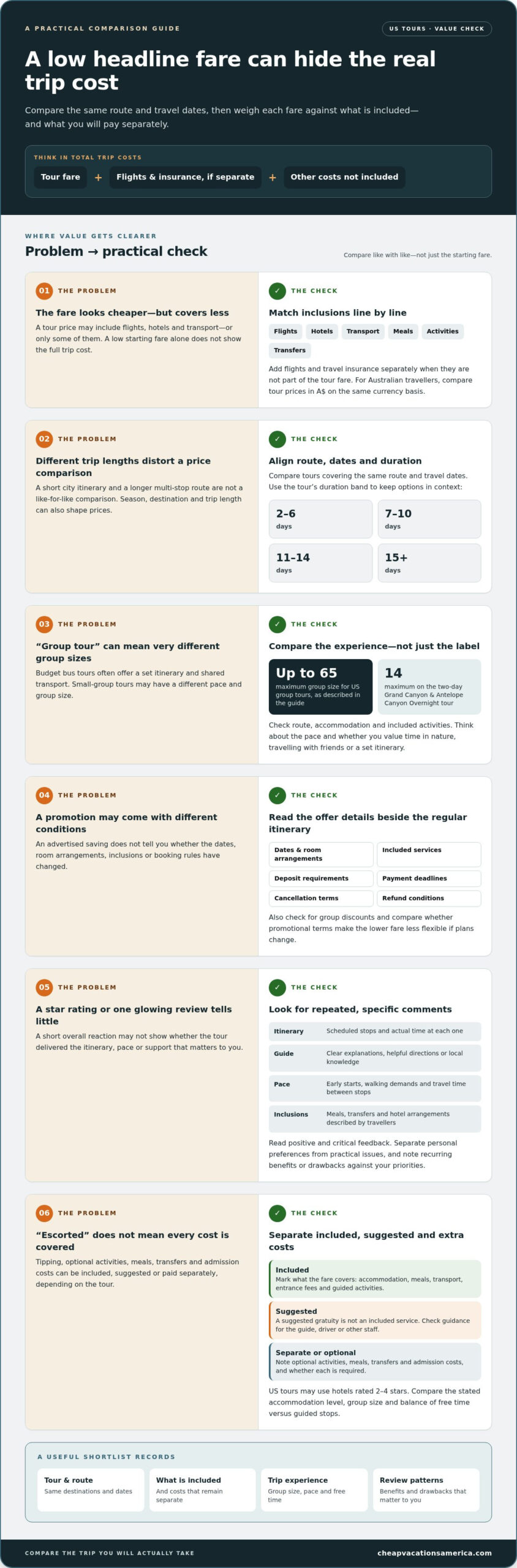
Compare tours covering the same route and travel dates, then match each price against its inclusions. Add flights and insurance separately if they’re not part of the tour fare.
Tour Prices and Included Services
Check whether the price covers flights, hotels and transport, or only some of them. Compare accommodation, meals, planned activities and transfers line by line. A travel consultant can help organise options into a like-for-like comparison, including a land tour and a river-cruise booking. Aggregator sites can help you scan itineraries and prices, while operator websites may provide details missing from shorter listings.
Bus Tours and Small-Group Tours
Budget bus tours often suit travellers who want a set itinerary and shared transport. Small-group tours may offer a different pace and group size, so compare the route, accommodation and included activities before judging value. For context, US group tours can have a maximum group size of up to 65 travellers, while the two-day Grand Canyon & Antelope Canyon Overnight tour has a maximum of 14. Choose based on the travel experience you want, whether you’re travelling with friends or prioritising time in nature.
Deals and Promotional Discounts
Compare promotional deals with the regular itinerary, not just the advertised saving. Look for group discounts and check whether an offer changes the dates, room arrangements or included services. Booking rules matter too: compare deposit requirements, payment deadlines, cancellation terms and refund conditions before paying. These details show what happens if plans change and whether the lower fare comes with tighter conditions.
For Australian travellers, compare the tour price in A$ with flights and travel insurance as separate trip costs. Exchange rates affect the converted tour price, so use the same currency basis across options. Season, destination and trip length also shape prices: a short city itinerary differs from a longer multi-stop route, with tours grouped by durations of 2-6, 7-10, 11-14 and 15 or more days. Compare matching dates and destinations for a fair view.
Customer reviews
Use customer reviews to assess a US tour package beyond its star rating. Read comments about the same itinerary and look for specifics: Was the guide clear? Did the planned stops happen? Was there enough time to see sights, walk and enjoy scenic areas? These details help you judge whether the advertised experience matches travellers’ accounts.
Look for repeated comments rather than relying on one glowing or unhappy review. If several travellers mention rushed stops, that may matter more to you than praise for a comfortable coach. Reports of smooth hotel check-ins and useful local guidance may strengthen a tour’s appeal. Match each comment to your priorities, such as free time, pace, accommodation or time outdoors.
- Itinerary: Compare what reviews say about the scheduled stops and actual time at each one.
- Guide: Look for examples of clear explanations, helpful directions, or strong local knowledge.
- Pace: Check comments about early starts, walking demands, and time spent travelling between stops.
- Inclusions: Note whether travellers describe the meals, transfers, or hotel arrangements shown in the tour details.
Read positive and critical feedback for balance. A review that says “great trip” offers little detail, while a comment explaining that a scenic overlook visit was brief gives you something to compare with the itinerary. Separate personal preferences from practical issues. One traveller may dislike a busy schedule; another may value seeing several places in one trip.
Keep a short comparison note for each option. Record the tour name, the itinerary feature mentioned, and whether the comment describes a benefit or drawback. For example, note “long walking days” if multiple reviews mention tiring routes. Compare these notes with your plans for the US. Reviews don’t replace itinerary details, but they can show what to investigate before booking.
Escorted tours and transparent pricing
Escorted tours combine planned transport, activities and a guide-led itinerary. Tipping and extra fees vary by tour, so compare which costs are included, suggested or paid separately.
Escorted Tour Pricing
Read the itinerary beside the price breakdown. Check accommodation, meals, transport, entrance fees and guided activities, then mark what each fare covers. US tours may use hotels rated 2-4 stars, so compare the stated accommodation level rather than assuming similar prices mean similar stays. Group size and the balance of free time and guided stops can also affect which escorted option suits your trip.
Trip length changes what a headline fare represents. Tours are grouped into duration ranges of 2-6 days, 7-10 days, 11-14 days and 15 or more days. Compare the daily schedule as well as the total price. A national parks itinerary, for example, may include different transport and activities from a city-focused route.
Tipping Expectations and Additional Fees
Look for clear tipping information in each tour’s pricing details. It should say whether gratuities are included, suggested or left to travellers. A suggested tip isn’t an included service. Check any guidance for the tour guide, driver or other staff, and account for these costs separately when estimating your spending.
Then check for optional activities, meals, transfers and admission costs outside the listed fare. A canyon visit might involve activities beyond the scheduled tour, while a national parks trip may have separate entry costs. Compare the same items across itineraries and note whether each is required or optional. This makes the total easier to understand before booking.
For a final check, match the price to the trip you’ll actually take. Compare group size, accommodation details, included activities and the daily schedule. US group tours can have a maximum group size of up to 65 travellers, so check the listed group limit if a smaller guided experience matters to you. A transparent breakdown lets you weigh convenience against the costs that remain yours to cover.
A clear shortlist makes it easier to compare what suits you.
Searching Within a Tour Budget
To learn how to compare affordable US tours, first filter for your preferred destinations and travel dates. Then sort by trip length and check whether each option matches your interests. A central-city stay may suit museums and cultural stops, while a hiking itinerary may focus on outdoor access. Compare the schedule, accommodation and included activities before deciding whether the fare fits your plans.
Travelling in off-peak seasons is one way to look for cheaper US tour packages. If your dates are flexible, compare different departure periods for the same destination and itinerary. Booking three to six months ahead is recommended for the best selection and prices in popular destinations and travel seasons. Keep a shortlist of options that match your budget and preferred travel style.
Average Guided Tour Costs
There’s no single average cost that describes every affordable guided tour in the USA. Prices depend on factors such as destination, duration, accommodation and included activities. A short city visit and a longer route through several destinations have different itineraries and inclusions. Compare similar trips to judge whether a tour’s price fits the experience it offers.
When learning how to compare affordable US tours, start by separating the tour fare from your wider travel budget. Include flights, insurance and personal spending in your trip plan, then assess tours against the amount set aside for the tour itself. Compare prices in Australian dollars, accounting for the exchange rate if a fare is shown in another currency.
Explore US budget destinations to find places that suit your travel plans. A destination shortlist can help focus your tour search.
Cheap Vacations America: Low budget destinations
Cheap Vacations America helps you explore low-budget destinations and budget-friendly US cities as you narrow down where to go. Its destination guides can help you compare places and shape an itinerary around your interests and budget.
Once you’ve chosen a destination, browse recommendations for well-priced hotels and hostels to consider alongside your tour plans. This is a useful next step if you’re weighing a guided itinerary against a trip centred on a particular city or region.
Visit Cheap Vacations America to explore US destinations and travel guides.
Choose a US trip that fits your priorities
Your next step is to decide what you most want from the trip. It could be time in one city, a route through several destinations, or a balance of guided activities and independent exploring. Keep that priority in view as you build your shortlist. It can help you choose a tour that feels worthwhile, rather than simply one with the lowest headline fare.
Explore Cheap Vacations America’s low-budget destinations, guides to budget-friendly US cities and travel destination guides to find places and shape your plans. With a destination in mind, focus on the itineraries and travel styles that suit you. A clear priority also makes it easier to apply what you’ve learned about how to compare affordable US tours.
Ready to plan your next step? Contact Cheap Vacations America to explore budget-minded US travel ideas. Pick a direction that suits you, then start building a trip you can look forward to.
Frequently Asked Questions
Which US tour operators offer the best value for money?
No single US tour operator offers the best value for every traveller. Compare options against your route, preferred pace and priorities. Cheap Vacations America is a travel guide, not a tour operator, and shares tour recommendations alongside destination-planning information. Use those recommendations to build a shortlist, then judge each operator’s itinerary and booking terms against the trip you want, rather than relying on a “best value” label.
What is included in the advertised price of a US tour, and what costs extra?
An advertised fare covers only the items explicitly listed in the tour details. Before booking, check the itinerary and terms for meals, airport transfers, attraction entry, optional excursions, baggage handling and gratuities. Count an item as included only when the offer says so. Save the price page or booking summary you used, then compare it with the final payment breakdown.
How can travellers compare US tour itineraries, accommodation, and included activities?
Compare itineraries by matching overnight stops and time at each destination, not just the number of places listed. Check accommodation location and room arrangements, then mark which activities are guided, optional or self-directed. For example, a central hotel can reduce daily travel to sights, while a more distant stay changes how you spend your evenings. This makes the trade-offs clear before booking.
What safety, accessibility, and traveller-review factors should be checked before booking a US tour?
Check the tour’s stated walking demands, transport and accommodation access, and planned terrain against your needs. A walking-heavy sightseeing itinerary requires different preparation from a coach-based city route. Read reviews for specific reports about pace or access, and distinguish first-hand details from general praise. Look for practical comments about guide communication and how itinerary changes were handled, not just star ratings.