
The cheapest hotel rate doesn’t always make the cheapest city break. For budget city breaks USA travellers need to weigh the whole trip, including getting there, choosing where to stay, getting around and deciding what to do each day. A low-cost room may be less useful if it adds travel time or extra local transport costs.
It’s easy to spot an appealing offer and overlook the expenses that come with it. If you’re planning from Australia, start with the kind of break you want, then compare the main costs before settling on a destination. A food-and-culture weekend, a museum-focused visit and an outdoor city escape can each call for a different plan.
This guide shows you how to match a city-break style to your interests, identify the costs that shape your budget and plan a practical short trip. Compare accommodation, transport and paid activities with free or low-cost things to do, then use the steps below to build an itinerary that feels manageable from the start.
Key Takeaways
- Choose a trip style that fits your interests, pace and spending limit.
- Compare the full trip cost, including transport, accommodation, local travel, meals, attractions and extra fees.
- Group nearby activities into the same day and leave room for free or low-cost stops.
- Follow a five-step planning sequence to turn a shortlist into a practical getaway plan.
- Use destination guides and curated accommodation and tour recommendations to research your options.
What makes a budget city break in the USA work?
A short urban trip can look affordable until you add transport, meals and activities. Plan around the cost of the whole visit and what you want to get from it. A low room rate matters, but so does how easily you can reach the places you want to see and how much time you have to enjoy them.
A budget city break is a short urban trip planned for the best overall value, balancing transport, accommodation, food and activities against your time and spending limit.
That balance leaves room for worthwhile experiences. You might choose one paid attraction, then fill the rest of the day with free or low-cost options such as public spaces, markets or a self-guided walk. The goal isn’t to cut out everything enjoyable. Spend deliberately on what matters to you and avoid paying for plans that don’t.
The general principles of travel include moving between places and making choices about time and resources. On a city break, those choices come close together. A focused plan helps you make the most of each day without turning the trip into a checklist.
Which travellers benefit most from a short city getaway?
A city break suits travellers who want a compact mix of food, culture, sightseeing and downtime. It can work for a couple of days away, a solo visit built around a personal interest, or a short family trip with a manageable number of activities. With limited days, it’s easier to set a clear daily plan and focus spending on a few priorities.
Unlike a multi-stop holiday, a city break centres on one urban base. You spend less time moving between destinations and more time choosing what to do in one place. That focus can make both the schedule and the budget easier to track.
What does affordable mean beyond the room rate?
Look at the combined cost of reaching your destination, accommodation, local transport, food, activities and extra fees. If you’re travelling from Australia, include the journey to the USA in your overall budget. Compare the full trip rather than judging a hotel offer on its own.
A convenient base may cost more per night but save time and local transport if it puts your chosen activities within easier reach. Compare that trade-off with a cheaper room farther away. To develop a shortlist, explore cheap coastal towns in America and other budget-friendly small-town breaks alongside your preferred trip style.
Five budget city-break styles to consider across the USA
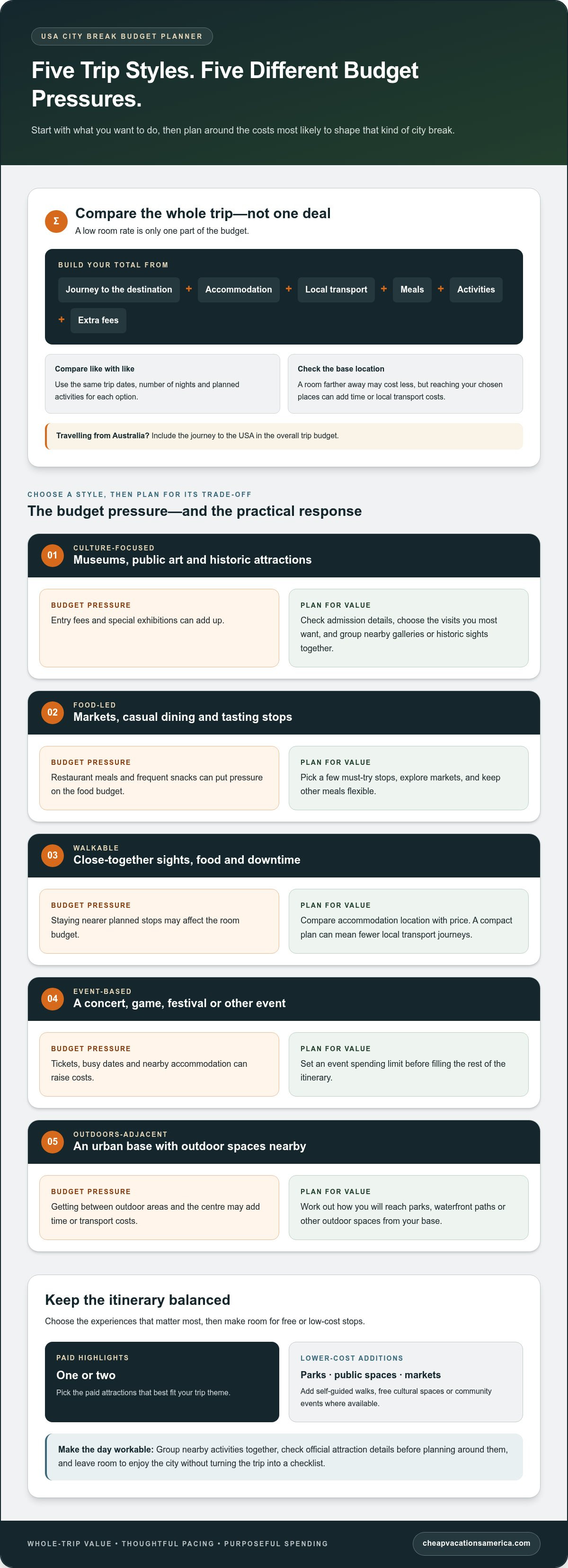
Start with what you want to do, not an assumption that one type of trip will always cost less. A culture-heavy weekend has different cost pressures from a food-led visit or an event trip. Use these styles to shape your shortlist, then compare the expenses that matter for your plans.
- Culture-focused: Build days around museums, public art and historic attractions. This suits curious travellers who enjoy a planned dose of learning, but entry fees and special exhibitions can add up. Check admission details and choose the visits you most want to make.
- Food-led: Explore markets, casual dining and self-guided tasting stops. This suits travellers who enjoy trying local flavours at their own pace. Restaurant meals and frequent snacks can put pressure on the food budget, so pick a few must-try stops and keep other meals flexible.
- Walkable: Choose a compact itinerary with sights, food and downtime close together. This suits visitors who enjoy exploring on foot and want fewer local transport journeys. Compare accommodation location with price, since staying nearer your planned stops may affect the room budget.
- Event-based: Plan around a concert, game, festival or other event. It works for travellers with one clear reason to visit, but tickets, busy dates and nearby accommodation can raise costs. Set an event spending limit before filling the rest of the itinerary.
- Outdoors-adjacent: Pair an urban base with parks, waterfront paths or other outdoor spaces where available. This suits travellers who want fresh air alongside city sights. Work out whether getting between outdoor areas and the centre adds time or transport costs.
Match the trip style to your interests
Pick one main theme, then add activities that support it. For a culture-focused break, check museum entry details and group nearby galleries or historic sights together. For a food-led plan, mark markets and casual dining stops, then leave room to choose a few places as you explore. For a walkable trip, make a short list of close-together stops instead of filling the schedule with activities across town.
Balance paid attractions with low-cost experiences
Mix one or two paid highlights with public parks, free cultural spaces, self-guided walks and community events where available. This keeps the days varied without making every stop a ticketed activity. Event schedules, opening times and access can change, so check official attraction information before planning around specific details.
If you’re open to a quieter trip beyond an urban centre, compare the options in a guide to affordable small towns to visit in the USA. For city ideas that fit your chosen style, browse budget-friendly city-break guides, then compare dates and plans for the options that interest you.
How to compare the real budget for a US city break
A headline fare or room rate is only one part of the picture. Compare options using the same trip dates, number of nights and planned activities. That makes it easier to see whether an attractive deal still fits once everyday costs are included.
The total trip budget matters more than one deal price because transport, lodging, local travel, meals and activities all contribute to what you spend.
Which costs deserve a place in your comparison?
Separate costs that are mostly set before departure from daily spending that can shift with your choices. For Australian travellers, getting to the USA and accommodation are major items to compare first. Then estimate meals, local transport and activities based on the itinerary you actually want, rather than an idealised plan.
| Cost category | What to compare | Questions to ask |
|---|---|---|
| Transport | Travel to and from the destination, plus transfers | Are bags, connections or transfers part of the quoted fare? |
| Lodging | Total stay, not just the nightly rate | How many nights are needed, and what terms apply? |
| Local travel | Transit, rides, and parking where relevant | How often will the itinerary require a journey? |
| Meals | Daily food plans, including drinks and snacks | Will you mostly cook, eat casually or book sit-down meals? |
| Attractions | Admission, tours and event tickets | Which experiences are priorities, and which are optional? |
| Fees | Applicable taxes, service charges or booking costs | Are these shown in the displayed total? |
Prices and terms can change with dates, demand and booking conditions. Check the current details for each option and record the full amount in one currency, including Australian-dollar estimates if you’re planning from Australia. Don’t count a cost as included unless the terms say so.
Compare package and separate-booking approaches
A package can group some trip components into one price, while arranging items separately lets you compare each category on its own. Neither approach is always cheaper. Check what is covered, what remains to pay and whether the dates and terms suit your itinerary. For budget city breaks USA travellers should compare full totals side by side instead of assuming a bundle or a standalone offer will cost less.
How can timing and trip length affect value?
Flexible dates may give you more options to compare, but they don’t guarantee a lower total. Look at the same trip across alternative dates, then consider whether an extra night gives you useful time or mainly adds lodging, meals and local travel. A shorter visit may mean a tighter schedule; an additional night may spread activities out but increase the total. Treat date and length as variables, then choose the balance that fits your plans.
Plan a lower-cost city break with a simple itinerary
A clear plan helps you spend on the parts of a trip you care about without cramming every hour or paying for unnecessary journeys. For budget city breaks USA, use this five-step sequence to turn a destination idea into a workable short stay:
- Set a spending limit. Choose a total amount you’re comfortable with, then separate costs you’ll need to cover from flexible daily spending. If you’re planning from Australia, keep estimates in Australian dollars so you can compare them consistently.
- Choose a trip style. Decide whether the main draw is culture, food, walking, an event or outdoor time. A clear focus makes it easier to decide which activities deserve space in the plan.
- Compare dates. Look at a few possible travel periods and note how dates affect transport, accommodation and activity plans. Treat flexibility as a way to compare options, not a promise of lower costs.
- Map activities. Pick one or two paid priorities, then add free or low-cost options that suit your interests. Group nearby stops on the same day to cut backtracking and avoid unnecessary local travel.
- Review costs. Add up transport, lodging, meals, local travel, admission and applicable fees. If the total doesn’t fit your limit, adjust the dates, length of stay or activity mix before settling on the plan.
Build each day around a practical route
Start with an anchor activity, such as a museum visit or a booked tour, then plan flexible stops nearby. Check current official information for opening hours, access details and event schedules before setting the route. Leave time for meals, breaks, weather changes and transit between stops. A day with breathing room is easier to adapt than one packed with timed bookings.
For example, put a morning attraction and a nearby park or public space on the same day, then leave the afternoon open for a self-guided walk or a rest. The route will depend on your chosen destination, but grouping activities by distance can help reduce extra journeys.
Keep the budget flexible without losing control
Set simple limits for meals, activities and local transport, and track planned costs against them as you build the itinerary. Keep a reserve for changes or unexpected expenses that suits your own plan. Before finalising bookings, review cancellation terms and check attraction schedules again. That leaves room to adjust while keeping the total in view.
Use affordable US destinations and lower-cost trip planning to develop your shortlist, then shape each day around your priorities. Explore destination guides and curated recommendations to research accommodation and activities for your itinerary.
Turn your USA city-break shortlist into a workable trip
You’ve compared trip styles, costs and possible routes. Now turn the strongest option into a plan you can check from start to finish. Confirm the dates, shape an itinerary around the activities that matter most, then research stays and tours that fit the route and your overall budget.
For Australians planning budget city breaks USA, keep your estimates in Australian dollars and note the exchange rate you used. Revisit that estimate before committing, as the final amount can shift with currency changes and booking terms. A simple list of costs makes it easier to compare options without losing sight of the total.
Compare stays and activities against your plan
Start with the kind of stay that suits your trip. Compare hotels, hostels and other budget accommodation options by location, dates, length of stay and what the listed rate includes. A room that looks suitable on its own may be less practical if it makes your planned activities harder to reach, so weigh location alongside price.
Next, look at tours and activities that match your chosen style. A guided tour may suit a packed sightseeing plan, while independent visits can leave more room to adjust your day. Cheap Vacations America brings together destination guides and curated accommodation and tour recommendations to help you discover options. The site refers travellers to third-party booking sites rather than taking bookings directly. Follow a booking link to review current details, policies and total charges on that site before making a decision.
Choose your next planning step
Keep the process simple. Settle on dates that suit your plans, check that the itinerary works for those dates, then compare accommodation and activities with the amount you’ve set aside. If one option pushes the plan over budget, adjust the route, stay or activity mix and compare again. You don’t need every detail locked in at once.
Browse the site’s budget destination and travel recommendations to research options that fit your preferred city-break style. Use the guides as a starting point, then review the specific details on any third-party booking site before you proceed.
Before you finalise the plan, run through this quick check:
- Fit: Does the trip match your interests and the time you have?
- Total budget: Have you considered transport, stay, meals, local travel, activities and applicable charges?
- Itinerary: Are the activities practical to reach, with enough time for breaks and changes?
- Booking terms: Have you reviewed current details, policies and total charges on the third-party site?
Make your next city break your own
Your shortlist doesn’t need to be perfect before you take the next step. Choose the idea you’re most excited about, then test it against your dates, available time and spending limit. If the first plan feels too tight, adjust one part rather than giving up on the getaway. A different stay, a slower itinerary or a new travel style could make it work better.
For fresh ideas, browse curated US destination and travel guides, with recommendations covering accommodation, tours, camping, RV facilities and travel gear. Use them to explore options and keep shaping a trip that suits the way you want to travel. The best plan is one you can look forward to and manage comfortably.
Explore budget-friendly US travel ideas and find a starting point for your budget city breaks USA shortlist. Compare options one choice at a time and leave room for the experiences that matter most. Your next urban getaway can be both practical and memorable.
Frequently Asked Questions
How many days are enough for a USA city break?
Two to three full days can suit a focused visit built around a few interests. Arrival and departure days may leave less time for sightseeing, especially on a long journey from Australia. If your must-see list spans several parts of a city or includes a full-day event, allow more time or trim the plan. Choose a length that leaves room to enjoy the trip, not just move between stops.
Can you plan a US city break without renting a car?
Yes, many city breaks can be planned without a rental car if your accommodation and activities work with local transport and walking. Before choosing where to stay, look at how you’ll get from your arrival point to your accommodation, then map the main sights and everyday errands. If a key activity sits far from your other plans, compare the time and cost of reaching it with choosing a different activity.
What should I include when comparing the cost of a city break?
Include every expected cost, and note whether it applies per person, per room or once for the group. This matters when comparing a solo trip with a shared stay. Look for items that may sit outside a headline quote, such as baggage, transfers, taxes or service charges. Keep estimates in Australian dollars and record the exchange rate and date used so later comparisons stay consistent.
Are package deals cheaper than booking trip components separately?
Not always. A package may suit your dates and simplify planning, while separate arrangements may give you more control over individual choices. Compare options for the same dates and travellers, then account for details such as baggage, room occupancy, cancellation rules and exclusions. A lower starting price can lead to a different final total if important trip needs aren’t covered. Choose based on the full terms and fit, not the label.
How can I find free things to do during a US city break?
Search official visitor, museum, park and public-library websites for free entry, public events, public art and self-guided routes. Look for recurring events as well as one-off listings, and check access rules and opening times before you go. Some attractions may offer free access only on certain days or at set times. Save a few options near your planned route so you can swap them in if weather or schedules change.
What happens if my travel dates change after I book?
It depends on the terms attached to each booking. Contact the airline, accommodation provider or activity organiser using the details on your confirmation and check whether changes are allowed, what deadlines apply and whether extra charges or fare differences may arise. If separate parts of the trip were booked independently, changing one may not automatically change the others. Keep confirmations together and review the rules before paying.
Is a hostel or budget hotel better for a short city break?
It depends on how you want to use your room. A hostel may suit travellers comfortable with shared spaces and interested in meeting other guests, while a budget hotel may better fit those who value a private room. For a short stay, compare location, room setup, check-in arrangements and noise details alongside the listed price. Solo travellers and pairs may weigh those features differently, so choose based on your own comfort needs.