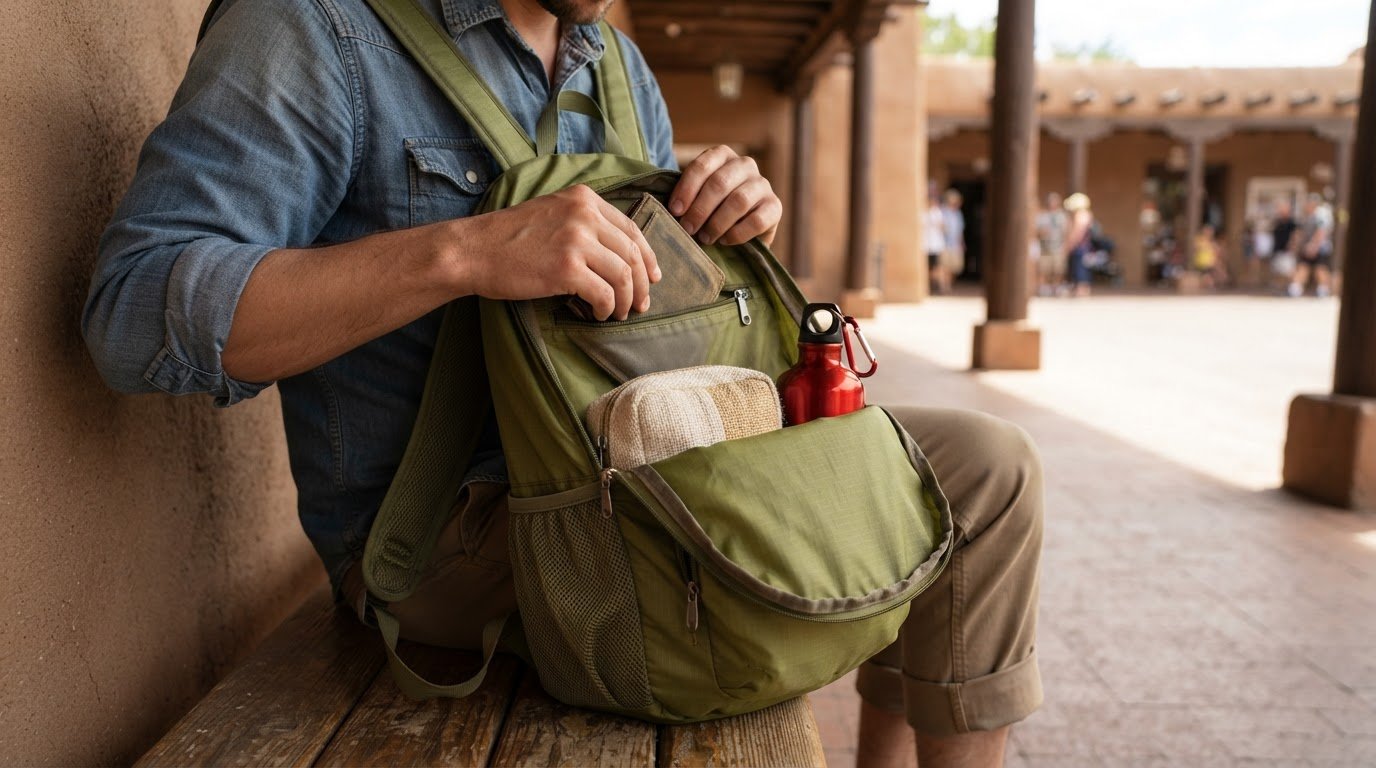
Budget travel essentials can work for both flights and general travel, but a packable daypack earns its place once you’re out exploring. Start with a simple bag organiser, a travel wallet for important items and a lightweight daypack for daily outings. Choose each item for how you’ll use it, not just because it’s labelled for travel.
Keeping costs down also means avoiding gear that only suits one part of a trip. Buy the items that solve your biggest packing or day-to-day hassle first, then add extras only if they fit your plans.
This guide compares packing organisers, travel wallets and money belts, plus accessories that can make flights and time on the ground easier. You’ll also see when a compact daypack is more useful than another flight-focused item, so you can prioritise practical gear for your next trip around Australia or further afield.
Key Takeaways
- Match packing cubes or reusable organisers to the way you pack, so clothes and small items are easier to find.
- Choose a travel wallet, money belt or organiser based on what you need to keep close and easy to reach.
- Prioritise accessories that solve your main travel hassle, such as keeping damp clothes apart or protecting electronics from rain.
- Consider a packable daypack for exploring, then add only the gear that suits your plans and travel style.
1. Packing cubes and non-plastic organisers
Packing cubes give clothes a set place inside a suitcase or backpack. Use one for tops, another for bottoms, and a smaller organiser for chargers or toiletries. This makes it easier to find what you need without unpacking everything and helps separate clean clothes from laundry during a trip. For more ideas, see this guide to best affordable travel gear for packing light and staying organised.
For a quieter option in a shared room, choose fabric organisers instead of rustling plastic bags. Compression cubes can reduce the space clothes take up, while standard packing cubes keep categories separate. A travel backpack has held two weeks of summer clothes for a Europe trip, showing how grouped packing can make a smaller bag workable. Let your destination and planned activities guide what goes inside each cube.
Add a laundry bag to keep worn clothes apart from clean outfits. One large travel laundry bag measures 91 x 61 cm, giving you room to collect washing as the trip goes on. For easier access, keep frequently used items near the top of your bag. Put an eye mask in a small cube or organiser, not at the bottom of your luggage.
A luggage scale can help you weigh a packed bag before heading to the airport. Pack first, weigh the bag, then remove or rearrange items if needed. Check your airline’s baggage allowance separately, since a scale won’t tell you what that allowance is. A travel organiser can keep cords, adapters and small items together. Choose a size that fits your bag rather than buying capacity you won’t use.
For a trip around the United States, choose travel insurance that suits your medical needs, planned activities, baggage and cancellation concerns. Costs depend on factors such as your destination, trip length, age and chosen cover, so compare policies with your actual plans in mind.
Start with a packing cube and laundry organiser if you’re testing a new system. Add more only when you encounter a real packing problem. These budget travel essentials should simplify packing, not give you another set of items to manage.
2. Should I choose a travel wallet, money belt or organiser?
Choose a travel wallet for documents and payment cards you need to reach during flights or at the airport. A money belt sits under clothing and keeps essential items close. A general organiser works better for passports, tickets and small travel papers that stay inside your bag. Pick one based on what you’ll carry, not how many pockets it has.
In your personal-item bag, keep your passport, wallet, phone and any important medication near the top. A lightweight travel backpack can hold those items, a change of clothes and toiletries, while checked luggage carries bulkier gear. Before leaving, put valuables in the same pocket each time. You’ll know where to look in an airport queue or after switching bags.
Separate checked luggage from your carry-on by need. Pack clothing and less urgent items in the checked bag; keep documents, daily essentials and a spare layer in the bag you can access during the flight. A waterproof pouch can contain toiletries or protect small items from spills. Avoid putting valuables at the bottom of a suitcase, where they’re harder to reach quickly.
Luggage tags make bags easier to identify among similar cases. Add your name and a way to contact you, but avoid displaying unnecessary personal details. Bluetooth trackers can help locate a tagged bag using a compatible phone and tracking network. They’re an extra tool, not a replacement for keeping important items with you. For international flights, check the airline’s baggage rules before packing, as bag size and included allowance can vary by ticket.
Let your route shape the choice. A city break with frequent day outings may call for an easy-access wallet, while longer transfers can make a money belt more convenient. Use travel destination guides to plan where you’ll go, then choose a bag setup that fits the journey.
3. What are the most useful travel accessories to buy first?
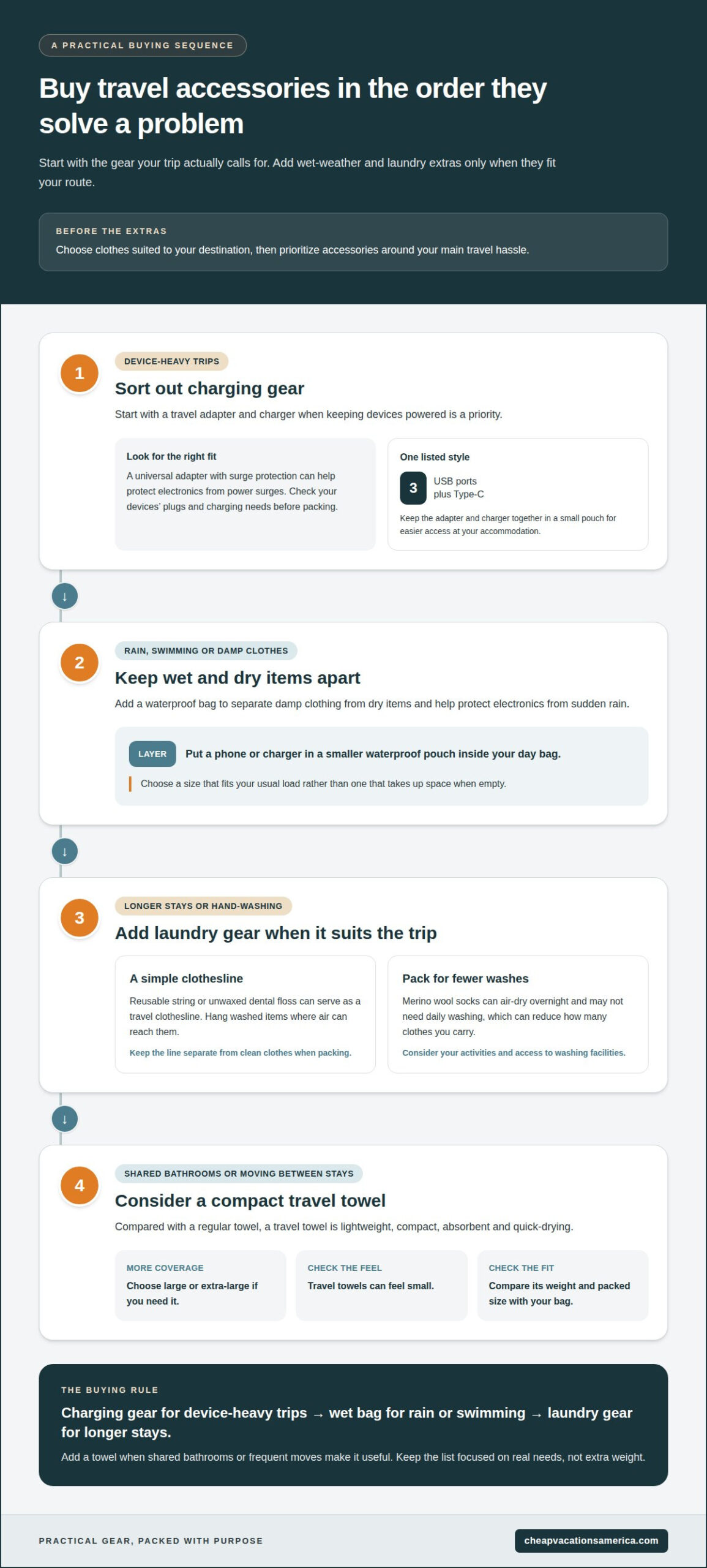
Start with a travel adapter, charger, wet bag and clothes suited to your destination. Add a compact towel or laundry line if your plans include hostels, hand-washing or frequent moves between stops.
For wet-weather days, a waterproof bag separates damp clothes from dry items and can protect electronics from sudden rain. Keep your phone or charger in a smaller waterproof pouch inside your day bag. This extra layer helps keep wet swimwear or rain-soaked clothing away from clean outfits. Choose a bag size that fits your usual load, rather than one that takes up space when empty.
A universal travel adapter with surge protection can help protect electronics from power surges. One listed style has three USB ports and Type-C, useful for charging several devices from one adapter. Check your devices’ plugs and charging needs before packing. Keep the adapter and charger together in a small pouch so they’re easy to find at your accommodation.
A simple laundry line can be useful when washing clothes by hand. Reusable string or unwaxed dental floss can serve as a travel clothesline. Hang washed items where air can reach them, and keep the line separate from clean clothes when packing. Merino wool socks can air-dry overnight and may not need daily washing, which can reduce how many clothes you need to carry. Pack socks according to your activities and access to washing facilities.
A travel towel is a practical choice if you expect to use shared bathrooms or move between stays. Compared with a regular towel, it is lightweight, compact, absorbent and quick-drying. Choose a large or extra-large size for more coverage, since travel towels can feel small. Check its weight and packed size against your bag before adding it to your list.
Buy accessories in order of need: charging gear first for device-heavy trips, then a wet bag for rain or swimming, followed by laundry gear for longer stays. This keeps your packing list focused and prevents useful items from becoming extra weight. For budget travel essentials, favour pieces that solve a real problem on your route.
4. Packable daypacks and exploring gear
A packable daypack earns its space when your main luggage stays at your accommodation. The Nanobag daypack has a 15L capacity, giving you a compact option for carrying daily essentials. Use it for a water bottle, light layer, phone and snacks on a city walk. Check that your planned items fit before choosing a daypack, especially if you’ll carry a camera or extra clothing.
Pack your daypack inside your main bag for travel days, then use it when you arrive. Keep frequently used items, such as a transit card or sunscreen, in an easy-to-reach pocket. A separate toiletry bag keeps personal care items together, while a small pouch can hold chargers. Avoid carrying all your luggage around town. Take only what you need for the day’s route.
For outdoor stops, a head torch keeps both hands free for tasks such as eating, camping or walking at night. Add one when your itinerary includes campsites or evening walks, rather than packing it automatically for every city break. If laundry is part of your trip, carry a lightweight line and keep it with your washing kit. A compression sack can group soft items, but don’t compress gear you need to reach quickly.
Think through a typical day before adding extras. For a museum visit, a small daypack may be enough for a jacket and phone. At a campsite, you may also want a head torch and laundry supplies. This simple test helps keep carrying comfortable and your main bag uncluttered. Portable gear is most useful when it solves a clear need on your route, not just because it packs away.
Plan your stops first, then match your exploring gear to the activities. Browse low-budget US destinations to shape a trip around places you can explore with a light daypack.
Cheap Vacations America: Low budget destinations
Cheap Vacations America helps you plan the destination side of a budget trip with guides to affordable places across Australia. Explore its recommendations when choosing where to go, comparing budget-friendly Australian cities or narrowing down a destination before sorting your packing list.
Its destination guides feature low-budget destinations and recommendations for well-priced hotels and hostels. Use them to weigh which places and types of stay suit your plans, then match your daypack and other gear to the activities you expect to enjoy. Make the next step practical: decide where you want to explore before adding more items to your bag.
Explore Cheap Vacations America’s Australian destination guides and start shaping your trip.
Plan the trip before adding more gear
Let your next destination guide what you buy. A useful packing choice for a city break may not suit a road trip or a stay near the outdoors. Set your route and daily plans first, then add only the gear that supports them. This keeps your budget travel essentials tied to your trip, not to a growing pile of travel items.
Cheap Vacations America can help you choose a destination with low-budget ideas, guides to budget-friendly US cities and travel recommendations. Use them to narrow down where you want to go, then build a simple plan around the places and activities that matter to you.
Ready to take the next planning step? Contact Cheap Vacations America to explore destination ideas and start shaping a trip that suits your budget. A clear plan makes it easier to pack with purpose and look forward to getting out there.
Frequently Asked Questions
Are these products better for flights or general travel?
Most are useful for both, but the best choice depends on where you’ll use an item most. For a flight-heavy itinerary, favour gear that stays handy during a layover, such as a small document pouch. For days spent walking around, choose something comfortable to carry for longer. Picture a typical travel day before packing and decide which items earn their space.
Should I choose a travel wallet, money belt or organiser?
Choose based on how often you need to reach your documents and cards. A travel wallet suits someone who wants key papers together for check-in or passport control. A money belt may suit a traveller who prefers to keep valuables under clothing. An organiser works well for items that can stay in a bag. Test your setup at home with the documents you’ll actually carry.
What are the most useful travel accessories to buy first?
Buy the accessory that solves a problem your current gear can’t handle. If your devices use different plugs at your destination, start with a suitable adapter. If you already own charging gear, don’t duplicate it. Lay out your planned clothes and daily items, then make a budget travel packing list around what’s missing. This helps you avoid spending on accessories that don’t suit your route or travel routine.
What counts as a cool travel item?
A cool travel item is a small, useful piece of gear that makes an ordinary task easier. For example, a spork can handle meals from a market, grocery shop or casual food stall. It’s more practical than packing separate cutlery for simple meals. Choose items that fit the way you travel, and skip novelty gear that adds bulk without solving a real need.