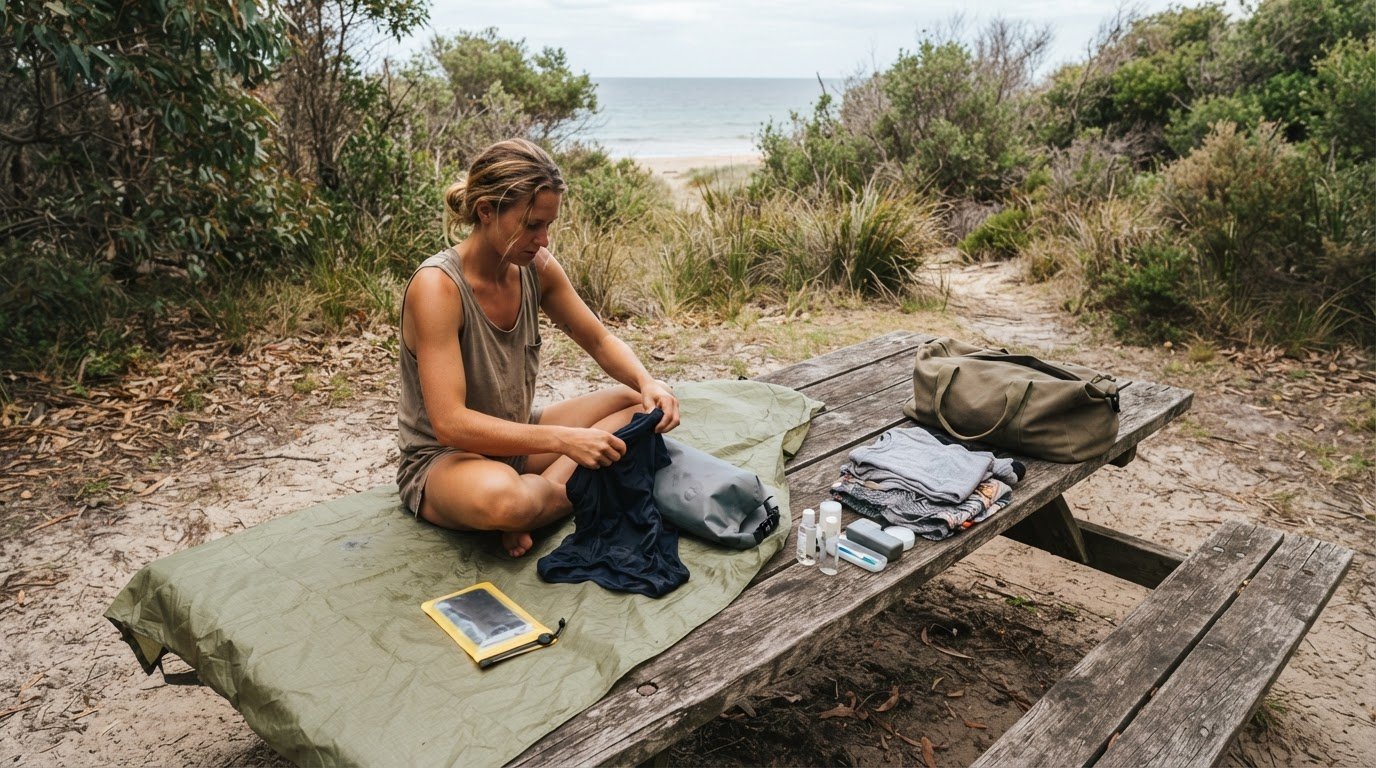
A travel sheet can do more than cover a bed. A budget travel packing list for Australia should pair one with versatile clothes, compact toiletries and a dry bag for wet gear or electronics. Choose items that serve more than one purpose, so your bag stays useful without getting overfilled.
It’s easy to pack extra clothes “just in case” and end up carrying more than you need. A few mix-and-match basics, plus a plan for washing clothes, can keep your load manageable. A travel sheet is a handy extra: it can double as a beach or picnic blanket, or provide cover on an overnight train ride.
Use this checklist to choose clothes, toiletries and gear for your trip. You’ll see what to pack, which items can serve more than one purpose, and how a sheet, dry bag and practical extras can help you travel light on a budget.
Key Takeaways
- Sort gear by what needs to stay dry and what may get wet, then pack each group so it’s easy to reach.
- Build outfits around a small set of pieces that work together, and leave room for washing clothes during the trip.
- Keep your toiletries routine simple with compact essentials and containers that suit your travel plans.
- Choose a travel sheet to match your sleeping setup, then make use of its extra functions on the move.
Dry bags for wet items and electronics
Add a waterproof bag for wet swimwear, damp towels or a sudden downpour. It can also help protect electronics from rain while you’re walking, but keep devices separate from wet clothing. If your plans include Australia’s coral reefs, pack reef shoes and a wet bag for swim gear.
Choose a size that fits what you’ll carry instead of packing a large bag “just in case”. A small dry bag can hold a phone, camera or charging cables; a larger one can separate wet clothes from documents and clean gear. Keep it easy to reach after swimming or when rain starts.
For photography, pack your camera, memory cards and charging cable together, then put them in the dry bag before heading out. Keep headphones and other small electronics in a separate pouch inside your daypack. This makes them easier to find and keeps loose cables from tangling with camera gear.
Australians travelling overseas should pack travel insurance documents, passport photocopies, visas and travel permits, local currency and emergency cash. Store essential documents and money in separate secure places, so a misplaced wallet doesn’t leave everything together.
For charging, bring an adapter and the chargers for every device you plan to use. Australia’s mains electricity is 230 volts and 50 hertz, so check that each device can work with the power supply at your destination. Store the adapter and cables in one pouch to reduce rummaging at hotels or in shared rooms.
- Before packing: Charge your camera, phone and headphones, then pack their cables.
- Before walking: Put electronics and important documents away from wet clothing.
- After swimming: Seal wet items in the wet bag before returning them to your luggage.
Keep your setup light. A dry bag, one cable pouch and only the electronics you’ll use can protect useful gear without adding clutter or extra weight.
Lightweight, versatile clothing and accessories
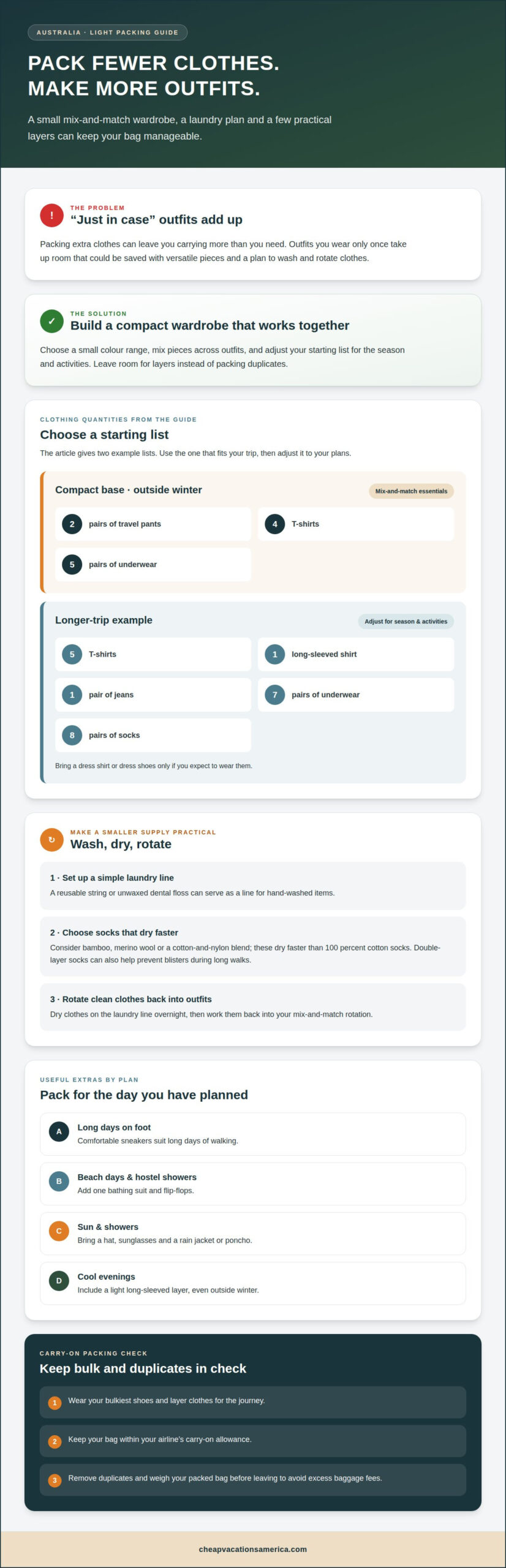
Choose clothes that mix easily, then build outfits around a small colour range. For a trip outside winter, pack two pairs of travel pants, four T-shirts and five pairs of underwear. This compact base leaves room for layers without filling your backpack with outfits you’ll wear only once.
For a longer trip, a simple list is five T-shirts, one long-sleeved shirt, one pair of jeans, seven pairs of underwear and eight pairs of socks. Use it as a starting point, then adjust for the season and planned activities. Pack a favourite dress shirt or dress shoes only if you expect to wear them.
To pack light in carry-on luggage, wear your bulkiest shoes and layer clothes for the journey. Choose pieces that work across several outfits, and keep your bag within your airline’s carry-on allowance. To avoid excess baggage fees, remove duplicates and weigh your packed bag before leaving.
Use a laundry line to make a smaller clothing supply practical. A reusable string or unwaxed dental floss can serve as a line for hand-washed items. Pack quick-drying socks made from bamboo, merino wool or a cotton-and-nylon blend; these dry faster than 100 percent cotton socks. Double-layer socks can also help prevent blisters during long walks.
- Walking: Pack comfortable sneakers because they suit long days on foot.
- Beach days: Add one bathing suit and flip-flops for swimming or hostel showers.
- Changing weather: Bring a hat, sunglasses and a rain jacket or poncho for sun and showers.
- Cool evenings: Include a light long-sleeved layer, even outside winter.
Dry clothes on the laundry line overnight, then rotate them back into your outfits. For practical packing ideas, browse these travel gear recommendations.
Toiletries and personal hygiene
Keep toiletries compact by packing only what you use each day. A toothbrush, toothpaste, dental floss, razor and small shampoo bottle cover basic routines without taking up much space. For a budget trip, travel-size products or reusable containers let you bring what you need without carrying full-size bottles.
Airline rules can limit the liquids you bring in carry-on luggage, so check the requirements before packing. Put them together in a small toiletry bag, then place it where you can reach it easily. If you use a particular shampoo or skin product, transfer some into a reusable container instead of packing the full bottle. Buying basic toiletries at your destination can also reduce luggage weight.
The cheapest practical options are often the small essentials you already own, plus refillable containers you can use again. A multi-use soap can replace several separate products; Dr. Bronner’s soap is described as having 18 uses. Choose products that suit your routine, and skip extras that would stay unused in your bag.
Pack personal care items with the day’s plans in mind. Sunscreen, insect repellent and bug-bite cream can be useful for an outdoor adventure. For Australia, pack SPF 50 sunscreen, even in winter, and keep sunglasses handy. A rain jacket can protect you from changing weather, while comfortable shoes help on long walks.
- Daily care: Pack a toothbrush, toothpaste, dental floss and the toiletries you use consistently.
- Sun and insects: Add sunscreen and insect repellent for outdoor plans.
- Basic medicine: Carry familiar medicines and a small first-aid supply, such as aspirin or bug-bite cream.
- Shared bathrooms: Use a separate toiletry bag to keep personal items together and easy to find.
Before leaving, group liquids in one pouch and keep medicine separate from toiletries. This makes essentials easier to find at a hotel, campsite or hostel, and helps prevent small items from getting lost among your clothes.
Packing a sheet for travel
A travel sheet is a portable layer for hostel stays, overnight trains and trips when you want your own bedding layer. Hostel bed linens are usually included in the stay price, but some hostels don’t provide blankets unless guests pay extra. Pack a liner if it suits your sleeping plans, rather than assuming every room has the same setup.
Choose a material to match your priorities. Silk is lighter and packs smaller than cotton, while cotton costs less. Microfibre is another option for a sleeping liner. Avoid bulky cotton liners if luggage space matters. Consider whether a liner suits your destination and sleeping arrangements before packing one.
- Check your accommodation: Look at the hostel’s bedding details when planning what to pack, because blanket provision can vary.
- Pick a suitable fabric: Choose silk for a lighter, smaller sheet, or cotton when lower cost matters more than pack size.
- Plan for more than bed use: Fold the sheet into your day bag for a beach or picnic blanket.
- Keep it handy: Pack the sheet near the top of your luggage if you’ll want it during an overnight train ride.
A travel sheet can earn its space with these extra uses. It won’t replace every sleep essential, but it can provide cover during a train journey or a clean layer for a picnic stop. Keep it separate from toiletries and wet clothing so it’s ready when needed. Store an adapter with your charging gear, not in the sheet’s storage bundle, to make both easier to find during flights and overnight stops.
Plan the rest of your trip around practical stays and routes. Explore budget-friendly travel destination guides to help shape where you go and what you’ll need.
Cheap Vacations America: Low budget destinations
Cheap Vacations America helps you plan where to go with low-budget destinations and travel guides. Once you’ve sorted your packing basics, explore its recommendations to narrow down an affordable Australian trip.
Explore budget-friendly Australian cities, then use destination guides to compare options for your travel plans. Recommendations for well-priced hotels and hostels can help you consider where to stay as you shape your itinerary. This is a useful next step when you want your destination, accommodation and packing choices to work together, without carrying gear you won’t need.
Ready to plan your next affordable trip? Contact Cheap Vacations America to discuss where you’d like to travel.
Choose the trip, then make your final packing decisions
Let your destination shape the last choices before you zip your bag. A city stay, a coastal break and a camping trip call for different gear. Check your planned activities and accommodation, then remove anything you won’t use. That final edit keeps your budget travel packing list focused on the trip you’re actually taking, not every possible “what if”.
Cheap Vacations America can help with the next planning step. Explore recommendations for budget-friendly US cities to narrow down a destination that suits your plans. A clear choice makes it easier to organise your days and decide what deserves space in your luggage.
Ready to explore your options? Contact Cheap Vacations America to start planning. Keep your plans practical, pack for the trip you choose, and look forward to getting out there.
Frequently Asked Questions
What should I pack for budget travel?
Pack for your planned activities, then remove items that serve no clear purpose. Useful extras include a reusable water bottle, snacks, a travel laundry bag and a guidebook or map. For evening walks or camping, a head torch keeps your hands free. Keep frequently used items together so you can find them without unpacking your whole bag.
What are the essential items for a budget travel packing list?
Start with items that solve several small problems: a reusable bottle, a travel laundry bag, snacks and a compact light. A spork can handle meals from markets or grocery stores, while a flexible flask is easy to carry. Add a guidebook or map for offline reference. Choose extras to suit your itinerary, not just because they appear on a generic checklist.
How to choose versatile clothes for budget travel in different climates?
Choose clothes for the conditions and activities on your itinerary. For warm afternoons and cool evenings, wear lighter pieces during the day and keep a packable warmer layer within reach. For wet or windy outings, choose outerwear suited to the forecast. A beach day and a long walk call for different footwear, so review your plans before choosing shoes.
What budget travel safety and first-aid items should I bring?
Choose first-aid items to suit your activities. For long walking days, include blister care and pack any regular medicine you rely on. Keep emergency contact details on paper as well as on your phone, and store essentials where you can reach them quickly. A head torch keeps your hands free if you’re walking or setting up camp after dark.