
The cheapest room can still lead to an expensive trip. For Australian travellers comparing affordable US destinations, the full cost includes getting there, local transport, meals and activities. A low nightly rate may not help if you also need a hire car or pay for every attraction.
It’s easy to start with a list of cheap places. It’s harder to work out which one will suit your budget and travel style once you account for the whole trip. This guide explains how to compare destination types by total cost, so you can weigh up a city break, an outdoor stay or a beach trip.
Start with a shortlist: set your budget, decide what matters most, then compare transport, accommodation and activities together. Consider season and trip length before settling on a destination. Cheap Vacations America’s guides to budget-friendly US destinations, accommodation, tours, camping and RV facilities can help you explore options and plan around your priorities. For a broader look at coordinating trip costs, see this guide on how to travel America cheaply.
Key Takeaways
- Compare affordable US destinations by the full trip cost, not just the nightly lodging rate.
- Match your travel style to a destination type, from a compact urban break to an outdoor or activity-focused stay.
- Use a comparison table to weigh travel access, lodging, local transport and things to do.
- Set your trip length, travel party, mobility needs and activity priorities before narrowing your shortlist.
- Use destination, accommodation, tour and outdoor-stay guides to explore options and plan your next steps.
What Makes a US Destination Affordable? Look Beyond the Lodging Rate
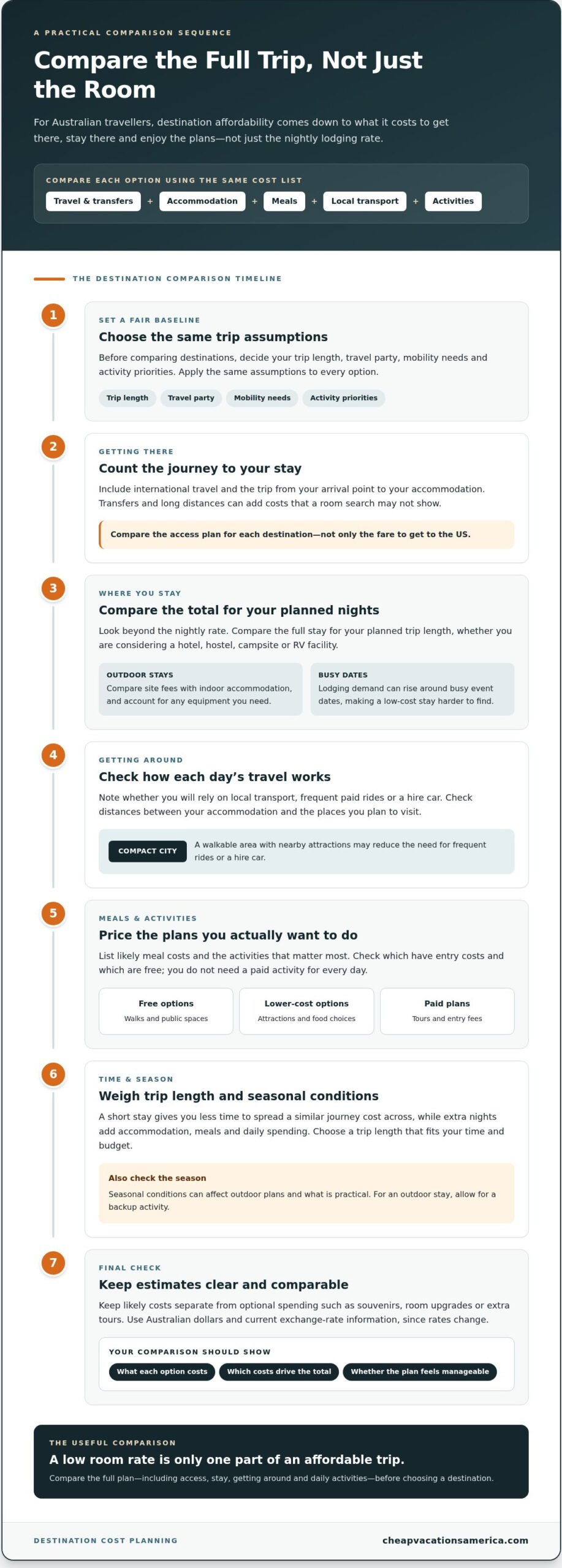
A destination isn’t affordable just because its rooms look cheap. For Australian travellers, getting to the US can take up a significant part of the budget before the first night’s stay. Transfers, local transport, meals and activities add to the total once you arrive. Compare the full trip, not one attractive line in a search result.
Total-trip affordability means what you spend to get there, stay there and enjoy your plans, not just what you pay for a bed. Applying the same test to each option makes it easier to compare affordable US destinations fairly. Tourism covers a wide mix of experiences and travel needs, as the Overview of Tourism in the United States explains. Your costs will depend on which experiences you choose.
Which trip costs shape destination affordability?
List the costs you’re likely to face: international travel, arrival transfers, accommodation, meals, local transport and planned activities. Keep these separate from optional spending, such as souvenirs, room upgrades or extra tours. Also consider distances. A destination that requires a long transfer or frequent paid rides can add costs that aren’t obvious from the lodging rate.
Activities can change the comparison, too. Free walks, public spaces or low-cost attractions may leave more room in your budget for transport or a special meal. Write down the activities you most want to do, then check which have entry costs and which are free. You don’t need to plan a paid activity for every day.
Why the cheapest-looking option may not be cheapest overall
A low nightly rate can be offset by expensive or inconvenient transport, paid attractions or extra nights needed to make the journey worthwhile. Compare the plans you’d actually follow, not just room prices. A destination with suitable activities close to your accommodation may fit better than one where each outing involves a separate journey.
Trip length affects how you weigh fixed travel costs. If reaching a destination costs about the same for a short or longer visit, a short stay gives you less time to spread that cost across. But extra nights also mean more accommodation, meals and daily spending. Choose a trip length that fits your time and budget rather than assuming longer is always better.
For a fair comparison, use the same assumptions for each option:
- Access: Include flights and the journey from your arrival point to your stay.
- Stay: Compare the total for your planned nights, not just the nightly rate.
- Getting around: Note whether you’ll need local transport or a hire car.
- Daily plans: List likely meal and activity costs, along with free alternatives.
Keep estimates in Australian dollars and use current exchange-rate information. Rates change, so an old conversion isn’t a reliable trip budget. A clear comparison won’t predict every expense, but it will show which costs drive each option and help you judge whether the overall plan feels manageable.
Which Affordable US Destination Styles Fit Your Trip?
The right destination style depends on what you want to do, how you prefer to get around and where you’re willing to stay. Two trips of the same length can have very different budgets. Your travel style affects the total cost because it shapes your transport, lodging and activity choices.
Think about the kind of days you want, not just the place name. A compact urban break may suit travellers interested in museums, food and easy walks. An outdoor stay may appeal if you enjoy nature and are comfortable planning around gear and transport. Coastal breaks and activity-focused trips can also fit, but costs depend on access, lodging and how much you plan to do.
When a compact city trip may suit a tighter budget
A walkable area with nearby attractions can reduce the need for frequent rides or a hire car. That may make daily transport easier to manage. However, lodging demand can rise around busy event dates, making a low-cost stay harder to find. Look for free public attractions and lower-cost food options near the activities on your list.
Coastal-style breaks may suit travellers who want time by the water, but access and lodging can shape the budget. Check how far your accommodation is from the places you plan to visit. If you’ll need transport for each outing, include that cost alongside the room rate. A slower itinerary with time outdoors may limit paid activities, although seasonal conditions can affect what’s practical.
Activity-focused trips make sense when one or two experiences are the main reason for travelling. Start with those priorities, then see what else is nearby. If most plans involve paid tours or entry fees, activities may have a bigger effect on your budget than accommodation. Look for free or lower-cost ways to fill the rest of your days without adding long journeys.
When outdoor stays or activity-led trips make sense
Camping or an RV stay offers a different setup from a hotel or hostel, but it isn’t automatically cheaper. Compare site fees with indoor accommodation, then account for transport and any equipment you need to bring or arrange. Outdoor access, weather and seasonal conditions can affect your plans, so allow for a backup activity.
To compare affordable US destinations by style, sketch out a typical day for each option. Note where you’ll sleep, how you’ll get to activities and which plans cost extra. This makes trade-offs easier to spot: a city may offer more nearby options, while an outdoor trip may require more equipment and planning.
Destination guides and recommendations for lodging, tours, camping and RV facilities can help you explore options that suit your priorities. Browse budget-friendly US trip ideas to compare different trip styles and paces.
How to Compare Affordable US Destinations Without Guessing
A consistent comparison is more useful than a string of unverified “cheap” labels. Choose a few trip options, use the same cost categories for each and note where your information comes from. For Australian travellers, record US prices in their original currency, then convert them to Australian dollars using a dated exchange rate. Treat the result as an estimate, not a quote.
Use the same cost categories for every option
Start with costs that are harder to change, such as getting to the destination and transferring after arrival. Add accommodation for your planned dates. Then estimate flexible costs: meals, local transport and activities. Mark each item as a current figure, a rough estimate or something you still need to check.
Use a simple scorecard. If comparable prices aren’t available, rate each category as low, medium or high based on your plans. Don’t present a guess as a precise figure.
Separate fixed costs from choices you can adjust. Your travel dates and initial journey may be difficult to change; meal choices, paid activities and some local trips may offer more flexibility. Check current lodging and transport information for your dates. Holidays, major events and seasonal changes can affect demand and prices, so note them in your comparison.
Match the shortlist to your travel priorities
Price is only one part of the decision. Rank your priorities before comparing, such as convenient transport, outdoor access, family-friendly plans or specific activities. Give each a simple rating, then note whether an option meets it easily, with extra planning or not very well. This makes trade-offs visible without suggesting one place is cheapest for everyone.
The US Bureau of Labor Statistics publishes broader price information, including data that can help explain changes in consumer prices. Use it as background on the cost climate, not as a quote for a particular destination. It can’t tell you the total cost for your dates, travel party and itinerary. Use current destination-level information for trip-specific figures, and leave uncertain amounts out of your estimate.
Applying the same scorecard to each option shows which costs are known, which need checking and which priorities matter most. That gives you a more useful basis for comparing affordable US destinations than a lodging rate or broad ranking alone.
How to Build a Realistic Affordable US Trip Shortlist
A useful shortlist starts with your limits, not a long list of places. Set your priorities, then compare the full trip for a small number of options. Choose your budget and travel needs first, compare dates and transport next, then narrow down destinations and stays.
Set your trip limits before browsing
Write down your total budget in Australian dollars and how long you can travel. Include who’s going, any mobility needs and the activities you most want to do. Keep essential costs separate from flexible spending so you can see what might change if an option looks too expensive.
- Set your trip boundaries. Choose a realistic total budget and trip length. Leave room for changes, but decide what that buffer means for your plans rather than relying on a standard percentage.
- List your must-haves. Note who’s travelling, any mobility or access needs, and the activities that matter most. Include practical needs such as a quieter pace or suitable accommodation facilities.
- Compare dates and travel access. Check how your possible dates affect travel options and arrival transfers before focusing on lodging. Use current information to look for seasonal demand, event-related changes, closures and access updates.
- Compare stay types. Weigh hotels, hostels, camping and RV facilities as different ways to stay. Consider what each option means for transport, equipment and daily plans, not just its listed rate.
- Trim the list. Keep the options that fit your budget, travel needs and activity priorities. Remove choices that rely on uncertain access or costs you can’t comfortably absorb.
Check dates, access, and stay options
Dates can change the shape of a trip. An event may affect lodging demand, while seasonal conditions or closures could change planned activities or access. Check official updates for time-sensitive details before settling on an itinerary. If your dates are flexible, compare more than one travel window using the same cost categories.
Next, match the stay to the trip. A hostel, hotel, campsite and RV facility suit different plans and can bring different transport or equipment needs. Cheap Vacations America’s affordable stays and camping guides can help you compare options for your shortlist. Keep your travel party, access needs and planned activities in view.
Before choosing, review each option against the same checklist: total budget, dates, arrival and local transport, suitable lodging and priority activities. If a key detail is uncertain, mark it for verification rather than treating it as settled. That way, your shortlist reflects what you can realistically plan, not just what looks appealing at first glance.
Where to Find Affordable US Trip Ideas and Take the Next Step
Once you have a shortlist, use travel guides to answer your next planning question. Destination guides help you compare the feel of different trips. Budget-city and small-town guides can offer ideas for an urban break or a slower visit. Road-trip resources help you think through distances and stops, while camping and affordable-stay guides cover different accommodation styles. Treat these as starting points for research, then compare each option with your own budget and plans.
Cheap Vacations America brings together destination ideas with recommendations for lodging, tours, camping, RV facilities and travel gear. Accommodation and tour recommendations can direct you to third-party booking partners. The site provides information and referrals rather than direct bookings, so any booking is completed through the relevant partner.
Choose the right guide for your next planning question
Choose a guide that addresses the detail you still need. If you’re deciding between a compact urban stay and a quieter trip, start with destination guides. If you already know your preferred travel style, explore road-trip, camping or affordable-stay resources to understand the practical options. Keep destination choice at the centre of your comparison, then review lodging details separately once you know what kind of trip suits you.
As you browse, note what each guide helps you decide: setting, transport needs, activity choices or stay type. This keeps research focused and helps you move towards a workable plan. It also makes it easier to return to your priorities if an appealing activity or accommodation option starts to pull the trip in a different direction.
Turn a destination idea into a bookable plan
Before booking through a third-party partner, review the current details on that partner’s site. Check your dates, what the listed option includes, cancellation terms and any extra fees. Details can change, so use the information shown for your travel dates rather than relying on an old estimate or guide entry.
Apply the same care to tours. Compare recommended paid options with free activities and self-guided alternatives. A tour may suit your interests or simplify logistics, while a walk, public attraction or independent outing may fit your plans better. Weigh time, transport and cost together, then choose what adds value to your trip.
For Australian travellers, keep your working budget in Australian dollars and note when you checked prices shown in another currency. Exchange rates and partner listings can change. Use your shortlist as a planning tool, then verify current details before you commit.
Explore affordable US destination guides to compare ideas and shape your next trip plan.
Make Your Next Trip Plan Feel Within Reach
Your shortlist doesn’t need to be perfect on the first try. Keep the options that fit the way you want to travel, then refine your plan as you check dates and current details. A clear starting point can make exploring affordable US destinations feel more manageable, even when you’re planning from Australia.
Use destination ideas to start comparing, then explore recommendations for stays, tours, camping, RV facilities and travel gear as your plans take shape. Take it one decision at a time and adjust the trip to suit your priorities and budget.
Explore affordable US destination guides for ideas that fit your travel style.
Frequently Asked Questions
What makes a US destination affordable for a vacation?
A US destination is affordable when the overall plan fits your budget without forcing costly trade-offs. Consider who’s travelling, how long you’ll stay and whether you’ll share accommodation or transport costs. A family may value free activities and kitchen access, while a solo traveller may prioritise a central stay that reduces daily travel. The best fit depends on your plans, not a universal “cheap” label.
How can I compare the total cost of different US destinations?
Compare options using the same travel dates, party size and planned activities. Record the source and date for each estimate, especially for fares and accommodation that can change. Include arrival transfers, meals and any equipment costs that apply to your plans. If exact figures aren’t available, use a simple low, medium or high rating. This shows where information is missing without creating false precision.
Are smaller destinations always cheaper than major cities?
No. A smaller destination may have fewer accommodation choices or require a hire car to reach attractions. A larger city might offer more public transport and free activities, but demand can rise around busy dates. Compare the specific stay and plans you’d choose in each place. A low room rate, for example, may not help if getting to meals and activities adds frequent transport costs.
Can I plan an affordable US trip without renting a car?
Yes, if your accommodation, arrival point and planned activities connect well by public transport, walking or other available options. Before choosing a destination, map out how you’d get from the airport or station to your stay, then check routes to the places you want to visit. A compact itinerary can help. Confirm service schedules and operating details for your dates before relying on them.
How much should I budget for an affordable US vacation?
There isn’t one useful budget for every traveller. Build yours from current trip costs: international travel, local transfers, accommodation, meals, activities and personal needs such as travel insurance. For an Australian-dollar estimate, convert US prices using a current exchange rate and note when you checked it. Add a personal buffer for changes, then compare the total with what you can comfortably spend.
When is the best time to visit US destinations on a budget?
There’s no single cheapest period across the United States. Prices and access can vary with local seasons, holidays and major events. If your dates are flexible, compare weekday and weekend stays, and consider periods outside peak travel times. Check the weather and opening schedules, too, since a lower-cost date may not suit your planned activities. Verify current fares and accommodation for the exact dates you’re considering.
Are camping and RV stays always cheaper than hotels?
No. Compare the full setup, not just the nightly site rate. Camping may involve equipment costs, while an RV trip can add vehicle hire, fuel and site fees. Depending on your plans, a hotel may include items or services that reduce other spending. The number of travellers matters, too, since costs may be shared differently. Check what each stay option includes before comparing totals.
What should I check before booking a budget-friendly US trip?
Confirm the dates, location, inclusions, extra fees and cancellation terms shown by the booking partner. Check that the option suits your travel party and any mobility or access needs. For tours or campsites, review meeting points, equipment requirements and current operating details. Cheap Vacations America shares recommendations and referrals, while bookings are handled by third-party partners, so read the partner’s current terms before you commit.
Explore Cheap Vacations America’s destination and budget-stay guides to start planning an affordable US trip around your priorities.